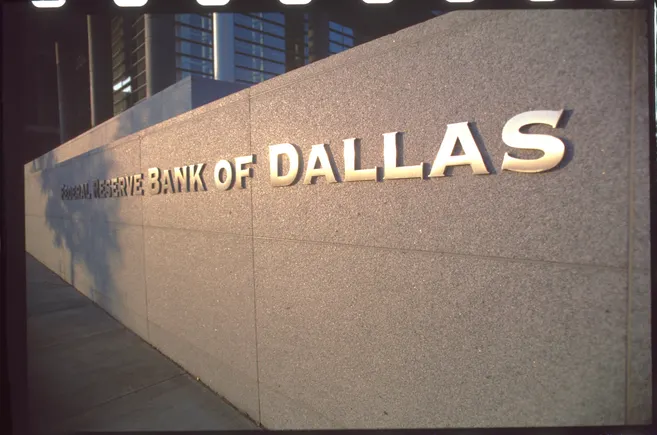









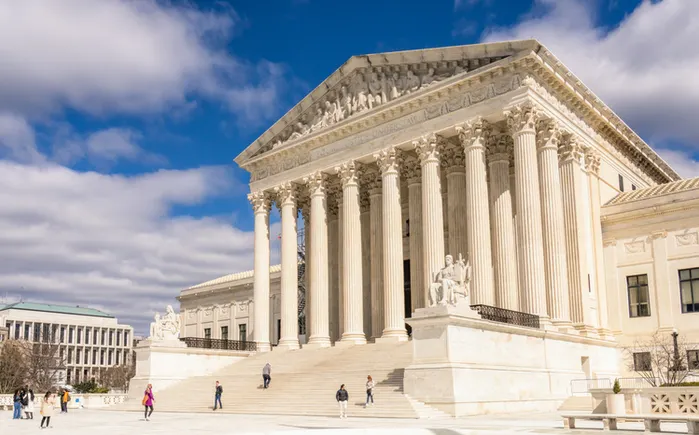
In a move that could fundamentally reshape the relationship between the American central bank and the burgeoning digital asset industry, Wyoming-based Custodia Bank has officially petitioned the United States Supreme Court. The petition seeks a review of a March ruling by the 10th Circuit Court of Appeals, which upheld the Federal Reserve’s authority to deny the bank access to a critical financial tool: a Federal Reserve master account.
At its core, the legal battle is about more than just a single bank’s survival; it is a high-stakes challenge to the "unbounded, unreviewable discretion" currently claimed by regional Federal Reserve Bank presidents. If the Supreme Court chooses to hear the case, the resulting decision could redefine the boundaries of executive power, the autonomy of state-chartered banks, and the future of financial innovation in the United States.
Main Facts: The "Golden Ticket" of Banking
To understand the weight of Custodia’s petition, one must first understand the significance of a Federal Reserve master account. Often referred to as the "golden ticket" of the financial world, a master account allows a financial institution to settle transactions, hold reserves, and send payments directly through the Federal Reserve’s system.
Without this account, a bank like Custodia must rely on an "intermediary bank"—a traditional financial institution that already holds a master account—to facilitate these services. This reliance introduces significant costs, operational delays, and counterparty risks. For a digital-asset-focused bank aiming to provide 100% reserve backing for its deposits, the inability to access the Fed directly is what Custodia describes in its filing as a "death sentence."
The Core Legal Question
In its petition filed on Friday, Custodia presented what it describes as an "exceptionally important question": whether regional Federal Reserve Bank presidents possess the legal authority to deny disfavored banks access to payment services without any form of judicial oversight.
Custodia’s legal team argues that the current system allows unappointed officials to act as gatekeepers to the nation’s financial plumbing based on policy preferences rather than statutory mandates. They contend that this level of control flouts the statutory text of the Federal Reserve Act and contradicts the historical prerogative of states to charter and regulate their own banking institutions.
Chronology: A Multi-Year Legal Odyssey
The conflict between Custodia Bank and the Federal Reserve did not happen overnight. It is the result of a four-year struggle characterized by administrative delays, allegations of favoritism, and escalating legal maneuvers.
2020–2021: The Application and the Wait
The journey began in October 2020, when Custodia (then known as Avanti Bank & Trust) applied for a master account with the Federal Reserve Bank of Kansas City. At the time, Federal Reserve materials indicated that the processing of such applications typically took between five to seven business days. However, as months turned into years, Custodia’s application remained in a state of limbo.
2022: The First Lawsuit
After waiting 19 months with no definitive answer, Custodia sued the Federal Reserve Board and the Kansas City Fed in June 2022. The lawsuit accused the central bank of an "unlawful delay" in processing its application. During this period, Custodia’s frustration was exacerbated when the Federal Reserve approved BNY Mellon to take custody of clients’ crypto assets in relatively short order. Custodia alleged favoritism toward traditional, "too-big-to-fail" institutions, a claim the Fed vigorously disputed.
2023: The Denial and Coordination Allegations
In January 2023, the Federal Reserve Board and the Kansas City Fed finally issued a decision: they denied Custodia’s application for both a master account and membership in the Federal Reserve System. The Fed argued that Custodia’s business model was "inconsistent with safe and sound banking practices," citing the volatility of the crypto markets and a perceived lack of sufficient risk management controls.
Custodia hit back, arguing that the central bank and the Kansas City Fed had "illegally coordinated" to orchestrate the rejection. The bank requested a reconsideration, which was subsequently denied in February 2023.
2024: The 10th Circuit and the Path to SCOTUS
In March 2024, the 10th Circuit Court of Appeals ruled in favor of the Federal Reserve, upholding the barrier preventing Custodia from accessing the master account. This ruling prompted Custodia’s latest and most significant move: the petition to the Supreme Court.
Supporting Data: The Constitutional and Statutory Arguments
Custodia’s petition to the Supreme Court rests on several pillars of legal and constitutional theory, drawing heavily on recent judicial precedents and dissenting opinions from lower courts.
The Trump v. Cook Precedent
A cornerstone of Custodia’s argument is the Supreme Court’s June opinion in Trump v. Cook. This case acknowledged that there are inherent boundaries to executive power. Custodia argues that the Federal Reserve, which enjoys a unique level of independence from presidential control, must be held to strict adherence to the powers authorized by Congress.
"Given the Federal Reserve’s unique independence… it is particularly important for the court to ensure that the power the Fed claims to possess has in fact been authorized by Congress," the bank wrote in its petition.
The Appointment Clause Issue
Custodia’s petition echoes a dissenting opinion written by Judge Timothy Tymkovich of the 10th Circuit Court of Appeals in October 2023. Judge Tymkovich criticized the court for endorsing a reading of federal law that allows "unappointed bank officials to exercise significant yet unreviewable executive authority."
His argument centers on the status of Reserve Bank presidents. These individuals are not "Officers of the United States" in the constitutional sense; they are not elected by the public, nor are they appointed by the President or confirmed by the Senate. Instead, they are chosen by a board of directors composed partly of private citizens. Custodia argues that allowing such private individuals to exercise veto power over state-chartered banks is a violation of the Appointments Clause and the principles of federalism.
State Sovereignty and Wyoming’s Regulatory Framework
The data also highlights a clash between state and federal policy. Wyoming has spent years developing a robust regulatory scheme for "Special Purpose Depository Institutions" (SPDIs) like Custodia, aiming to become a national hub for the digital asset industry. Custodia argues that the Kansas City Fed’s denial was essentially a policy disagreement with Wyoming’s legislative choices, rather than a legitimate regulatory concern.
Official Responses: The Federal Reserve’s Stance
The Federal Reserve has remained steadfast in its position, maintaining that its primary responsibility is the stability and safety of the U.S. financial system.
Risk Management and Illicit Finance
In its 86-page rejection of Custodia’s application, the Fed detailed three primary areas where the bank fell short:
- Concentration Risk: The Fed argued that Custodia’s heavy reliance on the volatile crypto market created an unsafe business model.
- Anti-Money Laundering (AML) Controls: The central bank expressed concerns that Custodia lacked the sophisticated controls necessary to prevent the intrusion of illicit finance into the banking system.
- Systemic Implications: The Fed raised the alarm about the potential systemic risks of granting a crypto-native institution direct access to the nation’s payment infrastructure.
Denying Favoritism
The Fed has also consistently denied allegations of favoritism toward legacy banks like BNY Mellon. They contend that traditional institutions have decades of experience in risk management and are subject to a different level of federal oversight than a newly formed state-chartered institution like Custodia.
Implications: A "Monumental" Case for the Future of Finance
The Supreme Court is currently on its three-month summer recess and is scheduled to reconvene in October. If the Court decides to grant certiorari (agreeing to hear the case), the implications will be far-reaching.
The Survival of the Dual Banking System
The United States has long operated under a "dual banking system," where banks can choose between state or federal charters. If the Fed is allowed "unreviewable discretion" to block state-chartered banks from the national payment system, Custodia argues that the state charter becomes essentially worthless. This would effectively centralize all banking authority in Washington D.C., ending the "historical prerogative of the States to charter banks."
The "Skinny" Master Account Alternative
While the legal battle rages, the Federal Reserve has recently floated the idea of "skinny" master accounts for certain fintech and crypto-centric lenders. These accounts would offer limited services with stricter oversight. However, Custodia argues that such half-measures do not solve the underlying legal question of the Fed’s statutory authority.
A "Power Grab" Unchecked
Custodia’s petition concludes with a stark warning: "Without the Court’s intervention here, the Fed’s flouting of the statutory constraints on its authority will continue indefinitely. The Court should not let the Fed’s power grab go unchecked."
For the digital asset industry, the case represents a fight for legitimacy and inclusion within the traditional financial system. For the Federal Reserve, it is a fight to maintain the integrity of the nation’s monetary infrastructure. For the Supreme Court, it is a question of where the power of unappointed officials ends and the rule of law begins. As the financial world looks toward October, the fate of Custodia Bank may very well determine the trajectory of American banking for the 21st century.