








WASHINGTON, D.C. — In a move that signals a significant shift in the intersection of federal immigration policy and financial regulation, three of the nation’s primary banking regulators issued joint guidance on Monday, July 13, 2026. The Federal Deposit Insurance Corporation (FDIC), the Office of the Comptroller of the Currency (OCC), and the National Credit Union Administration (NCUA) have formally advised financial institutions to treat the lack of legal work authorization as a primary factor in assessing credit risk.
The guidance, while technically nonbinding, serves as a stark directive to banks and credit unions to recalibrate their underwriting models. Regulators argue that lending to individuals not legally authorized to work in the United States introduces "elevated risk" levels that could compromise the safety and soundness of financial institutions.
Main Facts: A New Framework for Credit Risk
The core of the joint guidance revolves around the "willingness and capacity to repay." While these have always been the twin pillars of credit underwriting, the regulators have now explicitly linked "capacity" to a borrower’s legal right to maintain employment within the U.S.
The Regulatory Stance
The regulators contend that unauthorized workers face unique hurdles that traditional credit models may not adequately capture. Specifically, the guidance identifies three "elevated risk" factors:
- Income Instability: Borrowers without legal work authorization may face sudden termination or suspension of employment if their status is discovered by an employer or if temporary permits expire.
- Repayment Reliability: If a borrower is removed or deported from the U.S., the likelihood of continued payment on unsecured or even secured debt (such as auto loans or mortgages) drops precipitously, as the legal and logistical barriers to international debt collection are immense.
- Underwriting Integrity: Financial institutions are instructed to "identify, measure, monitor, and control" these risks through practices that specifically scrutinize the source of a borrower’s income.
Scope of the Guidance
The guidance applies to all FDIC-insured banks, federally chartered credit unions, and national banks under the OCC’s purview. While the document does not explicitly forbid lending to unauthorized immigrants, it sets a high bar for "safe and sound" underwriting, effectively pressuring institutions to either tighten their requirements or increase their capital reserves against such portfolios.
Chronology: The Road to the July Guidance
The July 2026 joint guidance is the culmination of a rapid-fire series of executive and regulatory actions aimed at aligning the financial sector with broader administration goals regarding immigration and border security.
May 2026: The Executive Mandate
The sequence began on May 15, 2026, when President Donald Trump signed an executive order titled "Restoring Integrity to America’s Financial System." The order directed federal financial regulators to examine how "non-legal status" contributed to systemic risk within the banking sector. The President argued that the proliferation of "ITIN lending" (loans made using an Individual Taxpayer Identification Number rather than a Social Security Number) had created a shadow credit market that was vulnerable to sudden economic or policy shifts.
June 2026: CFPB Clarification
Following the Executive Order, the Consumer Financial Protection Bureau (CFPB) issued its own guidance in early June. The CFPB’s statement focused on the Truth in Lending Act (TILA) and Regulation Z. The bureau clarified that lenders are not only permitted but may be obligated to consider an applicant’s immigration status when assessing their ability to repay. This was a pivotal moment, as it addressed long-standing debates over whether such scrutiny constituted discrimination under the Equal Credit Opportunity Act (ECOA).
July 2026: The Joint Guidance
On Monday, July 13, the FDIC, OCC, and NCUA closed the loop. By issuing joint guidance, the agencies presented a united front, ensuring that the same standards for risk management would be applied across the entire spectrum of depository institutions, from small community credit unions to "Too Big to Fail" national banks.
Supporting Data: The Economic Landscape of ITIN Lending
To understand the impact of this guidance, one must look at the growth of the ITIN lending market over the past decade.
The Rise of ITIN Mortgages and Auto Loans
Since 2015, many community banks and credit unions have expanded their portfolios by offering ITIN-based products. Because unauthorized workers often pay taxes via an ITIN but lack a Social Security Number, these products were seen as a way to promote financial inclusion while capturing a hard-working, underserved demographic.
- Market Size: Industry estimates from early 2026 suggested that ITIN-based lending accounted for approximately $12 billion to $15 billion in outstanding mortgage debt.
- Performance Metrics: Historically, ITIN loans have performed as well as, or in some cases better than, traditional subprime loans, primarily because these borrowers often provide larger down payments (often 20% or more) to compensate for their lack of traditional credit history.
The Risk of "Removal-Induced Default"
The regulators’ new focus, however, is not on historical performance but on "event risk." Internal OCC data cited in the guidance suggests that in regions with high rates of administrative removal (deportation), the default rate on unsecured personal loans among unauthorized workers can spike by as much as 400% following large-scale enforcement actions. This "removal-induced default" is the primary concern for regulators seeking to maintain the stability of the balance sheet.
Official Responses: Regulators and Industry Stakeholders
The reaction to the guidance has been polarized, reflecting the broader political and economic tensions inherent in the policy.
The Regulators’ Defense
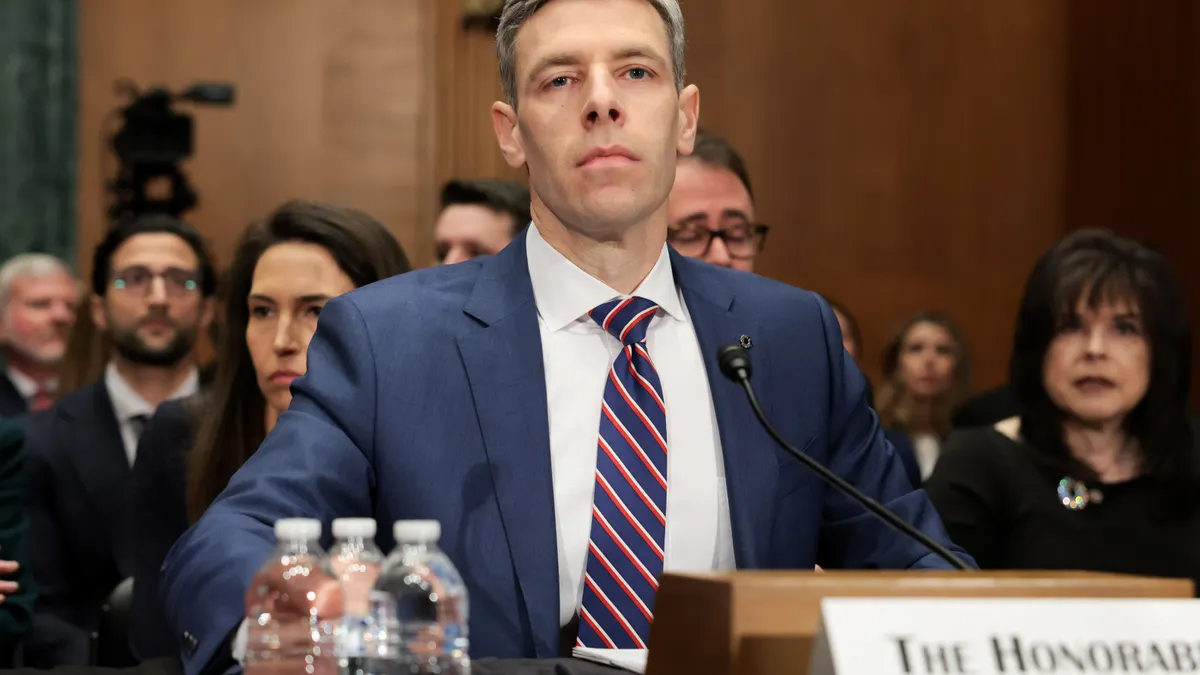
In testimony before the Senate Banking, Housing, and Urban Affairs Committee, Acting Comptroller of the Currency Jonathan Gould emphasized that the guidance is about mathematics, not politics.

"Our role is to ensure that when a bank puts a dollar of depositor money at risk, they have a reasonable expectation of getting that dollar back," Gould testified. "If a borrower’s only source of income is legally tenuous, that is a material fact. Ignoring it isn’t just bad social policy; it’s bad banking."
The FDIC echoed this sentiment, stating that "safe and sound underwriting requires a holistic view of the borrower. One cannot assess ‘capacity to repay’ while ignoring the fact that the borrower’s income could be legally terminated at any moment due to their status."
Industry Caution
Banking trade groups have responded with measured concern. The American Bankers Association (ABA) released a statement noting that while they support "rigorous risk management," they are concerned about the "compliance burden" this places on smaller institutions.
"Banks now find themselves in a difficult position," the statement read. "They must balance these new risk-management expectations with their obligations under the Equal Credit Opportunity Act. We need clear ‘safe harbor’ provisions to ensure that banks aren’t sued for discrimination while trying to follow this guidance."
Advocacy Group Backlog
On the other side, financial inclusion advocates and immigration rights groups have decried the move as "financial "redlining" by another name.
"By labeling an entire class of people as ‘elevated risks’ regardless of their actual credit behavior, the government is effectively pushing millions of people out of the regulated banking system and into the arms of predatory payday lenders," said a spokesperson for the National Fair Housing Alliance.
Implications: A New Era of "Immigration-Aware" Underwriting
The long-term implications of this guidance are likely to reshape the retail banking landscape in several profound ways.

1. Technological Shifts in Underwriting
Banks will likely need to integrate real-time work authorization verification into their loan origination systems. This could involve more frequent checks of the E-Verify system or requiring borrowers to provide proof of valid, unexpired visas. For the first time, a borrower’s "credit score" may be secondary to their "visa duration."
2. The Contraction of ITIN Programs
Many credit unions, which have historically been the leaders in ITIN lending, may find the cost of "monitoring and controlling" these risks too high. We can expect a significant contraction in the availability of ITIN mortgages and auto loans, as institutions fear that examiners will "flag" these portfolios during annual audits.
3. Increased Cost of Credit
For those unauthorized workers who can still access credit, the "risk premium" will likely increase. To offset the perceived risk of deportation or job loss, banks may charge significantly higher interest rates or require even larger down payments, further widening the wealth gap for immigrant communities.
4. Legal Conflict and Litigation
The tension between the new guidance and the Equal Credit Opportunity Act (ECOA) is ripe for litigation. ECOA prohibits discrimination based on national origin. While the regulators argue that "immigration status" is distinct from "national origin," civil rights attorneys are already preparing challenges, arguing that the two are inextricably linked in practice.
Conclusion: The Security vs. Inclusion Debate
The joint guidance issued by the FDIC, OCC, and NCUA represents a definitive win for the administration’s "law and order" approach to the financial sector. By framing work authorization as a fundamental component of credit risk, regulators have effectively institutionalized a barrier between the unauthorized population and the American dream of home and business ownership.
As financial institutions scramble to update their manuals and training programs by the end of the third quarter, the broader economic impact remains to be seen. While the move may indeed insulate banks from the specific risks of deportation-induced defaults, it also risks cooling the housing and auto markets in states like California, Texas, and Florida, where immigrant labor—regardless of legal status—is a cornerstone of the economy. For the banking industry, the message is clear: the era of "don’t ask, don’t tell" regarding a borrower’s immigration status is officially over.