








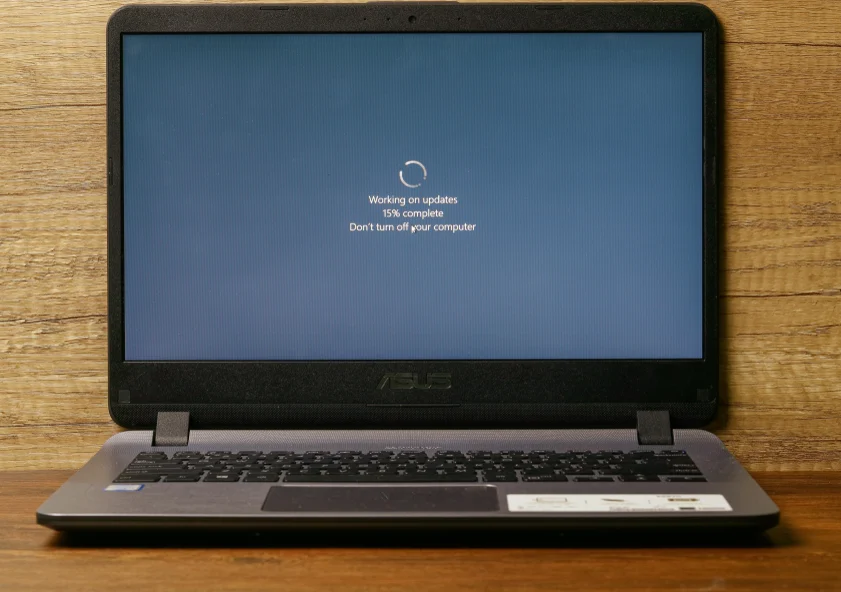
In a watershed moment for cybersecurity, Microsoft Corp. has issued a massive suite of software updates aimed at remediating at least 570 unique security vulnerabilities across its Windows ecosystem and auxiliary software products. This staggering figure—nearly triple the volume of patches released during last month’s already significant "Patch Tuesday"—signals a paradigm shift in how global technology giants identify, manage, and deploy security fixes.
The primary driver behind this sudden, explosive increase in vulnerability disclosures is the integration of artificial intelligence into the research and development lifecycle. By deploying machine learning models to scan millions of lines of code, researchers and Microsoft’s internal security teams have identified flaws at a velocity previously thought impossible. While this accelerates the patching process, it has also thrust the industry into a precarious "AI arms race" between defenders and malicious actors.
Main Facts: The Scope of the July Patch
The July security bulletin is one of the most comprehensive in the history of the company. Among the 570 vulnerabilities addressed, nearly 60 have been classified as "critical." This designation is reserved for flaws that could allow an attacker to seize remote control of a Windows device with minimal or no user interaction.
Beyond the critical batch, Microsoft has confirmed that three "zero-day" vulnerabilities—flaws that were being actively exploited in the wild before a fix was available—are now addressed. Of particular concern are the approximately 250 elevation-of-privilege flaws. These vulnerabilities permit an attacker with low-level access to escalate their permissions, potentially granting them administrative control over a network.
Key vulnerabilities addressed this month include:
- CVE-2026-56155: An Active Directory Federation Services vulnerability, which could allow for unauthorized identity access.
- CVE-2026-56164: A severe flaw within Microsoft SharePoint.
- CVE-2026-50661: A security feature bypass in Windows BitLocker. While currently not under active exploitation, this flaw could theoretically allow an attacker with physical access to a device to bypass encryption protections.
- CVE-2026-48561: A high-severity remote code execution flaw in Microsoft Copilot, boasting a 9.6 CVSS (Common Vulnerability Scoring System) threat score.
Chronology of the Escalation
The surge in patch volume did not happen overnight. Over the past six months, security researchers and tech analysts have observed a gradual increase in the frequency of vulnerability disclosures. However, the July 2026 release marks a distinct inflection point.
- June 2026: Microsoft and other industry peers began reporting a notable uptick in findings, with Google, for example, issuing over 900 fixes in a single month.
- July 1, 2026: CISA (the Cybersecurity and Infrastructure Security Agency) added the aforementioned SharePoint zero-day to its Known Exploited Vulnerabilities (KEV) catalog, underscoring the urgency of the current landscape.
- July 9, 2026: Microsoft Executive Vice President Pavan Davuluri published a landmark blog post confirming that the "new normal" for Windows updates would involve a significantly higher volume of fixes, citing the acceleration of AI-powered discovery.
- July 14, 2026 (Patch Tuesday): Microsoft officially released the massive, 570-plus patch bundle, confirming that the company is now operating on a scale that pushes the limits of traditional IT management.
Supporting Data: The AI Disparity
The data suggests that the "human-centric" model of security management is rapidly becoming obsolete. According to Satnam Narang, a senior staff research engineer at Tenable, the traditional "exploitability index"—a system Microsoft uses to estimate how likely it is that an attacker will successfully weaponize a bug—is no longer fit for purpose.
Narang points to a recent study conducted by Anthropic’s Red Team using their "Mythos Preview" model. The results were sobering: the AI was able to generate functional proof-of-concept (PoC) exploits for 13 out of 14 vulnerabilities that Microsoft had previously labeled as "Exploitation Less Likely" or "Exploitation Unlikely."
This evidence suggests a widening gap. While AI helps companies like Microsoft find bugs faster, it simultaneously empowers threat actors to weaponize those same bugs before the average enterprise has even begun to test the patch. The "Exploitability Index" is, in effect, a manual tool being used in a machine-speed environment.
Official Responses and Strategic Shifts
Microsoft has been proactive in framing this shift as a necessary evolution. In his mid-July address, Pavan Davuluri emphasized that the pace of discovery is fundamentally changing. "The pace of vulnerability discovery is changing with advances in AI making it possible to find more issues, faster, across more code, with new mechanisms that can accelerate both discovery and analysis," Davuluri stated.
Industry peers are responding in kind. Adobe, historically a monthly patcher, has announced a transition to twice-monthly security bulletins, specifically citing the influence of AI in accelerating their internal audit cycles. Cisco, Oracle, and Mozilla have also increased their patch cadences, signaling that the entire software industry is moving toward a model of constant, rapid-fire updates.
Implications for the IT Landscape
The implications of this "AI-fueled" patching cycle are profound for both the end-user and the enterprise IT administrator.
1. The Stability Paradox
With 570 patches arriving simultaneously, the risk of "patch fatigue" and system instability has never been higher. IT professionals are often forced to choose between leaving known vulnerabilities open or risking a system-wide crash by applying untested updates. Experts like Chris Goettl of Ivanti warn that the sheer volume of changes in this month’s release increases the probability of compatibility issues, particularly in complex corporate environments.
2. The Erosion of "Security by Obscurity"
The ease with which AI can reverse-engineer patches means that the "window of exposure"—the time between a patch release and the creation of a working exploit—is shrinking toward zero. For organizations, this means that the traditional "wait and see" approach to patching is becoming a liability.
3. Recommendations for End Users
For the average Windows user, the standard guidance remains: back up your data. However, given the record-breaking size of this month’s update, some security researchers are suggesting a cautious approach. While the temptation to ignore updates is high, the reality is that the threat landscape is increasingly automated. If you are an enterprise, automated patch management systems are no longer a luxury; they are a requirement. For home users, enabling automatic updates is the only way to keep pace with the sheer volume of code revisions flowing from Redmond.
Conclusion: A New Era of Defense
The transition to AI-accelerated vulnerability discovery is an inevitable byproduct of modern computing. While the prospect of 570+ bugs being fixed in a single month is daunting, it is ultimately a reflection of a deeper, cleaner, and more transparent approach to code integrity.
However, the industry must now grapple with the consequences. If the machines are doing the finding and the machines are doing the exploiting, the human element of defense—the patch management teams, the risk assessors, and the policy makers—must also evolve. As Narang noted, our entire way of looking at "Patch Tuesday" must change. We are no longer managing software updates; we are managing an automated, high-velocity cycle of constant digital fortification.
As we look toward the remainder of 2026, one thing is clear: the volume of security patches will likely continue to rise. The question is no longer whether we can keep up, but whether our systems are resilient enough to handle the constant, AI-driven change that now defines the Windows experience.