








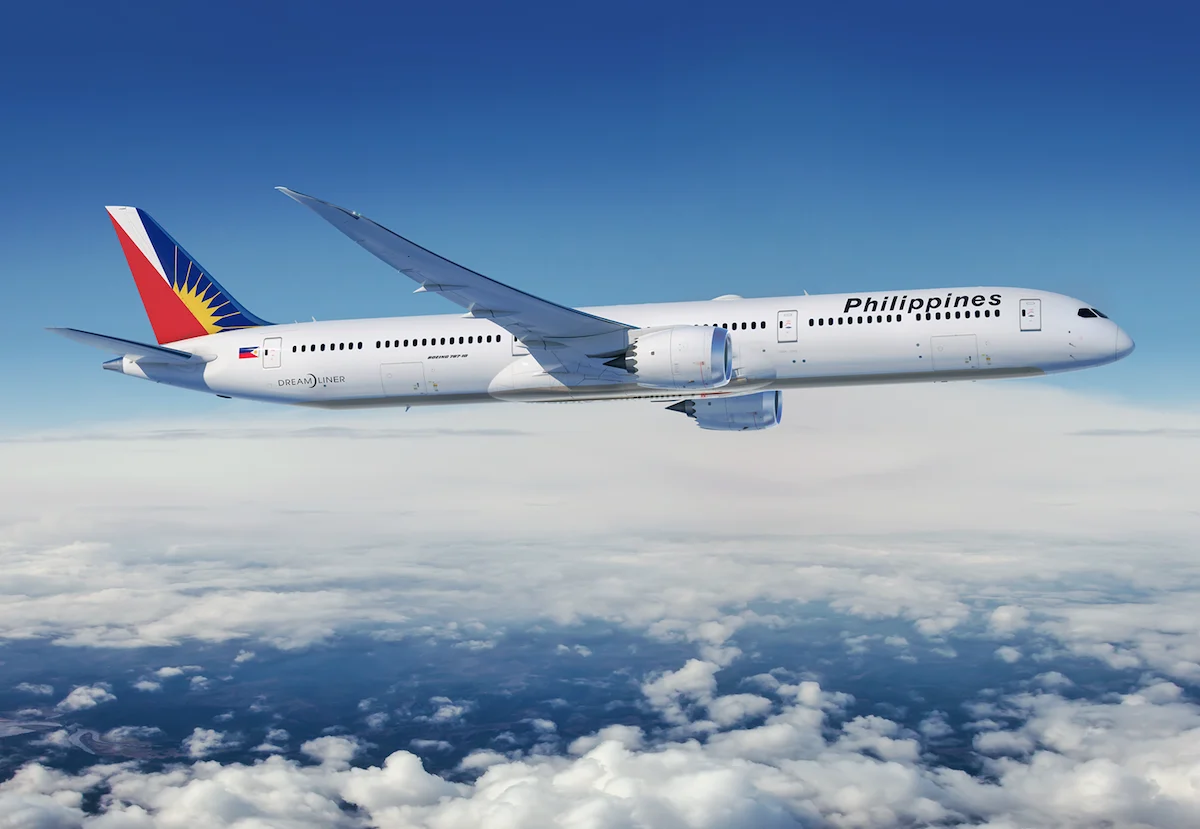
In a landmark move that signals a renewed chapter in aviation history, Philippine Airlines (PAL) has announced a significant commitment to expand and modernize its wide-body fleet. The flag carrier of the Philippines has signed a Memorandum of Understanding (MoU) with Boeing for the acquisition of up to 20 787-10 Dreamliner aircraft. This deal, unveiled during the prestigious Farnborough International Airshow, represents a major strategic shift for the airline, marking its first order for Boeing wide-body jets in nearly two decades and reinforcing its ambition to become a premier global carrier.
The Core Agreement: A Long-Term Vision
The agreement between Philippine Airlines and Boeing comprises 15 firm orders for the 787-10 variant, with an additional five purchase options. While the commitment is substantial, it is a long-term play. The aviation industry is currently facing significant supply chain constraints, and as such, deliveries for these state-of-the-art aircraft are currently slated to begin in 2031, continuing through 2034.
For the airline, this timeline is not merely a hurdle but a calculated step in a broader, decade-long fleet renewal strategy. By securing these delivery slots now, PAL ensures that it will have the capacity to maintain its competitive edge as the global air travel market evolves throughout the next decade.
A Historical Pivot: Re-engaging with Boeing
The significance of this deal cannot be overstated, particularly when viewed through the lens of recent history. Since 2007, Philippine Airlines has leaned heavily into the Airbus ecosystem, populating its fleet with A321 narrow-bodies and A330 and A350 wide-bodies. For nearly 20 years, Boeing’s presence in the PAL wide-body segment was relegated to its existing Boeing 777-300ER fleet.
This move marks a "return to form" for the partnership. As Lucio C. Tan III, CEO of PAL Holdings, noted, 2026 marks an auspicious milestone: the 80th anniversary of the partnership between the airline and the American manufacturer. "This investment manifests our confidence in the future of Philippine Airlines and the continued growth of air travel," Tan stated. "The Boeing 787-10 will strengthen our medium and long-haul fleet, allowing us to provide an even better travel experience for our customers while improving operational efficiency and supporting our long-term sustainability goals."
The Boeing 787-10: Economic and Operational Rationale
The selection of the 787-10 is a testament to the carrier’s focus on efficiency and passenger comfort. As the largest iteration of the Dreamliner family, the 787-10 is engineered for high-density routes where seat-mile costs are the primary driver of profitability.

Technical Superiority
The "stretched" fuselage of the 787-10 allows for a higher passenger capacity than its siblings, the 787-8 and 787-9, without sacrificing the trademark passenger comfort features associated with the Dreamliner, such as lower cabin altitude, improved humidity levels, and larger dimmable windows. For an airline like PAL, which operates in a highly competitive market where travelers are increasingly sensitive to comfort, these cabin features are a massive selling point.
Network Flexibility
While the 787-10 has a slightly shorter range than the 787-9, technological advancements in engine performance and aerodynamics have extended its reach significantly. Industry analysts suggest that the aircraft will be perfectly suited for PAL’s primary trunk routes. It is expected to seamlessly cover medium-haul routes across the Asia-Pacific region while providing the range necessary to reach key North American gateways, including Seattle and Vancouver, from the airline’s Manila hub.
Fleet Dynamics and Future Implications
To understand why this order is so pivotal, one must look at the current composition of the Philippine Airlines fleet. As of mid-2026, the carrier operates a diverse mix of 51 aircraft:
- Airbus A321 (ceo/neo): The backbone of regional operations.
- Airbus A330-300: Serving as the workhorse for regional and medium-haul wide-body capacity.
- Airbus A350-900/1000: The modern flagships for long-haul operations.
- Boeing 777-300ER: The current heavy-lifters for trans-Pacific routes.
With 13 additional A321neos and seven A350-1000s already on order, the airline is clearly in a phase of aggressive growth. The question, however, remains: will the 787s serve as a supplement or a replacement?
Managing the Transition
Many of the airline’s current wide-bodies—specifically the A330s and the aging 777-300ERs—are reaching a point in their lifecycles where retirement planning becomes a priority. The arrival of the 787s in the early 2030s will likely trigger the retirement of these older assets. By replacing older, less fuel-efficient engines with the next-generation technology of the Dreamliner, PAL is positioning itself to drastically lower its carbon footprint and operational costs, aligning with global environmental sustainability mandates.
The Wider Context: Growth and Global Alliances
This order is the latest in a series of bold moves by Philippine Airlines. Perhaps most significant is the airline’s recent decision to join the oneworld alliance. As a member of a global alliance, PAL is expected to see a significant uptick in international traffic, particularly from transfer passengers looking for connectivity across Southeast Asia.

The 787-10 is the perfect vehicle for this growth. As the airline integrates into the global network of oneworld partners, it needs a fleet that is not only reliable but also scalable. The 787-10 provides the flexibility to adjust capacity based on seasonal demand, a critical component for a carrier that relies heavily on both business travel and the substantial Filipino diaspora looking to return home.
Challenges and Considerations
While the mood surrounding the order is optimistic, the aviation industry is not without its hurdles. The five-year lead time before the first delivery is a reality check on the state of global aerospace manufacturing. Boeing, in particular, has faced intense scrutiny regarding production quality and delivery timelines over the past few years.
For Philippine Airlines, the challenge will be managing its current fleet through the "gap" years. Maintaining older aircraft while awaiting the arrival of new ones requires intensive maintenance schedules and high capital expenditure. Furthermore, the carrier must balance its expansion plans with the reality of fluctuating fuel prices and the competitive pressure from other low-cost carriers in the region.
Conclusion: A New Horizon for PAL
The commitment to purchase up to 20 Boeing 787-10s is a cornerstone of the next decade for Philippine Airlines. It is a calculated move that balances the need for operational efficiency with the demand for a premium passenger experience. By diversifying its wide-body fleet with both Airbus A350s and Boeing 787s, the carrier is insulating itself from single-supplier risks while optimizing its fleet for specific mission profiles.
As the airline approaches its 90th anniversary, the industry will be watching closely to see how these new assets are deployed. If the 787-10 delivers on its promise of superior economics and passenger satisfaction, Philippine Airlines may well be on its way to cementing its position as a world-class carrier capable of competing with the best in the business. The path forward is long, but for the first time in many years, the flight plan for Philippine Airlines looks clear, ambitious, and firmly aimed at the future.