








Navigating the complexities of federal tax obligations is a hallmark of responsible business ownership. For S corporations, the centerpiece of this annual requirement is Form 1120-S, the U.S. Income Tax Return for an S Corporation. While the filing process can initially appear daunting due to the intricate nature of pass-through taxation, modern e-filing technology has transformed this administrative burden into a structured, manageable workflow.
By breaking the process down into seven distinct, strategic steps, business owners can ensure compliance, mitigate the risk of IRS audits, and streamline the distribution of critical financial information to shareholders.
The Core Facts: Understanding Form 1120-S
Form 1120-S is an information return used to report the income, gains, losses, deductions, and credits of an S corporation. Unlike C corporations, S corporations generally do not pay federal income tax. Instead, the entity’s financial results are "passed through" to the shareholders, who report their proportional share of these items on their individual tax returns.

Key to this process is Schedule K-1, which allocates these specific items to each shareholder based on their ownership percentage. Because the IRS relies on the accuracy of these filings to verify individual tax liabilities, the integrity of the 1120-S data is paramount.
A Chronological Roadmap to Compliance
To successfully navigate the tax season, business owners should follow a disciplined timeline. Rushing the process is the primary cause of errors, late fees, and subsequent IRS correspondence.
Phase 1: Preparation and Data Aggregation
Before logging into any software, you must build a comprehensive dossier of your business’s financial activity. This includes:

- Organizational Details: Your Employer Identification Number (EIN), exact date of incorporation, and the official date of your S corporation election (Form 2553).
- Operational Classification: Identifying your correct business activity code, which signals to the IRS the nature of your industry and potential risk profile.
- Financial Records: Complete income statements, balance sheets, and a reconciliation of book-to-tax income.
- Shareholder Records: A precise list of all shareholders, their contact information, and their respective Tax Identification Numbers (Social Security Numbers or EINs).
Phase 2: Platform Selection
In the digital age, selecting the right e-filing platform is as important as the accounting itself. You should prioritize platforms that are IRS-authorized. These services are designed to perform real-time "business rule" validations, catching common errors—such as mismatched TINs or missing schedules—before the return is transmitted.
Phase 3: Data Entry and Categorization
Once a platform is chosen, the entry phase begins. This involves mapping your internal accounting categories to the IRS’s specific line items. Pay close attention to:
- Gross Receipts: Ensuring all income sources are accounted for.
- Expense Categorization: Clearly separating cost of goods sold (COGS) from operating expenses and administrative costs.
- Accounting Method: Confirming whether you are reporting on a cash or accrual basis, as this must be consistent with prior filings.
Phase 4: Validation and Submission
Before the final "submit" button is clicked, the software will perform an audit-trail check. This is your final opportunity to rectify discrepancies. Once submitted, the IRS will issue an acknowledgment, usually within 24 to 48 hours, confirming receipt or identifying rejection errors.

Supporting Data and Technical Requirements
Efficiency in tax filing is heavily reliant on the quality of your underlying data. Utilizing accounting software that integrates directly with tax-filing portals can reduce manual data entry errors by as much as 90%.
The Importance of Schedule K-1
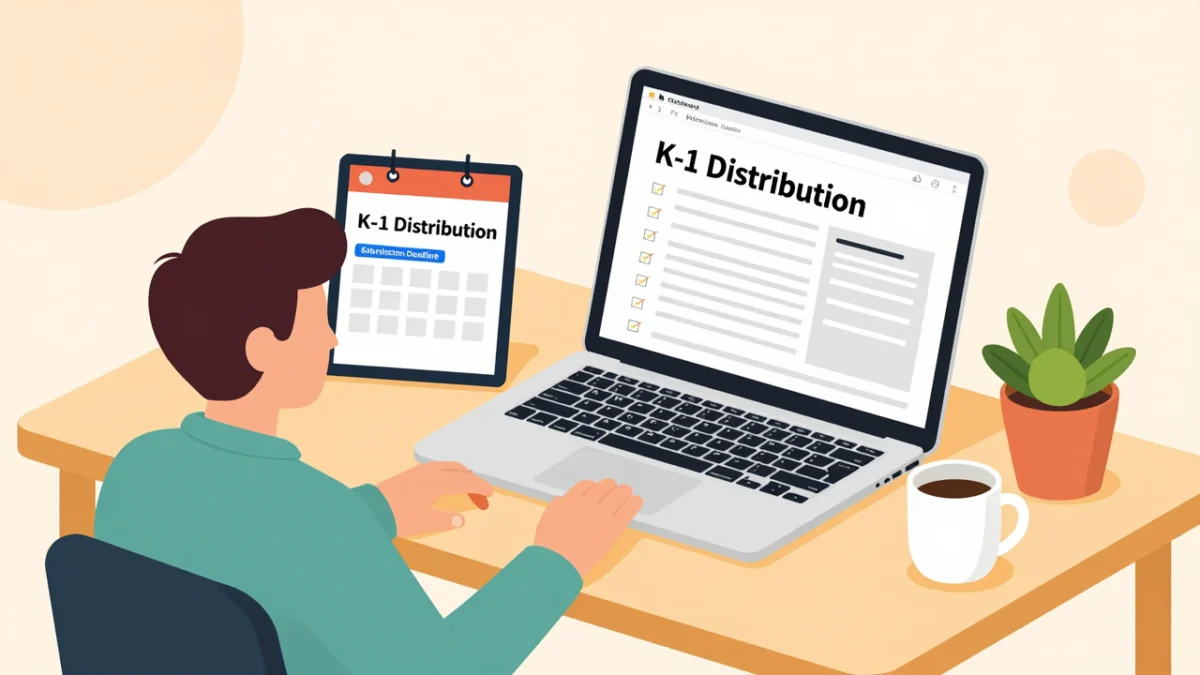
The K-1 is the lifeblood of the S corporation filing. Each shareholder must receive their K-1 in time to file their own individual return. Failure to distribute these forms accurately by the filing deadline—typically March 15 for calendar-year businesses—carries significant financial weight. The penalty for failing to file or furnish a correct K-1 can reach $330 per form, a cost that escalates rapidly for businesses with numerous shareholders.
Expense Management
The IRS mandates that all business expenses be "ordinary and necessary." To survive an audit, you must maintain a robust digital or physical trail of receipts, invoices, and bank statements that correlate to every dollar deducted on Form 1120-S.

Official IRS Perspectives and Compliance Implications
The IRS consistently advocates for e-filing, as it significantly reduces the margin for error compared to paper submissions. According to official IRS guidelines, e-filed returns are processed faster, and taxpayers receive quicker confirmation of receipt.
Implications of Non-Compliance
The implications of filing an inaccurate or late 1120-S are multifaceted:
- Financial Penalties: Beyond the late filing fee, the IRS may assess penalties for failure to report income correctly or failure to provide timely information to shareholders.
- Audit Risk: Inconsistent data—such as a mismatch between the entity’s income and the amounts reported on shareholder K-1s—is a primary trigger for an IRS audit.
- Shareholder Friction: If your shareholders receive their K-1s late, they may be forced to file extensions on their personal taxes, creating significant administrative headaches and potential professional liability for the business owner.
Frequently Asked Questions (FAQ)
Q: Can I really file Form 1120-S entirely online?
A: Yes. The IRS heavily incentivizes the use of authorized e-filing providers. These platforms are designed to guide the user through every section of the form, ensuring all mandatory fields are completed according to current tax laws.

Q: What is the most common mistake made on Form 1120-S?
A: Inaccurate shareholder information is the most common pitfall. Ensuring that every shareholder’s TIN is correct is critical. Even a single digit error can lead to a rejected return or a follow-up inquiry from the IRS.
Q: How does the "pass-through" nature of an S Corp affect my filing?
A: Because the S corporation itself does not pay federal income tax, the filing is strictly an informational report. Your focus should be on the accurate allocation of income and deductions to shareholders. If the allocation is incorrect, the entire tax structure for your shareholders will be flawed.
Q: Is there a fee for e-filing?
A: Most professional-grade e-filing platforms charge a flat fee. While costs vary, you can expect to pay around $179.99 for a comprehensive service that includes error-checking and automated K-1 generation. This is often a negligible cost compared to the potential penalties associated with filing errors.

Conclusion: Turning Tax Obligations into Business Routine
The annual filing of Form 1120-S does not have to be a source of anxiety. By treating the process as a structured, seven-step workflow, S corporation owners can ensure they remain in the IRS’s "good graces."
The keys to success are simple: maintain meticulous financial records throughout the year, utilize a reputable, IRS-authorized e-filing platform, and treat the March 15 deadline as a hard stop for both the corporate return and shareholder distributions. When you prioritize accuracy and leverage technology to handle the heavy lifting of compliance, you protect your business, satisfy your shareholders, and secure your financial future.
Disclaimer: This article is for informational purposes and does not constitute professional tax advice. Always consult with a certified public accountant (CPA) or tax attorney regarding your specific business circumstances.