






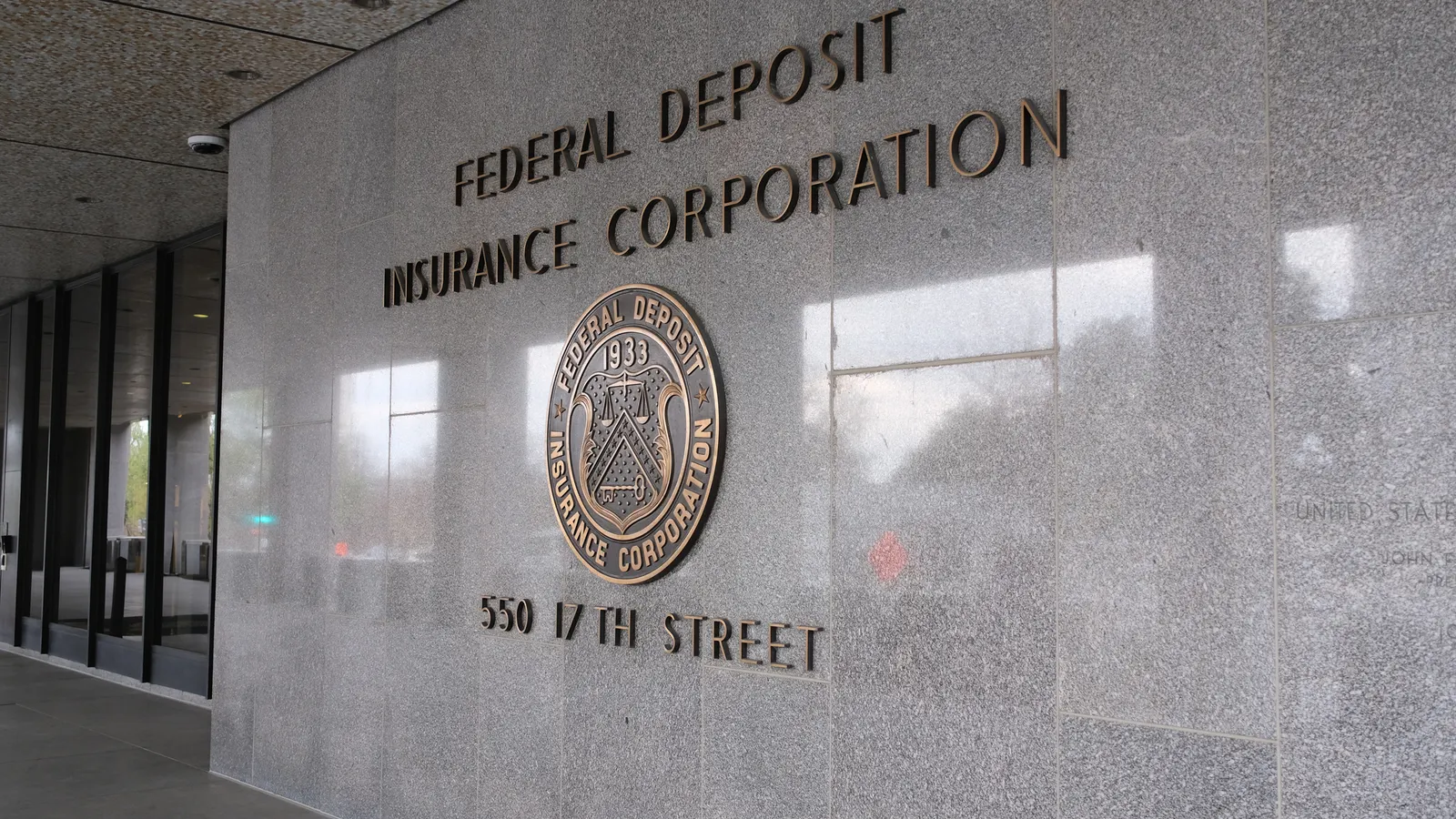
LENEXA, KANSAS — In a move that underscores the tightening regulatory grip on undercapitalized financial institutions, Kansas state regulators officially closed Lenexa-based Small Business Bank on Friday. The Federal Deposit Insurance Corporation (FDIC) was appointed as receiver, marking the fourth bank failure in the United States in 2026 and signaling continued volatility within the small-cap banking sector.
To ensure a seamless transition for depositors, the FDIC entered into a purchase and assumption agreement with The Farmers State Bank of Oakley, Kansas. Under the terms of the agreement, The Farmers State Bank will assume all deposits and acquire a significant portion of the failed institution’s assets. The closure marks the end of a protracted struggle for Small Business Bank, which had been under intense regulatory scrutiny for over three years.
The Immediate Transition: Continuity for Depositors
The FDIC confirmed that Small Business Bank’s sole location in Lenexa will reopen on Monday as a branch of The Farmers State Bank. This swift transition is a hallmark of the FDIC’s "resolution" process, designed to maintain public confidence in the banking system and prevent localized financial panics.
Customers of Small Business Bank were informed that they would automatically become depositors of The Farmers State Bank. Checks drawn on the failed bank will continue to be processed, and loan customers are advised to continue making payments as scheduled. The FDIC emphasized that all deposits, up to the legal limit, remain fully protected and accessible.
As of March 31, 2026, Small Business Bank reported total assets of approximately $73 million and total deposits of $69 million. While a small player in the broader financial ecosystem, its failure carries a projected cost of $5.7 million to the Deposit Insurance Fund (DIF). The FDIC noted that this estimate is subject to change as the receiver liquidates remaining assets and settles outstanding claims.
A Chronology of Decline: Three Years of Warnings
The failure of Small Business Bank was not a sudden event but rather the culmination of a three-year downward spiral characterized by regulatory "red flags" and failed corrective measures.
2023: The Initial Cease-and-Desist
The first major sign of trouble emerged in 2023 when the Federal Reserve issued a cease-and-desist order. This enforcement action followed an examination that revealed systemic deficiencies across the bank’s operations. Regulators cited critical weaknesses in:
- Staffing and Internal Controls: A lack of qualified personnel to manage complex financial reporting.
- Credit Risk Management: Poor oversight of the bank’s loan portfolio, leading to an accumulation of risky assets.
- IT and Third-Party Risk: Vulnerabilities in the bank’s digital infrastructure and a failure to properly vet external vendors.
2024: Compliance Failures and AML Concerns
The following year brought no relief. A joint examination by the Kansas City Fed and the Kansas Office of the State Bank Commissioner uncovered "new and continuing deficiencies." The most alarming of these involved Anti-Money Laundering (AML) compliance and risk management. In an era where financial crimes are under intense scrutiny, the bank’s inability to bolster its "know your customer" (KYC) protocols placed it in a precarious legal and operational position.
June 2026: The "Significantly Undercapitalized" Label
The final blow came in June 2026. The Federal Reserve officially designated Small Business Bank as "significantly undercapitalized." Under the Federal Deposit Insurance Act’s "Prompt Corrective Action" (PCA) framework, this label triggered a 30-day ultimatum. The bank was ordered to either:
- Increase its equity through a sale of shares.
- Find a suitable merger partner or buyer.
- Take other "necessary measures" to restore capital adequacy.
When the 30-day window expired without a viable recapitalization plan, Kansas regulators were forced to intervene to protect depositors and the integrity of the state’s financial system.
Supporting Data: Comparing the Failure to the Acquirer
The acquisition of Small Business Bank represents a strategic expansion for The Farmers State Bank of Oakley. While the failed lender struggled to maintain its footing, The Farmers State Bank has been on an aggressive growth trajectory.
The Acquirer: Farmers State Bank of Oakley
Before assuming the assets of the Lenexa lender, The Farmers State Bank reported $389 million in assets as of late March. The institution has been actively consolidating its presence in the region. Just last week, it finalized the account conversions for its acquisition of Kaw Valley State Bank. With the addition of the Lenexa branch, Farmers State Bank now operates locations in Oakley, Eudora, and Lenexa, diversifying its footprint from rural Western Kansas into the more affluent suburban corridors of the Kansas City metropolitan area.
The Cost of Failure
The estimated $5.7 million hit to the Deposit Insurance Fund (DIF) is relatively modest compared to the multi-billion dollar failures of 2023, but it highlights the cumulative pressure on the fund. The FDIC’s role as receiver involves selling the "retained assets"—those not purchased by Farmers State Bank—to recover as much value as possible for the DIF.
Official Responses and Regulatory Context
The closure was a coordinated effort between the Kansas Office of the State Bank Commissioner and federal authorities. While the FDIC serves as the primary insurer, the Federal Reserve Bank of Kansas City played a pivotal role in the oversight that led to the closure.
In statements regarding the Prompt Corrective Action directive issued in June, the Fed made it clear that the bank had exhausted its opportunities for recovery. "The safety and soundness of the banking system depend on institutions maintaining adequate capital cushions to absorb losses," a regulatory spokesperson noted (paraphrased from standard Fed protocols). "When an institution fails to meet these thresholds despite repeated warnings, closure is the only path to mitigate risk to the insurance fund."
The Farmers State Bank, for its part, welcomed its new customers. In a public notice, the bank emphasized its stability and commitment to community banking, framing the acquisition as a way to bring "robust financial services" to the Lenexa small business community that the previous bank had struggled to serve.
Wider Implications: A Resurgence of Bank Failures?
Small Business Bank’s collapse is part of a troubling trend in 2026. After a relatively quiet period in 2024 and 2025, bank failures appear to be accelerating.
The 2026 Failure Log
- Metropolitan Capital Bank & Trust (Chicago, IL): Failed in January due to unsafe practices and impaired capital.
- Community Bank & Trust – West Georgia (LaGrange, GA): Closed in May after failing to manage a growth strategy that outpaced its board oversight and capital reserves.
- Kentland Federal Savings and Loan Association (Kentland, IN): Shuttered on July 10, just weeks before Small Business Bank, after regulators found a "substantial dissipation of assets."
- Small Business Bank (Lenexa, KS): Closed July 2026.
Comparing 2023–2026
The industry is closely watching these numbers. In 2023, the U.S. saw five bank failures, though those were systemic "mega-failures" including Silicon Valley Bank and First Republic. In 2024 and 2025 combined, only four banks failed (two each year). With four failures already recorded in the first seven months of 2026, analysts are concerned that the "higher-for-longer" interest rate environment and tightening credit conditions are finally breaking the weakest links in the community banking chain.
The "Small Bank Squeeze"
The failure of Small Business Bank illustrates the "squeeze" currently felt by small, independent lenders. These institutions face a triple threat:
- Regulatory Burden: Small banks must comply with the same rigorous AML and IT security standards as larger peers but have fewer resources to do so.
- Capital Competition: Raising equity is difficult for small-town lenders in a market where investors favor high-growth tech or large-scale diversified financials.
- Operational Risk: As seen in the Lenexa case, a failure in "credit administration" or "internal controls" can quickly lead to a death spiral if the bank does not have a large enough capital buffer to survive the subsequent regulatory "cease-and-desist" orders.
Conclusion
The closure of Small Business Bank is a cautionary tale for the banking industry. It serves as a reminder that regulatory patience has its limits, and "prompt corrective action" is more than just a bureaucratic phrase—it is a countdown.
As the Lenexa branch reopens under the Farmers State Bank banner on Monday, the immediate crisis for local depositors is over. However, for the broader banking sector, the event raises uncomfortable questions about how many more "significantly undercapitalized" institutions are currently operating on borrowed time. For now, the FDIC’s swift action has contained the damage, but the 2026 trendline suggests that the agency’s receivership teams may remain busy for the remainder of the year.