








As Air India navigates a period of historic transformation under the Tata Group’s ownership, the airline is attempting to balance the rapid modernization of its fleet with the heavy lifting of rebranding its premium passenger experience. A recent 9-hour-and-25-minute flight from Delhi (DEL) to Frankfurt (FRA) aboard a Boeing 777-300ER provides a fascinating, if paradoxical, snapshot of this transition. While the carrier’s ground facilities have seen a quantum leap in quality, the experience in the air remains a study in contrasts between potential and execution.
The Ground-Air Disconnect: The First Class Lounge Delhi
The primary catalyst for this evaluation was the recently unveiled Air India First Class Lounge at Delhi’s Indira Gandhi International Airport. The lounge is a triumph—an oasis of sophistication that signals a clear intent to compete with the world’s elite carriers. It is, by all accounts, a spectacular facility that reflects the "new" Air India.

However, this sets a high bar that the current Boeing 777 first-class cabin struggles to clear. The dilemma for the premium traveler is stark: the lounge offers a world-class prelude to an inflight experience that feels, at best, like a legacy relic and, at worst, an identity crisis. While the lounge is a beacon of what the airline could become, the flight itself highlights the significant operational gaps that still need bridging.
Chronology of the Experience: A Last-Minute Swap
The flight was originally slated to be operated by one of the airline’s ex-Etihad Boeing 777-300ERs, which feature a superior suite-style first-class product. However, in the mercurial world of aviation, aircraft swaps occur with little warning. Passengers were shifted to one of Air India’s "native" 777-300ERs, equipped with a 1-2-1 configuration offering just four first-class seats.

While these aircraft have developed a reputation for being "horror stories" in some circles—often cited for aging interiors and maintenance issues—the reality of this particular journey was surprisingly stable. The cabin, having undergone a light refurbishment, was in decent, albeit dated, condition.
The sequence of the flight proceeded as follows:

- Boarding and Initial Impressions: The cabin was functional and clean, a welcome departure from reports of deteriorating hardware.
- The Technical Hurdles: Maintenance issues were minor but present, notably a lopsided tray table that made dining a game of balance. Furthermore, the absence of Wi-Fi and the presence of an IFE (In-Flight Entertainment) system that felt like a relic from the early 2000s underscored the disparity between the hardware and modern traveler expectations.
- The In-Flight Rest: Despite the dated technology, the seat itself provided an exceptionally restful environment. As the sole passenger in the first-class cabin, the atmosphere was perfectly controlled—dark, quiet, and cool. A six-hour period of uninterrupted sleep, a rarity for many frequent flyers, served as the flight’s greatest success.
- Dining and Amenities: Service remained consistent throughout, with the meal service transitioning between breakfast and lunch, reflecting the 4:00 AM departure and 10:00 AM arrival.
Supporting Data: The "Soft Product" Dilemma
Perhaps the most jarring aspect of the journey was the lack of distinction between first class and business class. In the aviation industry, the "soft product"—the service, amenities, and dining—is what differentiates a premium experience.
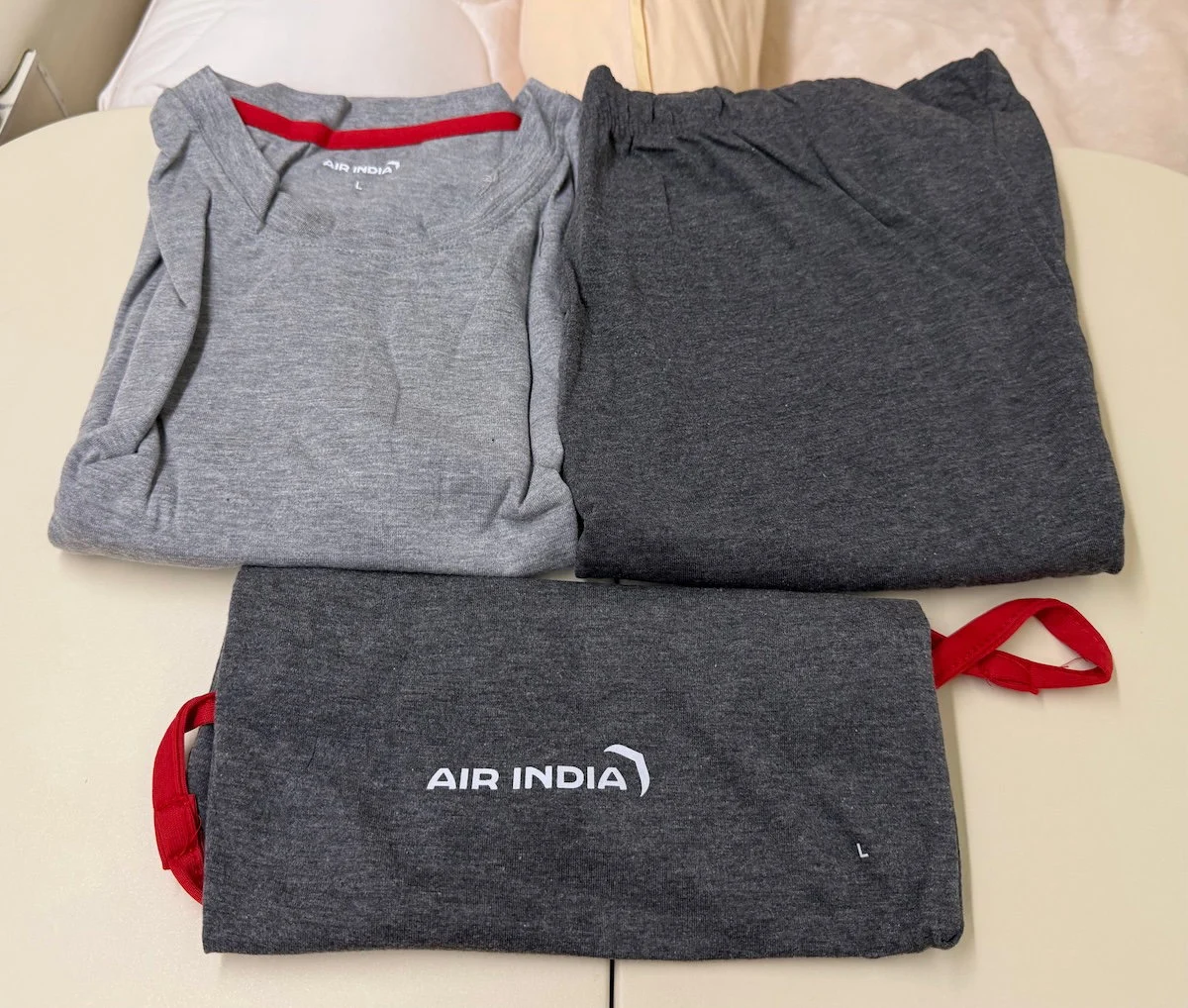
Air India has made commendable strides in upgrading its business class offerings across its A350 and A320neo fleets. Yet, in first class, these upgrades appear to have stalled. The amenity kits were virtually identical to those provided in business class, and the pajamas offered no "first class" distinction.

When analyzing the dining experience, the quality of the food was undeniably high—the Indian cuisine was tasty and authentic—but the presentation and service flow mirrored that of business class. There was no "wow" factor, no refined tea service, and little to suggest a premium tier above the standard business class offering. The only significant deviation was the alcohol selection, with a commendable Charles Heidsieck Blanc de Blancs champagne serving as the lone signal that one was indeed in the first-class cabin.
The Paradox of Modernization
Why does Air India maintain a first-class product that feels neglected when it is clearly pouring resources into its business class?

There is an implicit industry trend toward the "business-class-plus" model, where airlines consolidate their premium offerings to streamline logistics. However, Air India seems committed to retaining first class. If the airline intends to keep this cabin, it faces a structural challenge: it must either elevate the soft product to justify the price premium or risk cannibalizing its own revenue.
Currently, the carrier’s new business class product is arguably more attractive than the legacy first-class offering when one accounts for modern connectivity (Wi-Fi), updated IFE screens, and more contemporary seat design. The lack of investment in the "first class" identity suggests that the airline is currently treating it as an afterthought rather than a flagship experience.

Implications for the Future
The implications for Air India are twofold. First, the airline must decide if it wants to be a true "first-class" carrier or a superior business-class provider. If it chooses the former, it must commit to a total overhaul of the cabin environment, including the integration of connectivity and a more distinct, high-touch service model.
Second, the "rebranding" of Air India relies heavily on consistency. A passenger who enjoys a stellar lounge experience at Delhi and is then served a meal identical to the one in business class, on an outdated seat, will be left confused. The current experience is a "mixed bag"—not the disaster that some might fear, but certainly not the beacon of luxury that the brand aspires to represent.

Final Assessment
To summarize the current state of Air India’s Boeing 777 first class:
- Hardware: Functionally adequate but technologically obsolete.
- Service: Warm and professional, yet hampered by a lack of differentiation.
- Rest: Exceptional, primarily due to the cabin’s privacy and the ability to control one’s environment.
- Value: Currently difficult to justify, especially when compared to the airline’s own refreshed business-class products.
As the Tata Group continues to overhaul the airline, the first-class cabin remains the "missing link" in their otherwise ambitious transformation. The potential for a world-class experience is clearly visible in the new lounge; it is now simply a matter of bringing that same vision to the skies. Until the airline decides whether its first class should be a luxury hallmark or a relic of the past, travelers are advised to manage their expectations: you will arrive well-rested, but you will not necessarily be flying a "first-class" product in the modern, luxury sense of the term.

The path forward for Air India is clear: bridge the gap between its world-class ground facilities and its evolving in-flight product. Until then, the airline remains a carrier in transition—a bird in the middle of a difficult, yet promising, molting process.