









The residential real estate landscape in 2026 is currently defined by a persistent, if cautious, resilience. According to the latest Q3 BiggerPockets Pulse survey, which tracks the sentiment and behavior of a community exceeding three million real estate investors, the market is currently navigating a period of significant recalibration. As geopolitical tensions, inflationary pressures, and structural shifts in financing continue to evolve, the average investor is increasingly adopting a “wait and see” posture, effectively flattening expectations for the remainder of the year.
The Shrinking Pulse: A Quantitative Decline in Sentiment
The “Pulse Index,” a proprietary metric used to quantify investor sentiment, has tracked a steady, downward trajectory throughout 2026. After opening the year at a robust 108 points in Q1, the index slipped to 102 in Q2 and has now receded to 96 points in Q3. While this 96-point mark keeps the index within the “neutral” territory, the consistent erosion of optimism highlights a growing weariness among market participants.
The drivers behind this cooling sentiment are multifaceted. The primary friction points identified by respondents include the increasingly elusive nature of “good deals” and the mounting difficulty of securing favorable capital. Furthermore, investors are reporting a compounding pressure from rising operational costs. Property taxes, surging insurance premiums, and the general inflation of maintenance expenses are collectively eroding cash flow, forcing investors to tighten their underwriting standards and demand more significant margins of safety.
Chronology of the 2026 Market Shift
The evolution of investor sentiment throughout the year reveals a clear transition from speculative optimism to guarded pragmatism.
- Q1 2026: Investors began the year with relatively high expectations, buoyed by the hope that interest rate relief would arrive sooner rather than later. The Pulse Index stood at 108, and nearly 40% of participants were banking on mortgage rates in the 5.5% to 5.99% range.
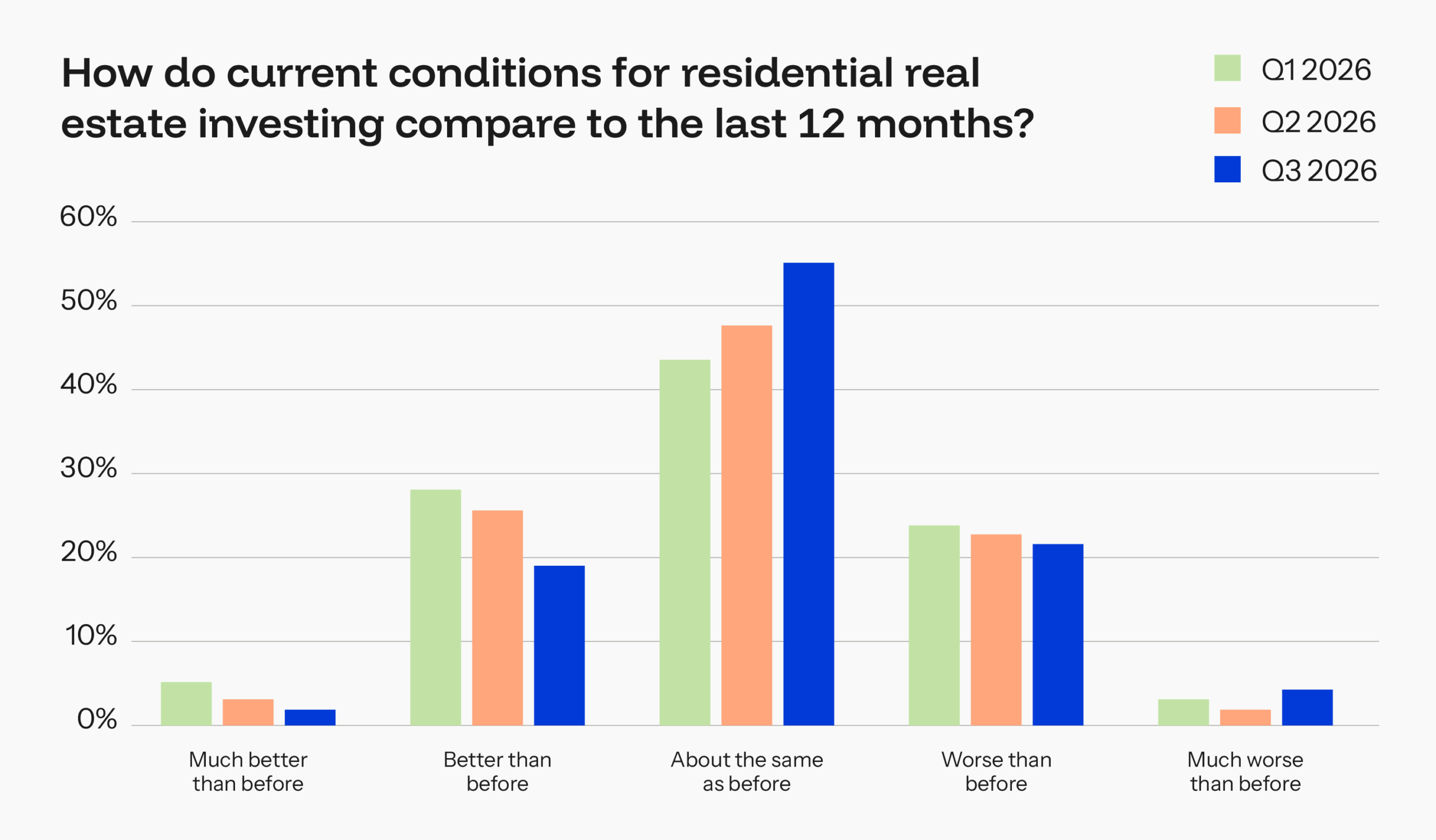
- Q2 2026: As the economic reality of a "higher for longer" interest rate environment set in, the index fell to 102. The focus shifted from potential growth to portfolio maintenance, and the "about the same" consensus began to grow as the dominant market narrative.
- Q3 2026: The index bottomed out at 96. The sentiment has officially shifted toward a "holding pattern." Investors are no longer waiting for a market correction or a significant rebound; they are actively underwriting their portfolios to accommodate current interest rates and elevated holding costs as the new baseline.
Supporting Data: Where Investors Are Placing Their Bets
Despite the pessimistic shift in the Pulse Index, the data suggests that investors are not retreating from the market—they are simply changing their tactics.
The Persistence of Offensive Strategy
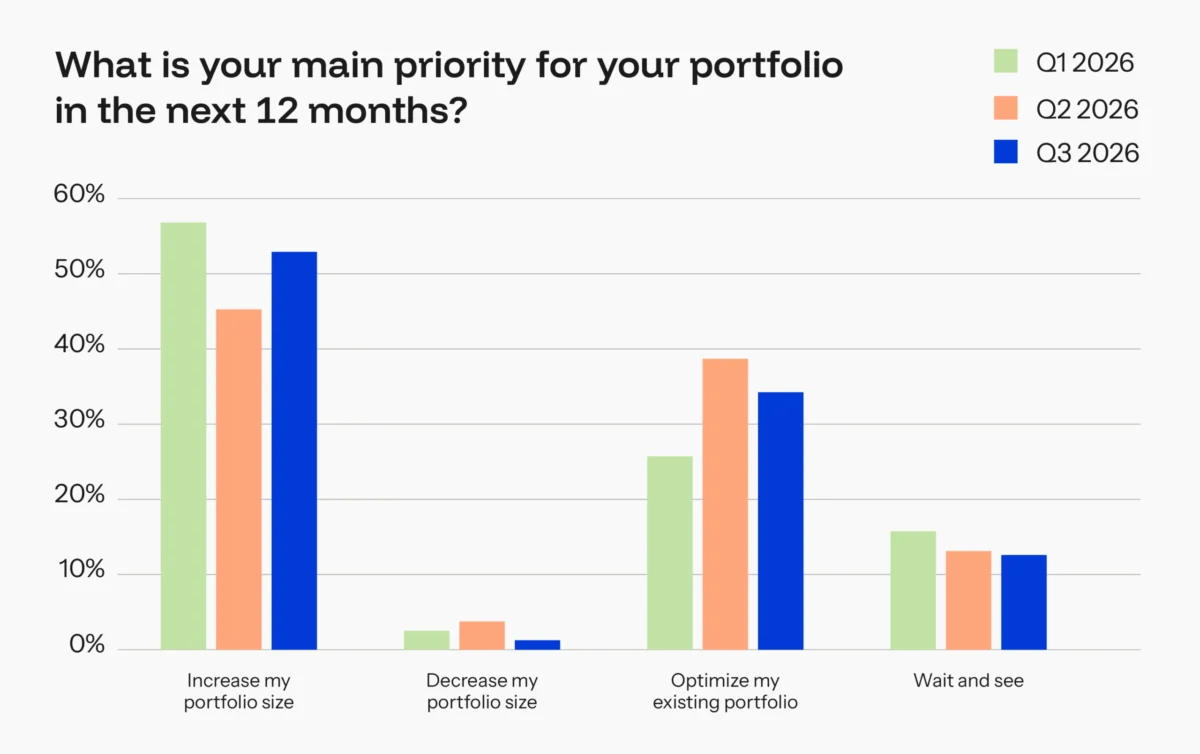
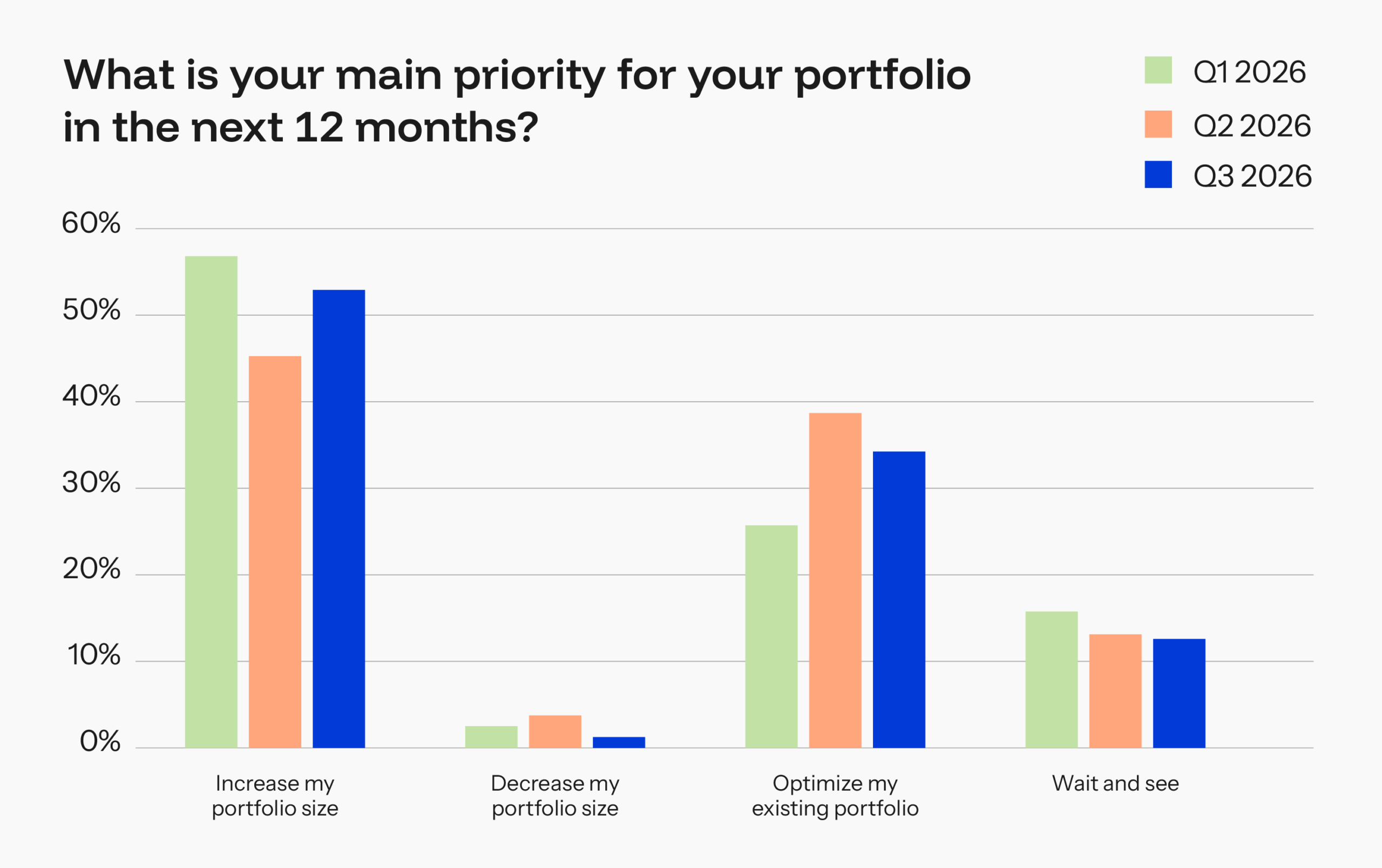
Interestingly, 53% of respondents indicated that their primary priority for the next 12 months is to increase their portfolio size. This is a marked rebound from the 45% who held that view in Q2. This suggests that while sentiment is lower, the appetite for growth remains high among those who can navigate the current inventory constraints. Another 34% are prioritizing the optimization of their existing assets, while a negligible 1% are looking to divest.

The Return to Durable Strategies
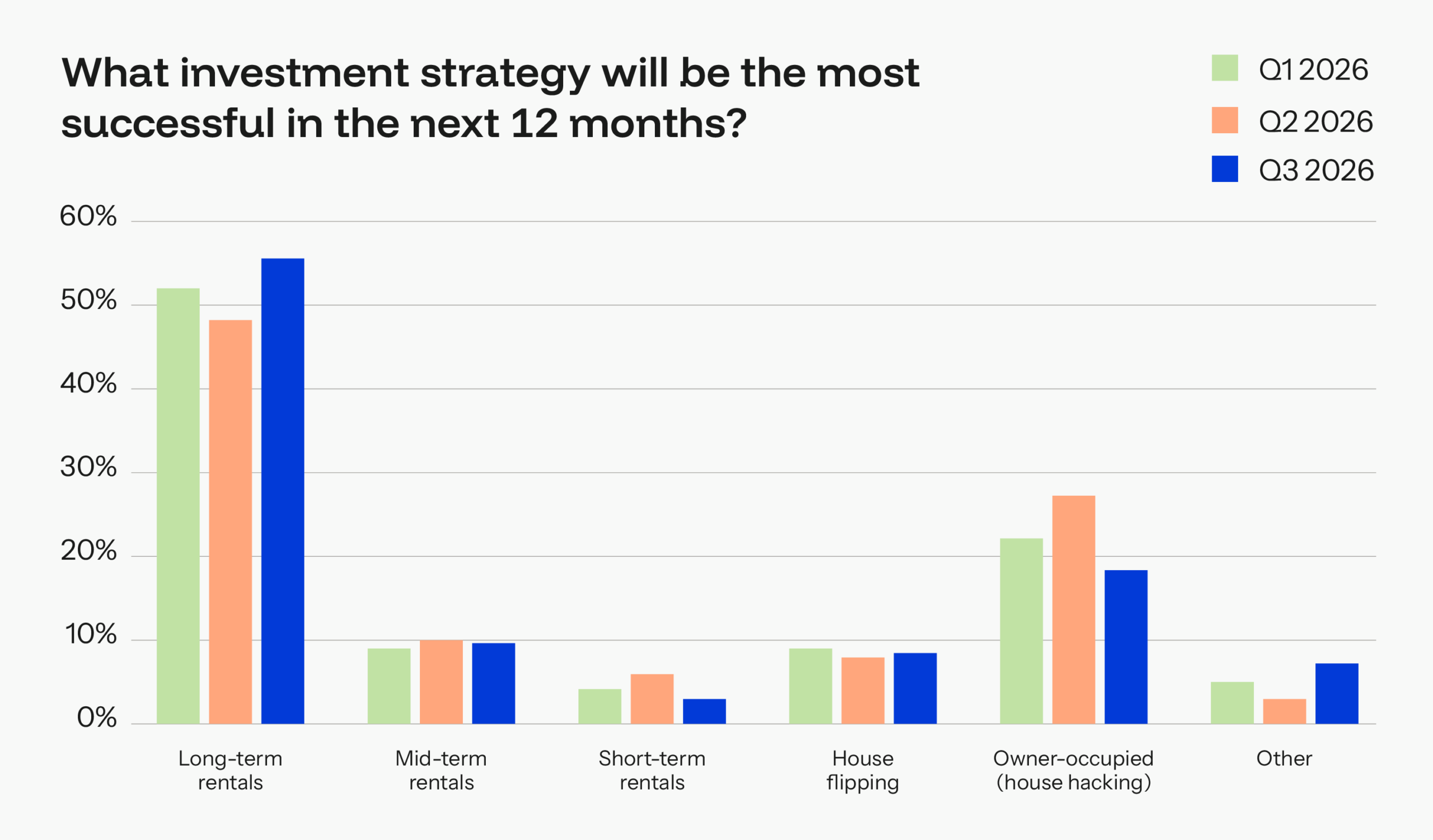
When asked which strategy would prove most successful over the coming year, 55% of investors pointed to long-term rentals. This represents a return to fundamentals. In times of uncertainty, investors favor the lower turnover and relative cash-flow stability offered by long-term leases. By contrast, short-term rentals have fallen out of favor, garnering support from only 3% of respondents, as regulatory pressures and market saturation dampen their appeal.
Geographic Preferences: The Midwest Advantage
Geographically, the Midwest continues to dominate as the preferred region for investment. With 45% of investors naming it the region with the best potential, it remains the gold standard for those seeking affordability and reliable cash flow. The Southeast and Florida followed with 22.5%, while the Southwest and Texas attracted 13% of investor interest.
The Challenge of Execution: Squeezed by Costs and Supply
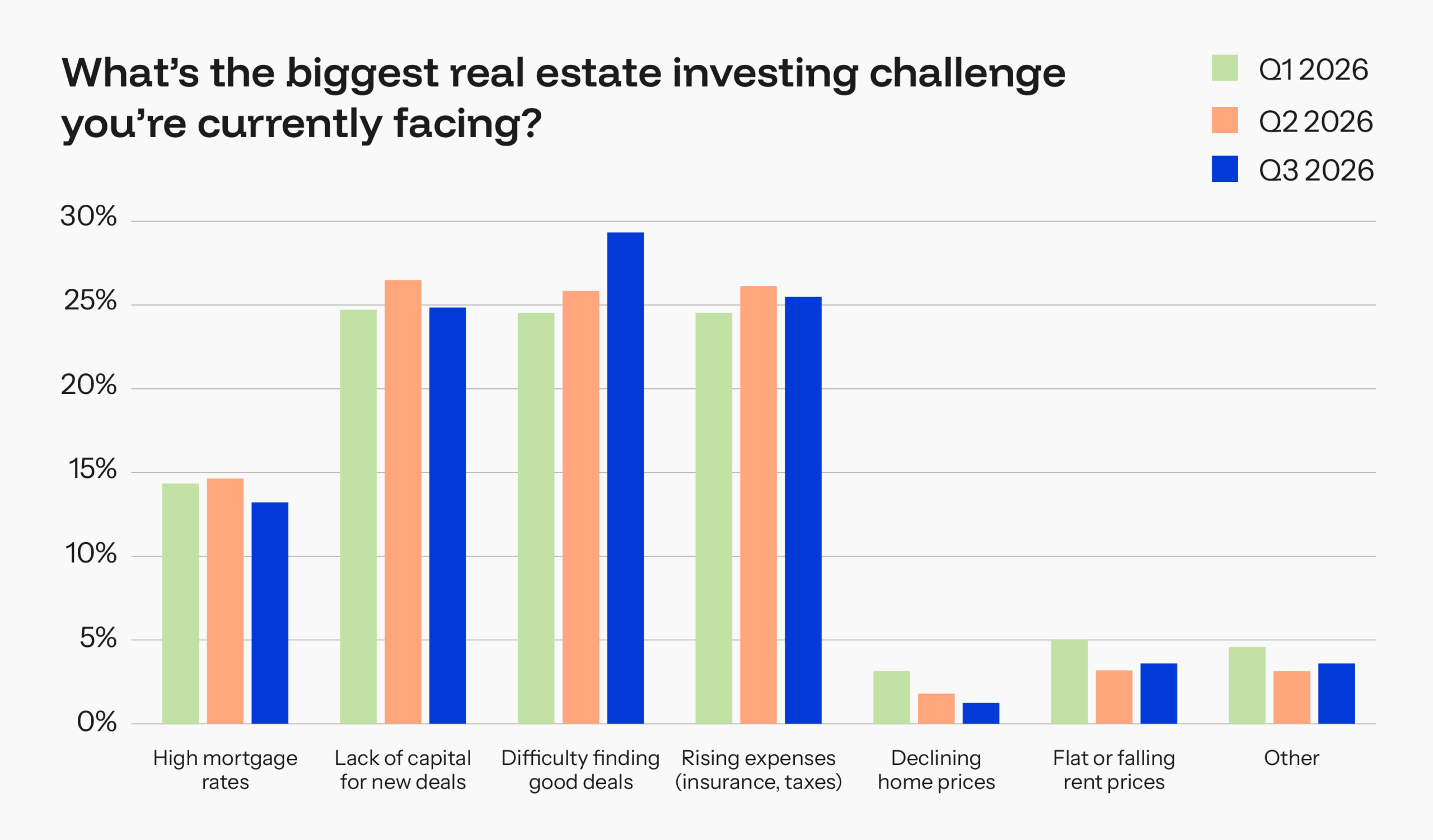
The primary hurdles facing investors today are a lack of inventory and the rising cost of capital. Nearly 30% of investors cited the “difficulty of finding good deals” as their top challenge. This is not merely a matter of high prices; it is a matter of mathematical feasibility.
Current vs. Future Headwinds
When asked to project the biggest challenges 12 months out, the narrative shifts slightly from the difficulty of acquiring assets to the difficulty of holding them. While finding deals remains the #1 priority (28.5%), concerns about rising expenses—specifically insurance and property taxes—remain firmly at 25.5%. Interestingly, the lack of capital is expected to become less of a hurdle as the year progresses, suggesting that investors are becoming more adept at securing financing or that lenders are adjusting to the new interest rate environment.
The Interest Rate Reality Check
Perhaps the most significant adjustment in investor psychology is the acceptance of elevated mortgage rates. Only 17.5% of investors now believe rates will return to the 5.5% range. The vast majority (75%) expect 30-year fixed rates to remain firmly in the 6% to 6.99% range a year from now. Investors have essentially stopped waiting for the "cheap money" era to return, opting instead to focus on negotiation and price adjustments to make deals work.
Official Perspectives: The Fed, Geopolitics, and Technology
The survey provides a fascinating look at how investors perceive broader economic forces. Regarding the potential leadership of Kevin Warsh at the Federal Reserve, the overwhelming response is one of neutrality (67%). This indicates a pragmatic detachment; investors are less concerned with individual political figures and more focused on the hard data of inflation and interest rates.
The Inflation Hedge
Inflation remains a double-edged sword. While 43% of investors feel that inflation makes them less likely to invest, a core group continues to view real estate as a necessary hedge. This divide highlights the difference between the "cautious observer" and the "active investor" who continues to heed the classic advice of Warren Buffett: to remain active when the general market is fearful.
Geopolitical and AI Factors
The perception of risk regarding the ongoing conflict in Iran has softened, with a growing percentage of investors (47%) now viewing it as having a neutral impact on the domestic real estate market. This is a significant change from Q2, suggesting that the initial alarmism has been replaced by a more tempered assessment of the conflict’s actual economic reach.

Meanwhile, the conversation surrounding Artificial Intelligence (AI) and its impact on job displacement is evolving. While 49.5% still see the impact as neutral, the share of investors who anticipate a negative impact on housing demand has climbed to 37.5%. This reflects a growing anxiety that white-collar automation could alter rental demand patterns in major urban centers.
Implications for the Future
The 2026 Q3 data reveals an investor class that has matured significantly over the course of nine months. The days of reacting to every headline with volatility are over; in their place is a methodical, long-term approach.

The implications for the broader housing market are clear:
- Inventory stagnation will likely continue. Because investors are not finding deals that "pencil out," the transaction velocity may remain suppressed, keeping downward pressure on home price appreciation while keeping rent prices relatively stable.
- The "Flight to Quality" will accelerate. As investors focus on long-term rentals and look to optimize existing portfolios, properties that require heavy deferred maintenance or are in high-risk insurance zones will likely see lower demand.
- Efficiency is the new growth engine. With margins compressed by taxes and insurance, the investors who succeed in the next 12 months will be those who master expense management and operational efficiency rather than those who rely solely on market appreciation.
Ultimately, the BiggerPockets Pulse survey for Q3 2026 paints a picture of a sector that is not broken, but is certainly being tested. Investors are responding to these tests by recalibrating their expectations, focusing on fundamentals, and preparing for a prolonged period of equilibrium. The "resilient investor" of 2026 is one who has traded the hope of a quick recovery for the steady, if slower, grind of building wealth in a high-cost environment.