






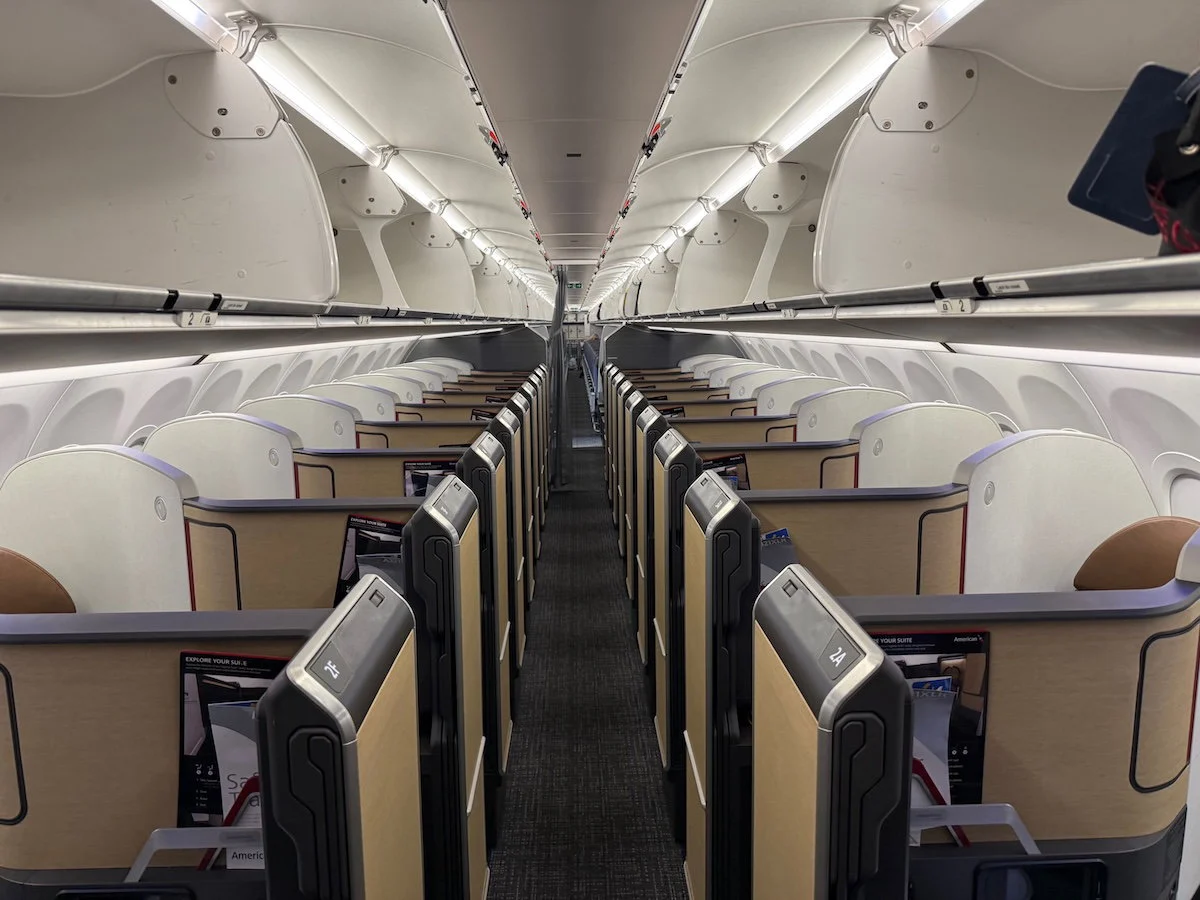
In the age of social media, the cabin of a commercial aircraft has increasingly become a stage for public disputes. A recent incident aboard an American Airlines Airbus A321XLR—a state-of-the-art aircraft designed for long-haul comfort—has ignited a firestorm of debate across Instagram and beyond. The conflict, which occurred on July 21, 2026, during flight AA171 from New York’s John F. Kennedy International Airport (JFK) to Los Angeles (LAX), involves a heated confrontation over a business-class seat swap that was not as simple as it first appeared.
At the center of the controversy is a passenger who, after being upgraded to business class, recorded a video confrontation with a fellow traveler, accusing her of attempting to "trick" him into occupying a broken seat. However, a deeper examination of the incident, including follow-up disclosures, suggests that the reality of the situation may be far more complex, pointing toward standard airline operational procedures rather than an act of passenger malice.
The Chronology of the Conflict
The incident began in the quiet, early-morning hours of a transcontinental flight. The narrator of the viral video, a frequent flyer with American Airlines, was traveling in seat 6A after receiving a complimentary upgrade. According to his account, he was in a "daze" shortly after boarding when a female passenger in seat 3F approached him, requesting a seat swap.
Initially, the man agreed, operating under the assumption that the woman wished to sit near a travel companion or desired a different view. However, his attitude shifted dramatically upon discovering that the primary reason for the request was that seat 3F was malfunctioning and would not recline. Feeling misled, the passenger confronted the woman, who had already relocated to his original seat, 6A.
The video captures a tense exchange. The man is seen standing over the woman, recording her with his smartphone while demanding she vacate his seat. The woman, appearing composed, asserts, "You were moved, sir," suggesting that the decision to relocate him was not a personal choice but a directive. Despite her insistence, the man continued to film her, broadcasting the interaction to his social media followers, until she eventually relinquished the seat. The encounter concluded with a fellow passenger telling the man, "Bro, you almost got robbed," reinforcing the man’s belief that he had successfully defended his rightful place.
The Reality of Airline Operational Protocol
While the viral video frames the situation as a moral victory for the narrator, aviation industry experts and observers point to a crucial detail: the flight attendant’s involvement. In a follow-up video, the narrator inadvertently revealed that the flight crew had issued him an ultimatum: he could either swap seats, accept a downgrade to his original economy seat, or be removed from the flight entirely.
This revelation shifts the narrative from a "sneaky passenger" trope to a standard, albeit frustrating, airline procedure. When a seat becomes inoperable in a premium cabin before takeoff, airlines must manage the situation according to established priority tiers. Because the narrator was an upgrade recipient—not a passenger who had paid the full fare for a business-class ticket—he sat at the bottom of the priority list for seat integrity.
When a paid seat malfunctions, the crew is obligated to provide the paying customer with a working seat. If the only functional seat available is one occupied by a non-revenue or upgraded passenger, that passenger is effectively "bumped" back to their original cabin or a different seat. The woman’s comment, "You were moved, sir," was likely not an attempt to trick him, but a repetition of the instructions provided by the flight crew.
Supporting Data: The Hierarchy of Upgrades
To understand the friction in this incident, one must understand the economics of the airline loyalty ecosystem. Frequent flyers are often granted complimentary upgrades as a reward for their patronage. However, these upgrades are subject to space availability and seat serviceability.
In the aviation industry, "revenue integrity" is paramount. A passenger who pays thousands of dollars for a lie-flat business class seat enters into a contract for that specific service. When that service fails—in this case, a broken recline mechanism—the airline is contractually and ethically bound to rectify the situation. In many cases, the gate agent or the flight attendant will look for the most recently upgraded passenger to "re-accommodate" back to their original booking class to resolve the discrepancy.
The narrator’s claim that the woman "didn’t even say please" or that she was being "entitled" ignores the fundamental reality that he was a guest in the premium cabin, whereas she was a paying customer. His decision to record the confrontation, post it online, and effectively bully a fellow passenger into abandoning a seat she was likely directed to by the crew, represents a significant breach of cabin etiquette.
Official Airline Policy and Legal Implications
Airlines have stringent policies regarding the behavior of passengers on board. Recording other passengers without their consent is discouraged and, in many jurisdictions and under specific airline Codes of Conduct, can be grounds for removal from the flight. The fact that the passenger was able to "bulldoze" his way back into his seat and intimidate a fellow traveler raises questions about the crew’s control over the cabin environment.
Furthermore, airline crews are tasked with maintaining safety and order. If a flight attendant issues an ultimatum—move or be downgraded—it is not a request; it is a final, non-negotiable instruction. By refusing to comply and instead engaging in a public confrontation, the passenger arguably violated his "Contract of Carriage."
Typically, airlines expect passengers to follow crew instructions to ensure a smooth departure. If a passenger disrupts the cabin, creates a hostile environment, or films other travelers in a way that causes distress, the captain has the authority to remove that individual from the flight. That this passenger remained on the flight suggests either a lack of awareness by the flight crew regarding the severity of his actions or a desire to avoid further delays to a 6:00 AM departure.
Implications for Future Travel
The "Seat Swap" incident serves as a cautionary tale for both airlines and travelers. It highlights three major implications for the industry:
- The Digital Privacy Gap: The ubiquity of smartphones means that every passenger is now a potential filmmaker. This creates a challenging environment for crew members who are already managing complex operational issues. Airlines may need to update their policies to explicitly prohibit the non-consensual filming of other passengers to prevent harassment.
- Transparency in Upgrades: The resentment displayed by the narrator stems from a lack of understanding regarding his status as an upgraded passenger. Airlines should perhaps provide clearer communication when an upgrade is "conditional" or subject to the functional status of the cabin, though this is difficult to manage in the fast-paced environment of boarding.
- The Erosion of Cabin Decorum: The rise of "influencer culture" in travel has fostered a sense of entitlement where passengers believe their social media narrative is more important than the rules of the flight. This incident proves that being "right" in one’s own mind does not excuse the behavior of harassing fellow travelers or undermining the authority of the flight crew.
Conclusion
The confrontation on American flight AA171 is less about a "stolen seat" and more about the collision between personal entitlement and corporate responsibility. While the narrator felt he was the victim of a deceptive scheme, the evidence points to a scenario where a crew was simply trying to resolve a mechanical issue for a paying customer.
By choosing to turn a private disagreement into a viral confrontation, the passenger not only acted against the interests of his fellow travelers but also demonstrated a profound misunderstanding of the terms and conditions of his own upgrade. As the airline industry continues to navigate the complexities of cabin service, one thing remains clear: the sky is not a space for public shaming, and the seat you occupy is ultimately subject to the needs of the flight—and the directions of the crew—above all else.