







WASHINGTON, D.C. — In a move that signals a burgeoning confrontation between the legislative branch and the executive’s financial regulators, Senator Elizabeth Warren (D-MA) has formally requested a federal investigation into the Commodity Futures Trading Commission (CFTC). The request, directed to the Government Accountability Office (GAO), alleges that a "precipitous drop" in enforcement activity and a massive reduction in personnel have left the nation’s derivatives markets vulnerable to fraud and systemic instability.
The Senator’s intervention comes at a critical juncture for the CFTC, an agency that has seen its headcount shrink by a quarter since the second Trump administration took office in January 2025. As the agency grapples with expanding mandates over cryptocurrency and prediction markets, critics argue that the internal "hollowing out" of the commission represents a strategic retreat from financial oversight.
Main Facts: The Allegation of Regulatory Paralysis
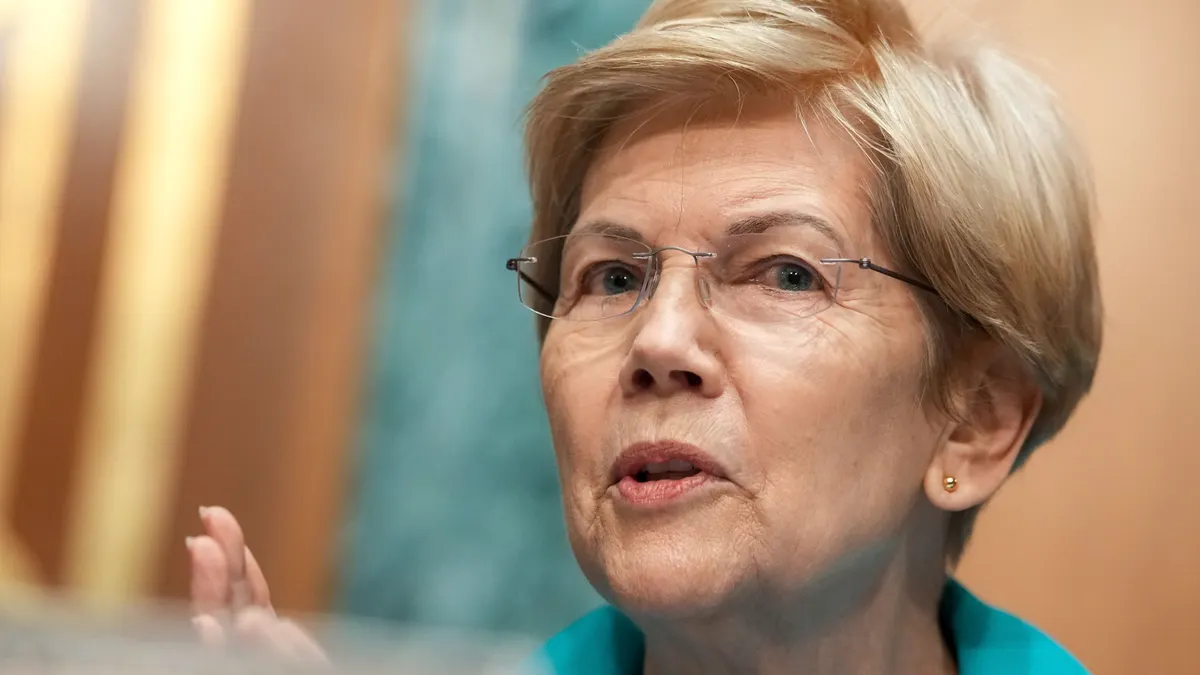
Senator Elizabeth Warren, a senior member of the Senate Banking Committee and a long-time advocate for stringent financial regulation, sent a detailed letter on Tuesday to Orice Williams Brown, the acting comptroller of the GAO. The core of Warren’s argument is that the CFTC is no longer capable of fulfilling its statutory mandate to protect market participants and the public from fraud, manipulation, and abusive practices.
"The CFTC may be inhibited in meeting [its] mandate due to staffing cuts that threaten to weaken its enforcement," Warren wrote. She specifically requested that the GAO—the non-partisan "congressional watchdog"—examine the legality and impact of recent staff reductions.
The request focuses on three primary areas of concern:
- Staffing Depletion: A 25% reduction in the agency’s workforce since January 2025.
- Enforcement Collapse: A dramatic statistical decline in the number of enforcement actions and the total monetary relief collected.
- Industry Alignment: Allegations that the timing and nature of staff cuts may have been designed to favor the very industries the CFTC is tasked with policing.
The GAO has confirmed receipt of the letter, stating it is currently "working through" the standard process to determine the scope and timing of a potential investigation.
Chronology: From Robust Enforcement to Internal Buyouts
To understand the current friction, one must look at the trajectory of the CFTC over the last 24 months. The transition from the 2024 fiscal year to the current 2026 environment reveals a stark shift in institutional priorities.
- Fiscal Year 2024: Under previous leadership, the CFTC was on a high-water mark of activity. The agency brought 58 enforcement actions, resulting in a record-breaking $17.1 billion in monetary relief. This period was characterized by aggressive policing of the digital asset space and traditional derivatives markets.
- January 2025: Following the inauguration of President Donald Trump, a new regulatory philosophy took hold. Michael Selig was appointed as Chairman of the CFTC, signaling a pivot toward "regulatory streamlining" and a focus on "market innovation" over enforcement.
- January 2025 – June 2026: Within eighteen months of the administration change, the CFTC’s workforce began to dwindle. While Chairman Selig publicly maintained that the agency was actively hiring, internal reports suggested otherwise.
- June 2026: Reports surfaced via Politico that the CFTC was offering widespread buyouts and early retirement packages to senior staff. This maneuver is often viewed by critics as a way to "purge" career civil servants and experienced investigators without the legal hurdles of direct layoffs.
- July 2026: Senator Warren’s letter marks the first major legislative effort to halt this trend, framing the staff departures not as "efficiency gains" but as a threat to national financial security.
Supporting Data: The Numbers Behind the Decline
The statistics cited by Senator Warren and corroborated by recent market reports paint a picture of an agency in retreat.
The Enforcement Gap
The most jarring metric is the collapse in monetary penalties. In 2024, the CFTC secured $17.1 billion. In the year leading up to January 2026, that figure plummeted to just $1 billion—a 94% decrease in financial recovery. Similarly, the number of individual enforcement actions fell from 58 to 11 over the same period.
Staffing and Jurisdiction
The 25% reduction in staff is particularly significant given that the CFTC’s jurisdictional footprint has expanded.
- Derivatives and Swaps: Since the 1974 creation of the agency and the subsequent 2010 Dodd-Frank Act, the CFTC has been responsible for the $600 trillion (notional) global derivatives market.
- Prediction Markets: In April 2026, the CFTC asserted exclusive jurisdiction over prediction markets (platforms where users bet on the outcome of future events), requiring a new cadre of specialized investigators.
- Cryptocurrency: Ongoing "crypto market structure" legislation in Congress is expected to hand the CFTC primary oversight of digital asset spot markets.
Warren argues that it is mathematically impossible for the agency to manage these new, complex responsibilities with a staff that is three-quarters the size it was two years ago. The Senator’s letter suggests that the "staffing cuts… may have aligned with industry interests," implying that a weakened regulator is exactly what major financial institutions and crypto exchanges lobbied for.

Official Responses: Silence and Standard Procedures
The response from the agencies involved has been measured, reflecting the high stakes of the inquiry.
The GAO Response
A spokesperson for the GAO confirmed that the agency is reviewing Warren’s request. "GAO has a process it goes through to determine whether we do work and when," the spokesperson said. Historically, the GAO takes several weeks to "scope" an investigation before assigning a team. If the GAO proceeds, it will have the power to audit CFTC personnel records, internal emails, and budget allocations.
The CFTC Stance
Chairman Michael Selig has not directly addressed the Senator’s letter. However, his previous public communications have attempted to frame the agency’s status as one of renewal. In recent social media posts, Selig claimed the "CFTC is hiring," though he did not reconcile this with the reported buyout programs. A formal CFTC spokesperson declined to comment on the record regarding the GAO request.
Industry Reaction
While major financial trade groups have remained officially neutral, several lobbying firms representing the fintech and derivatives sectors have previously lauded Chairman Selig’s "common-sense approach" to regulation, arguing that the 2024 enforcement levels were "excessive" and "stifled innovation."
Implications: What a Weakened CFTC Means for the Global Economy
The ramifications of a hollowed-out CFTC extend far beyond Washington’s "alphabet soup" of agencies. The derivatives market is the "plumbing" of the global financial system; it allows farmers to hedge crop prices, airlines to lock in fuel costs, and banks to manage interest rate risks.
1. Increased Systemic Risk
The 2008 financial crisis was fueled in large part by opaque, unregulated derivatives (credit default swaps). The Dodd-Frank Act was designed to ensure that the CFTC had the eyes and ears to prevent such a buildup of "hidden" risk. Senator Warren’s concern is that without sufficient staff to monitor these complex trades, the "plumbing" could once again become clogged with toxic assets, leading to another taxpayer-funded bailout.

2. The ‘Wild West’ of Crypto
With the CFTC poised to become the primary regulator for Bitcoin and other digital assets, the staffing shortage is particularly alarming to consumer advocates. If the agency lacks the technical expertise to investigate blockchain-based fraud, the crypto market could remain a "Wild West," where retail investors have little protection against sophisticated actors.
3. Regulatory Capture
The most serious of Warren’s allegations is the "alignment with industry interests." Regulatory capture occurs when an agency, created to act in the public interest, instead acts in favor of the commercial or political interests of the industry it is tasked with regulating. If the GAO finds that buyouts were targeted specifically at aggressive enforcement officers or those overseeing "high-friction" industries, it could trigger a wider congressional inquiry and potential calls for leadership changes at the commission.
4. The Legal Precedent of Staffing Cuts
Warren’s letter also asks the GAO to review the "extent to which [cuts] complied with federal laws and regulations." Federal agencies are bound by strict Civil Service rules. If the GAO determines that the buyouts were used as a pretext for "prohibited personnel practices"—such as targeting employees based on their political leanings or their commitment to enforcement—the CFTC could face significant legal liability and a mandate to reinstate departed staff.
Conclusion: A Looming Battle for Oversight
As the GAO begins its preliminary review, the tension in Washington is palpable. For Senator Warren, the fight is about preserving the post-2008 regulatory architecture. For the Trump administration and Chairman Selig, it is about a fundamental shift toward a leaner, less "adversarial" government.
The outcome of the GAO investigation will likely determine whether the CFTC remains a formidable "cop on the beat" or becomes a cautionary tale of how quickly a federal regulator can be dismantled from within. With the derivatives market growing more complex by the day, the stakes for the American taxpayer have rarely been higher.