







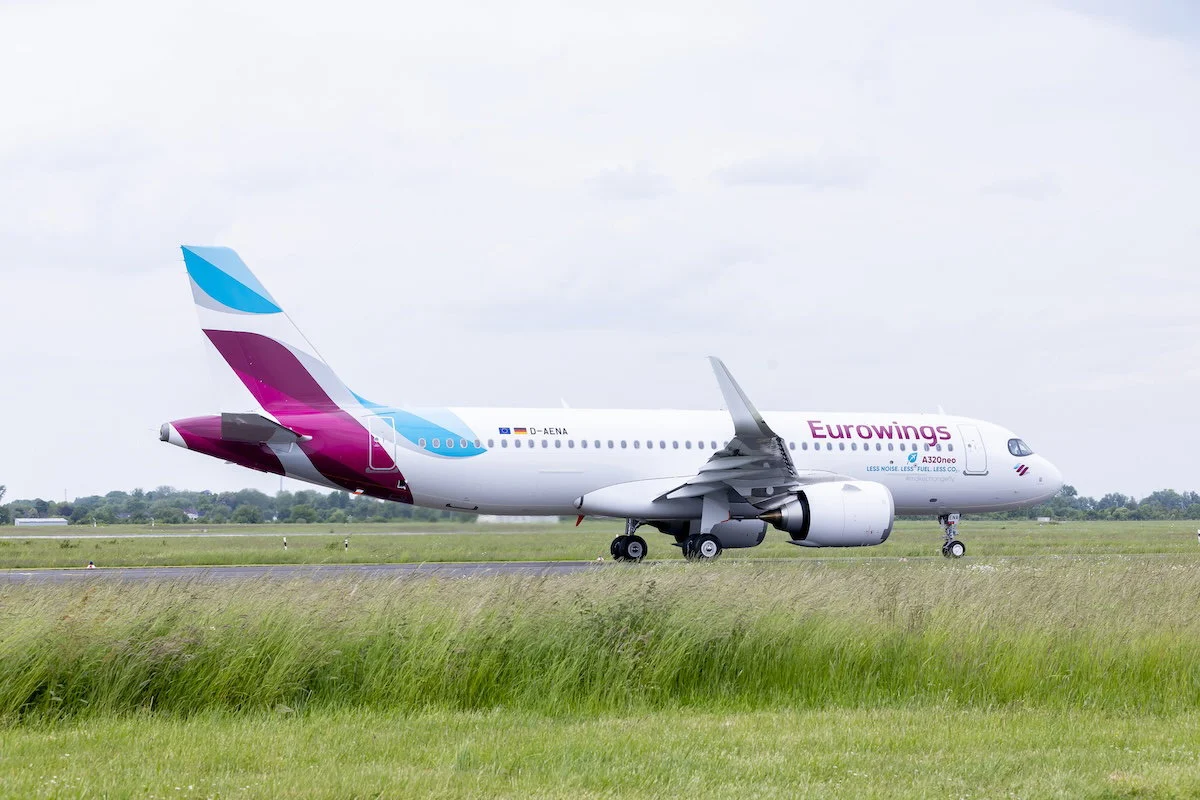
For the 156 passengers aboard Eurowings flight EW9503 on the evening of September 9, 2026, what was billed as a routine 896-mile hop from the sun-drenched island of Ibiza to the industrial hub of Dusseldorf turned into a logistical ordeal that would test the patience of even the most seasoned traveler. What began as a standard, albeit slightly delayed, departure culminated in a rare and grueling "double diversion" event, triggered not by mechanical failure or inclement weather, but by a single, misplaced piece of luggage.
The incident serves as a stark reminder of the rigid, uncompromising nature of modern aviation security protocols—protocols designed to ensure safety, even when the operational consequences for airlines and passengers are profound.
The Chronology of a Disrupted Journey
The troubles for flight EW9503, operated by an Airbus A320 with the registration D-ABZN, began even before the aircraft reached its cruising altitude. Scheduled for a 6:10 PM departure from Ibiza (IBZ), the flight faced an initial delay, finally pushing back from the gate and taking off at 7:35 PM.
As the aircraft climbed into the evening sky over the Mediterranean, a routine reconciliation process—conducted as part of standard pre-flight and post-takeoff security checks—flagged an anomaly. Ground crews in Ibiza, upon finalizing the load sheets, realized that a piece of checked luggage had been loaded into the hold that did not correspond to any passenger currently on board.
Under current European Union aviation security regulations, this is classified as an "unaccompanied bag" scenario. With the discovery made while the aircraft was already airborne, the flight crew was left with no discretion. The mandate is absolute: if a bag does not have a matching passenger on board, it must be removed or verified before the aircraft can continue to its destination.
The First Diversion: Toulouse
At approximately 8:37 PM, just 62 minutes after departing Ibiza, the flight diverted to Toulouse-Blagnac Airport (TLS) in France. The diversion was categorized as a mandatory safety measure. Upon landing, the aircraft was held on the tarmac to facilitate a thorough security sweep.
For the passengers, this marked the beginning of a long night. The inspection process, required to ensure that the rogue bag did not pose a security threat, was exhaustive. By the time the aircraft was cleared for departure, nearly three hours had elapsed. It was now 11:20 PM, and the window for a smooth arrival in Germany had long since closed.
The Second Diversion: The Curfew Problem
The delay in Toulouse created a cascading operational failure. By the time the Airbus A320 was airborne again, it was clear that the original destination, Dusseldorf (DUS), would be unreachable due to strict local noise abatement and operational curfews.
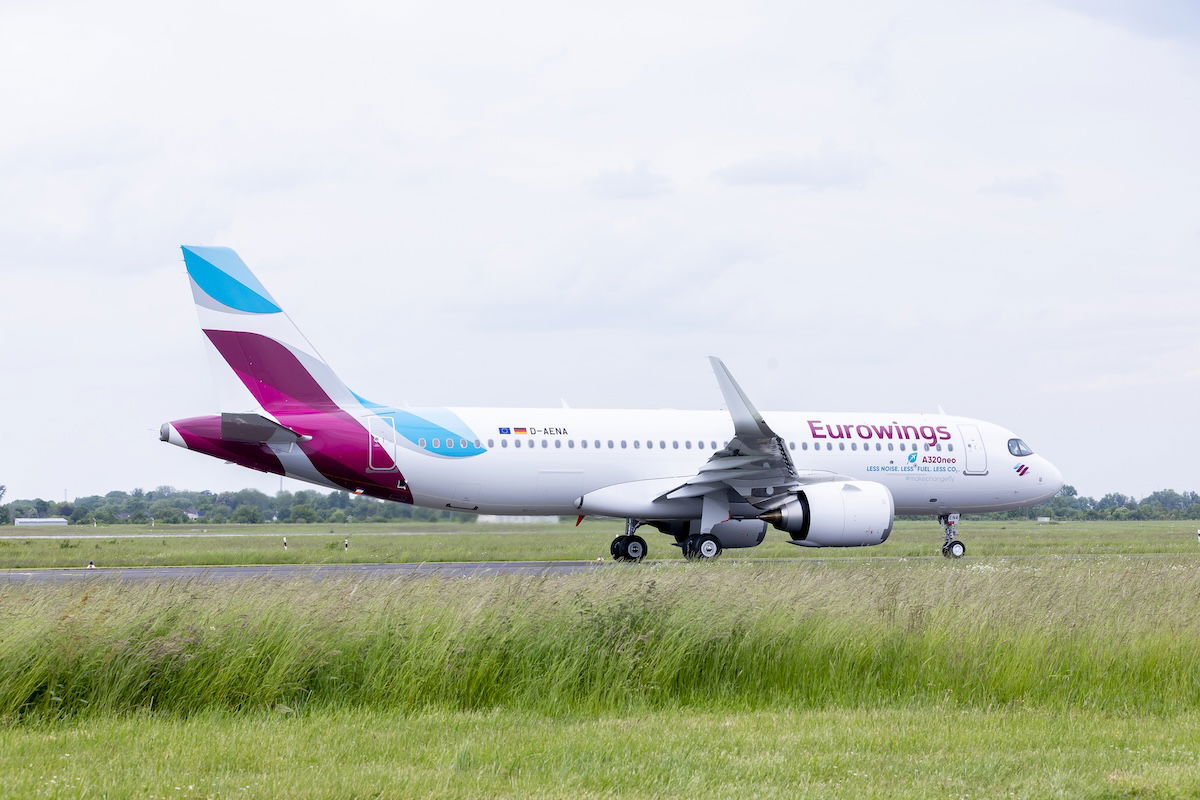
With Dusseldorf closed to incoming commercial traffic for the night, the flight was forced to divert a second time. The crew directed the aircraft toward Cologne Bonn Airport (CGN), a facility that maintains 24/7 operations. The plane touched down in Cologne at 12:53 AM, nearly four and a half hours after its original scheduled arrival time.
The ordeal did not end on the runway. Exhausted passengers were disembarked and transferred to buses for a final ground transit to Dusseldorf. By the time the last passenger reached their final destination, the delay had stretched well beyond six hours, turning a short evening flight into an overnight odyssey.
The "Lockerbie" Legacy: Why the Rules Are Non-Negotiable
To the casual observer, diverting a plane for a single suitcase might seem like an overreaction. However, the aviation industry operates under a shadow cast by the 1988 Pan Am Flight 103 bombing over Lockerbie, Scotland. That tragedy, in which a bomb concealed in a suitcase exploded on an aircraft carrying no accompanying passenger, fundamentally changed global aviation security.
The "Positive Passenger Bag Match" (PPBM) rule is the bedrock of modern hold-baggage security. Regulations state that if a passenger checks a bag but fails to board—or is offloaded for any reason—their luggage must be identified and removed from the aircraft. The logic is simple: a passenger who intends to commit a terrorist act is unlikely to board a flight with their own explosive device. By ensuring that every bag is "owned" by a human being on board, the risk of an unattended explosive device is significantly mitigated.
When Eurowings identified the "loading error," they were not making a choice; they were complying with international law. To continue the flight with an unaccounted-for bag would have been a direct violation of safety protocols, potentially exposing the airline to massive fines and, more importantly, endangering the lives of those on board.
Operational Realities and Human Error
The Lufthansa Group, the parent company of Eurowings, later confirmed that the incident was the result of a "loading error." In the high-pressure environment of a busy airport, where hundreds of bags are scanned, sorted, and loaded onto aircraft within a narrow timeframe, human error is an ever-present risk.
Ground handling at airports is a complex dance involving automated scanning systems, manual labor, and constant communication between the ramp, the gate, and the flight deck. While technology has advanced significantly, the final reconciliation of bags often relies on human verification. A misread barcode, a bag placed in the wrong container, or a failure to cross-reference a "no-show" passenger with the loading manifest can lead to exactly what happened on September 9.
Critics often argue that in the era of advanced AI and real-time tracking, such errors should be impossible. However, the sheer volume of global air travel means that even a 0.001% error rate results in thousands of incidents annually. Most of these are caught before the aircraft moves; the tragedy of the Eurowings incident is that it slipped through the net until the plane was in the air.

The Broader Implications for Passengers and Airlines
This incident highlights two major pain points in modern air travel: the vulnerability of the "last flight of the day" and the rigidity of airport curfews.
The Curfew Trap
Airports like Dusseldorf enforce strict night curfews to protect the quality of life for surrounding communities. While these curfews are necessary for environmental and social reasons, they create a "hard wall" for airlines. When a flight is delayed by mechanical issues or, in this case, a security diversion, the curfew does not bend. This forces airlines into the secondary diversion scenario, which effectively doubles the logistical headache and the passenger’s misery.
The Cost of Reliability
For the airline, the costs are substantial. Beyond the fuel consumed for two unplanned takeoffs and landings, there is the cost of:
- Ground Handling: Extra fees at two additional airports.
- Passenger Care: Mandatory duty of care, including buses, potential hotel vouchers, and refreshments.
- Crew Duty Limits: The flight crew likely reached their maximum legal flight time, requiring a fresh crew or significant rest periods, which disrupts the aircraft’s schedule for the following day.
- Reputational Damage: While the airline acted correctly from a safety standpoint, the passenger experience was undeniably poor.
Conclusion: A Lesson in Resilience
The Eurowings double-diversion is a textbook example of how the "rules of the sky" can create extreme friction in the real world. While the passengers of flight EW9503 were undoubtedly frustrated—and rightfully so—the incident serves as a testament to the fact that, in aviation, safety remains the final arbiter.
There is no "gray area" when it comes to an unaccompanied bag. The decision to land in Toulouse, while inconvenient, was a necessary adherence to a security framework that has prevented countless tragedies since the late 1980s. As the industry moves forward, the challenge for airlines like Eurowings will be to reduce the frequency of such loading errors through better technology and more robust ground-staff training, ensuring that the only surprises passengers encounter are the ones they find at their intended destination.
For now, the story of EW9503 remains a cautionary tale: a reminder that the aviation system is a delicate, interconnected web where the fate of 156 people can be upended by something as small as a single, misplaced suitcase.