







By PYMNTS
September 14, 2026
Main Facts
In a landmark development reshaping the digital marketing landscape, Amazon Ads and OpenAI officially launched a joint pilot program on September 10, 2026. This strategic collaboration allows select United States-based advertisers to seamlessly extend their existing Amazon ad campaigns directly into ChatGPT. Among the pioneering brands testing this innovative channel is Delta Vacations.
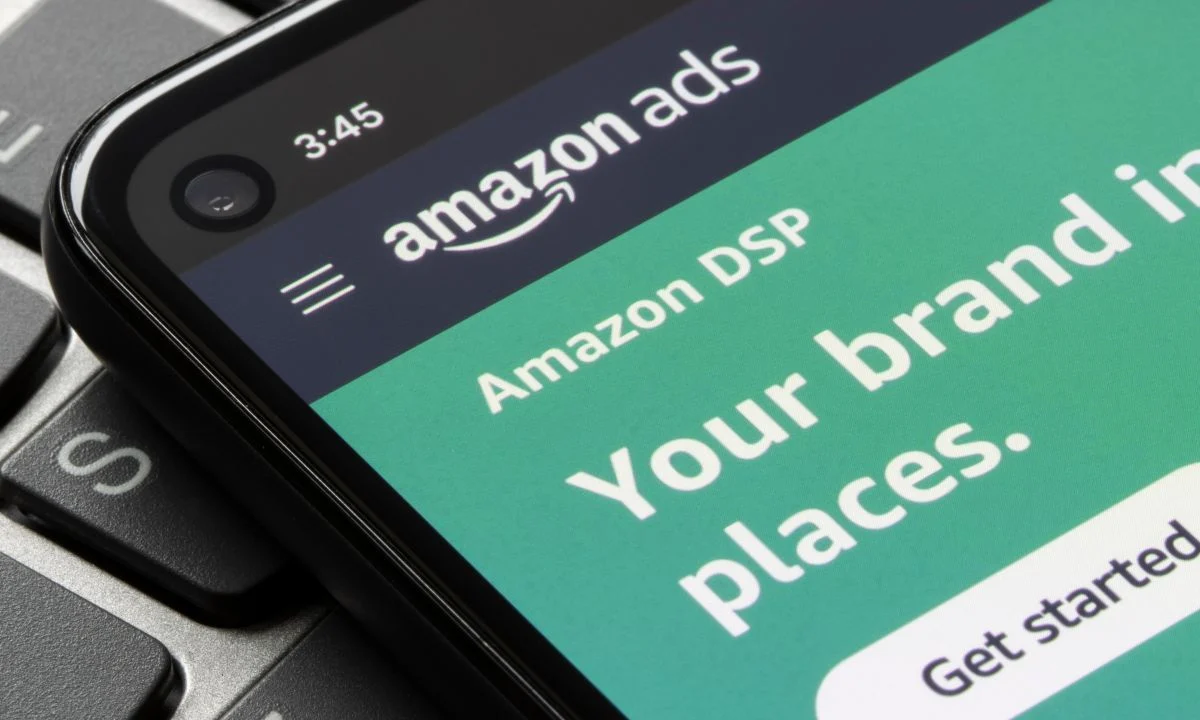
Rather than requiring marketers to negotiate directly with OpenAI, the arrangement enables brands to purchase ad placements through Amazon DSP (Demand-Side Platform), Amazon’s proprietary programmatic advertising engine. The operational mechanics split responsibilities cleanly between the two tech giants: Amazon is responsible for setting up, managing, and optimizing the campaigns through its robust infrastructure, while OpenAI’s native advertising algorithms retain ultimate authority over which specific ads appear, how they are contextualized, and where they are placed within the user interface.
For users, these sponsored placements appear as cleanly labeled text or image units directly beneath a ChatGPT response. For instance, a user querying the AI for marathon training tips might be served a relevant advertisement for running shoes sold by merchants on Amazon.
This alliance marks a significant strategic reversal for Amazon. Historically, the retail and tech titan had strictly barred external artificial intelligence platforms—including ChatGPT, Anthropic’s Claude, and Google’s Gemini—from tapping into its proprietary retail ecosystem. Amazon had instead focused inward, building its own competing suite of AI-driven shopping assistants and retail search tools.
Chronology
To understand how this high-stakes partnership materialized, it is necessary to examine the rapid evolution of generative AI monetization over recent years.
- Early 2024–2025 (The Rise of Conversational Search): As generative AI assistants captured hundreds of millions of daily active users, tech companies began exploring monetization models. OpenAI steadily built its foundational self-serve advertising framework, experimenting with regional rollouts, minimum spend thresholds, and direct-sales initiatives.
- Early 2026 (OpenAI’s Ad Business Milestone): OpenAI’s internal advertising operations achieved a major milestone, crossing a $1 billion annualized revenue run rate. However, company leadership set an aggressive, highly ambitious long-term target: scaling the ad business to $100 billion in annual revenue by 2030.
- Mid-2026 (Alternative Intermediaries): Prior to the Amazon partnership, advertisers looking to access ChatGPT’s massive audience had to work directly with OpenAI or route their budgets through smaller ad-tech intermediaries such as Criteo and Kargo. While functional, these partners lacked the massive global scale required to meet OpenAI’s multi-billion-dollar projections.
- September 10, 2026 (The Amazon-OpenAI Pilot Launch): Amazon Ads and OpenAI officially debut their integration. Select U.S. advertisers gain the ability to purchase ChatGPT ad space directly through Amazon DSP. Delta Vacations steps forward as one of the inaugural brands testing the ecosystem.
- Post-Launch (Industry Reception): Media outlets and industry analysts immediately recognize the move as a watershed moment. While OpenAI provides the AI surface area, Amazon provides the multi-decade sales machinery required to scale programmatic advertising efficiently.
Supporting Data and Market Metrics
The financial and operational metrics underpinning this partnership underscore the sheer scale of the digital advertising ecosystem involved:
- $70 Billion: The approximate trailing 12-month revenue generated by Amazon’s advertising segment as of 2026. This massive figure dwarfs the scale of smaller ad-tech intermediaries and highlights the maturity of Amazon’s programmatic infrastructure.
- $1 Billion to $100 Billion: OpenAI’s current annualized ad revenue run rate (achieved in early 2026) compared against its ambitious 2030 target. Achieving a $100 billion valuation in four years requires sustained compound growth exceeding 200% annually—a pace that would be virtually impossible to achieve relying solely on organic, ground-up sales team expansion.
- 20+ Years: The approximate timeframe Amazon has spent constructing, refining, and scaling its advertiser relationships, automated buying infrastructure, and merchant data pipelines.
- Select U.S. Advertisers: The initial cohort granted access to the pilot program, showcasing a controlled, phased rollout designed to test system latency, relevancy matching, and user experience.
Official Responses and Industry Commentary
Executives and industry experts have offered sharp insights into the motivations driving this unique collaboration.
Chris Conetta, Director of Omnichannel Supply for Amazon DSP, emphasized the growing importance of interactive media formats. "Conversational ads represent the fastest-growing engagement opportunity for brands to reach new and existing audiences," Conetta stated during the rollout announcement. By integrating ChatGPT into Amazon DSP, the company aims to capture a dominant share of this emerging digital real estate.
From OpenAI’s perspective, the partnership is less about acquiring raw audience numbers—since ChatGPT already commands hundreds of millions of active users—and more about solving structural inefficiencies in ad sales. Nate Elliott, Principal Analyst at eMarketer, highlighted this core challenge in an interview with PPC Land:
"They’re still trying to build out even many of the basics of a functional ad sales operation."
Without Amazon’s established machinery, OpenAI would have had to spend years cultivating individual agency relationships, developing programmatic bidding protocols, and building out complex financial settlement systems. By leveraging Amazon DSP, OpenAI bypasses these developmental bottlenecks.
Meanwhile, industry analysts tracking retail media networks note that Amazon’s participation represents a calculated gamble. For years, the company has guarded its retail data and shopping ecosystem with extreme discretion. Allowing its advertising clients to project their campaigns onto an external AI interface—even one as dominant as ChatGPT—signals a willingness to expand beyond walled gardens in pursuit of omnichannel dominance.
Broader Implications
The Amazon-OpenAI partnership carries profound implications for the future of digital marketing, artificial intelligence, and retail media networks.
1. The Death of the Traditional Ad-Tech Middleman
For years, smaller ad-tech firms and specialized intermediaries positioned themselves as the bridge between emerging digital platforms and brands. The entry of Amazon Ads into the ChatGPT ecosystem threatens to marginalize smaller players. When a titan with a $70-billion ad machine partners with the world’s leading generative AI platform, enterprise advertising budgets naturally gravitate toward the path of least resistance.
2. The Shift Toward Conversational Commerce
As consumers increasingly bypass traditional search engines in favor of conversational AI assistants like ChatGPT, Claude, and Gemini, the nature of discovery is changing. Instead of browsing static product grids, users ask complex, multi-layered questions ("Plan a two-week itinerary for Japan focused on culinary history" or "What are the best running shoes for flat feet with maximum cushioning?"). Integrating programmatic ads directly into these conversational threads turns AI prompts into high-intent conversion funnels.
3. A New Era of Coopetition
The tech industry has long operated on strict boundaries: search engines fought social networks, and e-commerce giants fought AI developers. The Amazon-OpenAI deal illustrates a new era of "coopetition," where fierce competitors recognize mutual dependencies. OpenAI secures the robust financial engine it needs to chase its $100 billion goal, while Amazon extends its advertising footprint far beyond its own retail properties.
4. Balancing User Experience and Commercialization
As ChatGPT and other AI assistants become increasingly commercialized, maintaining user trust remains a paramount challenge. The success of this pilot will depend heavily on the relevance and transparency of the ads served. By ensuring that sponsored content is clearly labeled and contextually aligned with user prompts—such as matching marathon advice with running gear—Amazon and OpenAI hope to monetize AI chat without alienating their user bases.
As the pilot program expands beyond its initial cohort of U.S. brands and early testers like Delta Vacations, the broader digital advertising market will watch closely. If successful, this hybrid model of AI engagement and retail programmatic infrastructure could well become the blueprint for the next decade of digital marketing.