









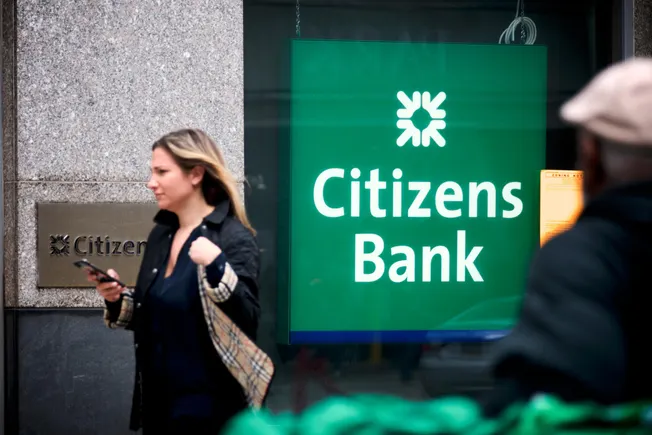
The high-stakes world of mortgage lending has erupted into a bitter legal battle as Citizens Bank, the Providence-based financial powerhouse, has leveled explosive accusations against digital fintech giant SoFi Bank. In a lawsuit filed last week in the U.S. District Court for the District of Connecticut, Citizens Bank alleges that SoFi has engaged in a systematic campaign of corporate poaching, effectively “annihilating” regional mortgage branches by siphoning off key personnel and proprietary client data.
The legal action, which characterizes SoFi’s recruitment tactics as “choreographed misconduct,” marks a significant escalation in the ongoing struggle for talent within the volatile mortgage industry. Citizens Bank contends that since early 2024, SoFi has successfully poached 30 mortgage-focused employees, a move the bank claims has severely crippled its operational capabilities across nine states.
The Catalyst: The Collapse of a Connecticut Branch
At the heart of the litigation is a dramatic sequence of events that occurred in June, which Citizens Bank describes as a targeted strike against its Connecticut operations. According to court filings, the exodus began on June 12, when Michael Daversa, a seasoned mortgage market manager at Citizens, submitted his resignation.
When questioned by his superiors at the time, Daversa reportedly claimed he was acting alone and possessed no knowledge of other impending departures. However, the bank’s internal monitoring revealed a different reality. Within just 49 minutes of Daversa’s resignation, six of his direct reports tendered their own resignations. Two additional employees followed suit later that same day.
Citizens Bank alleges that this was not a spontaneous career move by individual professionals, but rather a “strategically orchestrated” effort by SoFi to dismantle the branch in one fell swoop. The bank asserts that Daversa had been actively recruiting his own colleagues for months, touting the benefits of moving to SoFi and promising that they would be “getting ahead of the pack” by joining the digital lender.
A Trail of Data and Digital Footprints
The lawsuit goes beyond mere allegations of poaching, delving into the murky territory of intellectual property and trade secrets. Citizens Bank claims that in the days leading up to the June mass exodus, Daversa and his team systematically extracted confidential information.
The complaint alleges that Daversa sent screenshots of highly sensitive client lists to his personal email account shortly before his departure. Furthermore, the bank’s forensic review uncovered that another colleague attempted to upload a comprehensive spreadsheet containing confidential client data, contact information, and critical real estate agent referral networks to a personal device. To add to the suspicion, the bank noted that a sensitive loan pipeline report was physically printed on the very day of the resignations.
These actions, Citizens argues, constitute a flagrant violation of employment contracts and a calculated theft of trade secrets. The bank contends that this data was not only taken but intended for immediate use by SoFi to convert Citizens’ existing customer base into SoFi clients.
Chronology of the Conflict
The friction between these two financial institutions did not begin in June. Citizens Bank’s filing paints a picture of a broader, long-term strategy of aggression by SoFi.
- Early 2024: Citizens Bank begins tracking a pattern of recruitment activity, noting that mortgage employees are being targeted across various states.
- August 2024: A high-ranking Texas-based head of consumer lending leaves Citizens to join SoFi. This departure acts as a catalyst for a subsequent "talent migration," with 11 additional employees from the Texas mortgage department defecting to SoFi shortly thereafter. Citizens argues this effectively handicapped their ability to operate in the Southwest.
- June 12, 2024: The "Connecticut Incident" occurs. Nine employees resign in a single day, effectively shuttering the bank’s local mortgage branch.
- Post-June 2024: Citizens reports that three additional Connecticut-based employees have defected to SoFi, further depleting their regional presence.
- September 2024: Citizens Bank officially files suit in the U.S. District Court for the District of Connecticut, citing racketeering, breach of contract, and theft of trade secrets.
The Economic Toll: Supporting Data
The financial implications for Citizens Bank are substantial. In its complaint, the bank highlights the sheer value of the personnel lost in the June Connecticut migration. The employees involved in that specific departure were responsible for over $400 million in closed loans during the previous fiscal year, generating approximately $5 million in revenue for Citizens.
By losing 70% of its mortgage producers and 80% of its mortgage volume in that specific market, Citizens Bank argues that its local presence has been “essentially eliminated.” The bank characterizes the loss not merely as a personnel turnover issue, but as an “unscrupulous and oppressive” seizure of a profitable business unit that took years of investment to cultivate.
Official Responses and the "Baseless" Allegation
The response from SoFi has been characteristically defiant. A spokesperson for the San Francisco-based fintech firm issued a statement dismissing the lawsuit as a transparent attempt to stifle competition.
"This is a baseless allegation and a clever attempt to prevent Citizens employees from pursuing career opportunities elsewhere," the spokesperson said. "We lawfully compete to recruit and retain the best talent and expect other organizations to do the same."
SoFi has further maintained that Citizens Bank has failed to provide any concrete evidence that the company offered illegal incentives or instructed former employees to breach their noncompete agreements. Regarding the accusations of racketeering and trade secret theft, SoFi’s defense team appears prepared to frame the mass resignations as the voluntary choices of high-performing individuals seeking better opportunities, rather than a corporate conspiracy.
Citizens Bank counters that they have made good-faith efforts to resolve the issue outside of the courtroom, having issued cease-and-desist letters to the departing employees. According to the bank, those letters were met with total silence from both the former staff and SoFi’s management.
The Broader Implications for the Financial Sector
This lawsuit sits at the intersection of employment law, intellectual property rights, and the aggressive "land grab" tactics increasingly common in the digital banking age.
1. The Erosion of Noncompete Enforceability
The legal battle serves as a litmus test for the enforceability of restrictive covenants in the financial sector. As the Federal Trade Commission and other regulatory bodies look toward restricting noncompete clauses, companies like Citizens Bank are finding it harder to prevent the loss of "human capital." If the courts side with SoFi, it could signal a shift toward a much more open, albeit volatile, labor market for specialized finance professionals.
2. Intellectual Property in the Digital Age
The allegations regarding the transfer of client lists and loan pipeline reports highlight the vulnerability of modern banks. In an era where digital data can be transferred in milliseconds, the "theft" of a client relationship is often a matter of a few keystrokes. This case may set a new precedent for what constitutes a "trade secret" and how far banks can go to protect their proprietary CRM (Customer Relationship Management) data from departing employees.
3. "Racketeering" as a Legal Strategy
Perhaps the most striking aspect of the lawsuit is the invocation of "pattern of racketeering activity." By framing a series of employee hires as an illegal enterprise, Citizens Bank is employing an aggressive legal strategy designed to increase the stakes for SoFi. Should this classification hold any weight, it could expose SoFi to significantly higher damages and regulatory scrutiny.
What’s Next?
The legal clock is now ticking. SoFi is required to provide a formal response to the lawsuit by September 30. Until then, the case remains a focal point for industry analysts who are watching to see if the court views these events as standard, albeit ruthless, business competition or as a systemic violation of corporate law.
For Citizens Bank, the goal is clear: they seek to recover damages for the lost revenue and to potentially obtain injunctions against further poaching. For SoFi, the case is about maintaining its reputation as a premier destination for top-tier talent in the mortgage space.
As the digital transformation of the mortgage industry continues, the battle over who owns the client relationship—the bank or the loan officer—will likely only intensify. For now, the "familiar faces" that Michael Daversa sought to work with at SoFi have become the center of a legal storm that could reshape how banks recruit and retain talent for years to come.