









VERO BEACH, Fla. — For 12 years, Martin Castro-Silva sat across the desk from some of South Florida’s most affluent residents in his role as a private client banker at Chase. Day in and day out, he managed their portfolios, reviewed their statements, and observed a quiet, undeniable commonality among the wealthiest individuals walking through his doors: their fortunes were almost invariably anchored in real estate.
The turning point arrived incrementally. A young client repeatedly visited his branch to wire funds for residential house flips, walking away with clean, recurring profits of $20,000 to $25,000 in a matter of months. Intrigued, Castro-Silva began asking pointed questions. Those conversations planted the seed for a career pivot that would transform him from a salaried corporate employee working long hours into a full-time real estate investor scaling 11 property transactions in a single year.
Today, operating primarily in the coastal Florida markets of Vero Beach and Sebastian, Castro-Silva has built a disciplined, single-family fix-and-flip operation. By leveraging creative financing, building localized wholesaler networks, and prioritizing a strict "buy box," he has not only replaced his corporate income but reclaimed his weekends and family life.
Main Facts: The Blueprint of a Modern Investor
Castro-Silva’s transition from banking to real estate is a study in calculated risk-taking and financial literacy. Leveraging his background in high-net-worth wealth management, he understood how to marshal capital, analyze credit lines, and structure debt safely.
Key Operational Metrics:
- Current Market Focus: Vero Beach and Sebastian, Florida.
- Annual Output: 11 property transactions completed (7 fix-and-flips, 2 rental properties retained).
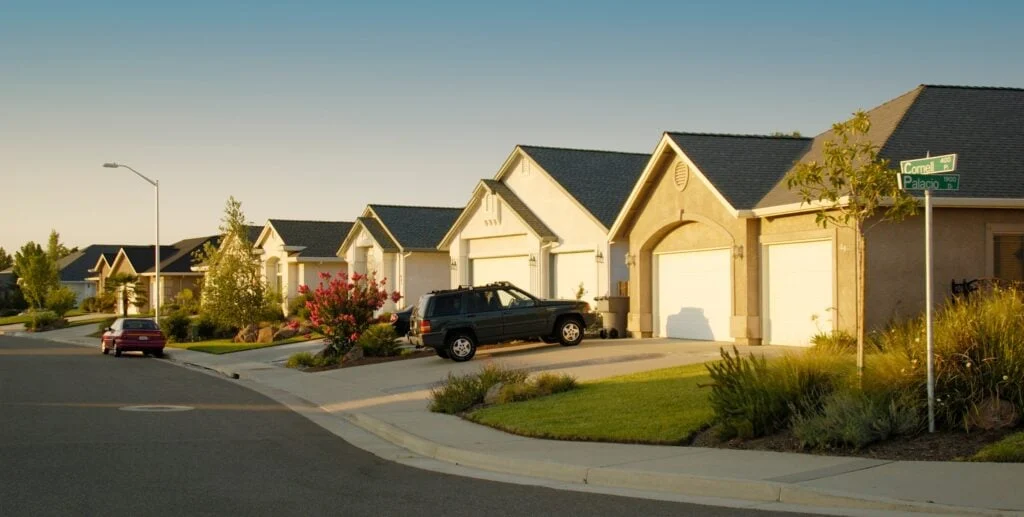
- Target Asset Class: Single-family homes, roughly 1,200 square feet, 2–3 bedrooms.
- Acquisition Price Point: $150,000 to $220,000.
- Exit Strategy Value: Under $350,000 (ensuring broad buyer demand and a fallback rental option).
- Financing Vehicles: Cash-out refinances, home equity lines of credit (HELOCs), cross-collateralized hard money loans, private equity partnerships with family members, and private lender-agent collaborations.
Chronology: The Evolution of a Real Estate Portfolio
Building a real estate business from scratch rarely happens overnight. For Castro-Silva, the journey required a step-by-step masterclass in project management, overpricing corrections, and building a network from the ground up.
Deal #1: The Lake Worth Townhome (The Proof of Concept)
Castro-Silva’s real estate career kicked off in February 2022. Partnering with his mother, they purchased a townhome in Lake Worth, Florida, for $200,000. To fund the acquisition, they utilized a 50/50 split of cash derived from a refinanced home equity loan and an interest-only hard money loan.
Because Castro-Silva was still maintaining his full-time banking career, the renovation—which required roughly $25,000 to $30,000 in cosmetic updates to two bathrooms and a kitchen—dragged on for seven months. During that lengthy timeline, they bled approximately $7,000 in holding costs.
Initially listed at $320,000, market realities and minor concessions forced a final closing price of $310,000. Despite the delays and rookie mistakes, the net profit tallied $37,000—nearly half of Castro-Silva’s annual corporate salary at the time. "That was the moment everything clicked," he reflects.
Deal #2: The Solo Leap and Mid-Renovation Resignation
Emboldened by his first success, Castro-Silva made the radical decision to quit his job mid-renovation on his second project. Driven by a desire to be present for his young children—then ages 1 and 3—he showed his wife the hard-number spreadsheet from the first deal. His rationale was simple: worst-case scenario, the corporate world would always take him back.
For his second project, he ventured two hours north, purchasing a single-family home for $170,000 using a HELOC against his own residence. While he budgeted $40,000 for the gut rehab, overruns pushed renovation costs to $50,000.
A major lesson in pricing accompanied the exit. Ignoring his real estate agent’s advice, Castro-Silva overpriced the property at $325,000 to $335,000. After turning down a clean $300,000 cash offer in the first week, the house sat for four months before ultimately selling for $300,000 via traditional financing. Though he still netted a $35,000 profit, the carrying costs served as an expensive lesson in ego-driven pricing.
Deal #3: Cross-Collateralization and Creative Partnerships
Depleted of liquid cash following the second project, Castro-Silva needed a creative funding mechanism. He turned to another banking client—who happened to be a real estate agent—and proposed a mutually beneficial partnership: provide the financing, secure the future listing contract upon resale.
The agent extended a $150,000 hard money loan, cross-collateralized using Castro-Silva’s first single-family investment property. Having learned his lesson from the previous project, Castro-Silva priced this asset competitively at $299,000. The market responded instantly, putting the property under contract in a mere six hours. He successfully closed this deal and his second property during the exact same week.
Deal #4: The Power of Neighborhood Networking
Real estate deals often come from unexpected places. Castro-Silva adopted a strict mantra: tell everyone you buy houses. While managing his first single-family flip, he struck up conversations with the next-door neighbor, letting him know he would be ready to help whenever the neighbor decided to sell.
Months later, the phone rang. Castro-Silva purchased the property directly from the neighbor for $150,000—saving $20,000 compared to typical wholesaler pricing—noting that the home even featured an extra bonus room. Bringing his siblings into the fold as equity partners who had witnessed his prior success, they funded the purchase entirely in cash. After injecting $55,000 to $60,000 into the rehabilitation, they sold the property for $320,000, walking away with a $65,000 net profit split three ways.
Supporting Data: Managing Risk Through a Tight "Buy Box"
As Castro-Silva scaled his operations to 11 transactions annually, systemic risk management became paramount. Uncontrolled expansion can lead to overleveraged portfolios, especially during market downturns. To mitigate this, Castro-Silva instituted a rigid "buy box" parameter that shields him from catastrophic losses.
+-------------------------------------------------------------------------+
                    MARTIN CASTRO-SILVA'S BUY BOX
+-------------------------------------------------------------------------+
| Geographic Focus : Vero Beach and Sebastian, Florida                    |
| Property Type    : Single-Family Residential                            |
| Square Footage   : ~1,200 sq. ft. (2-3 Bedrooms)                        |
| Purchase Price   : $150,000 – $220,000                                  |
| After-Repair Value: Under $350,000                                      |
| Fallback Strategy: Convert to long-term rental if resale market slows   |
+-------------------------------------------------------------------------+
This specific pricing tier provides a distinct economic cushion. If a renovated home fails to move quickly in the retail market, Castro-Silva is not forced into panic-selling or bleeding out from hard money interest rates. Instead, he can seamlessly transition the asset into a long-term rental property, where monthly rental income roughly covers operational and debt expenses.
Official Perspectives: The Mindset of a Modern Real Estate Entrepreneur
When evaluating the trajectory of independent operators in today’s housing market, industry analysts frequently point to localized expertise and diversified funding as the twin pillars of longevity. Castro-Silva’s transition exemplifies this dynamic.
Reflecting on his departure from institutional banking, Castro-Silva emphasizes that the true ROI of entrepreneurship extends far beyond balance sheets.
"I didn’t want to keep missing moments with my kids," Castro-Silva explains. "You can always make more money, but you cannot buy back time when they are toddlers."
By moving his family directly to Vero Beach—the very community where his deal pipeline naturally consolidated—he reduced commute times, secured a more affordable and spacious primary residence, and streamlined his oversight of active job sites.
Implications: What Aspiring Investors Can Learn
Castro-Silva’s rapid ascent from retail banking to managing a multi-property flipping enterprise offers critical takeaways for prospective real estate investors entering complex economic climates:
- Leverage Transferable Skills: Financial literacy, credit management, and the ability to evaluate risk—honed during his years at Chase—allowed Castro-Silva to communicate effectively with private lenders, agents, and investors from day one.
- Embrace Direct-to-Consumer Sourcing: Moving away from saturated wholesaler lists by networking directly with neighbors and community members yielded better margins and superior property stock.
- Guard Against Overconfidence: Overpricing properties to test the ceiling of a market carries heavy penalties in holding costs. Competitive, realistic pricing maximizes velocity, which is the lifeblood of any fix-and-flip business.
- Build a Safety Net: By designing a buy box that doubles as a viable rental pool, investors insulate themselves against unforeseen liquidity crunches or shifts in buyer sentiment.
Today, Castro-Silva employs dedicated local renovation crews to handle the day-to-day physical labor of rehabbing properties. More importantly, he has successfully reclaimed his calendar: weekends are strictly reserved for his family, marking the ultimate return on investment for an ex-banker who dared to step out from behind the corporate desk.