






In a move that signals a renewed focus on premium passenger experience, Etihad Airways has unveiled a sophisticated new lounge design concept that promises to redefine the carrier’s ground-based presence. The reveal, which emphasizes a transition from the traditional airport waiting area to a bespoke, immersive environment, will make its grand debut at London Heathrow (LHR) in the summer of 2027.
While the physical redesign of the Heathrow facility is the immediate headline, the broader strategic implication—a potential expansion of Etihad’s global lounge network—has sparked significant conversation within the aviation industry. As the airline navigates a period of growth and strategic realignment, this initiative serves as a cornerstone of its "Beyond Borders" branding, aiming to create a seamless, cohesive experience for travelers from the moment they step into the airport until they arrive at their destination.

The Core Concept: "From Sand to Superstructure"
The design philosophy behind the new lounges is deeply rooted in the identity of the airline’s Abu Dhabi home. Etihad describes the aesthetic as "from sand to superstructure," a narrative that pays homage to the emirate’s rapid evolution from a desert landscape to a global architectural hub.
The design language, first introduced through the interiors of Etihad’s newest aircraft, is intended to bridge the gap between the sky and the ground. By utilizing a shared palette of materials, textures, and lighting, the airline aims to foster a sense of familiarity for its frequent flyers. Rather than forcing a cookie-cutter approach onto every international terminal, the concept allows for regional flexibility, ensuring each lounge reflects its local environment while remaining unmistakably "Etihad."

Chronology: From Closure to Reimagination
The path to this new design began with a strategic decision to temporarily shutter the existing Etihad lounge at London Heathrow. Recognizing that the facility had reached the end of its lifecycle, the airline opted for a total renovation rather than a superficial refresh.
- Pre-2026: The original London Heathrow lounge serves as a key touchpoint for European travelers but begins to show its age in comparison to newer, more modern airline offerings.
- 2026: Etihad officially closes the Heathrow location, initiating a multi-year construction project.
- Summer 2027: The anticipated reopening of the London Heathrow lounge, serving as the flagship for the new global design language.
- 2027 and Beyond: The rollout of this design concept to future lounge projects as part of the airline’s broader network expansion strategy.
Supporting Data: A Premium Focus
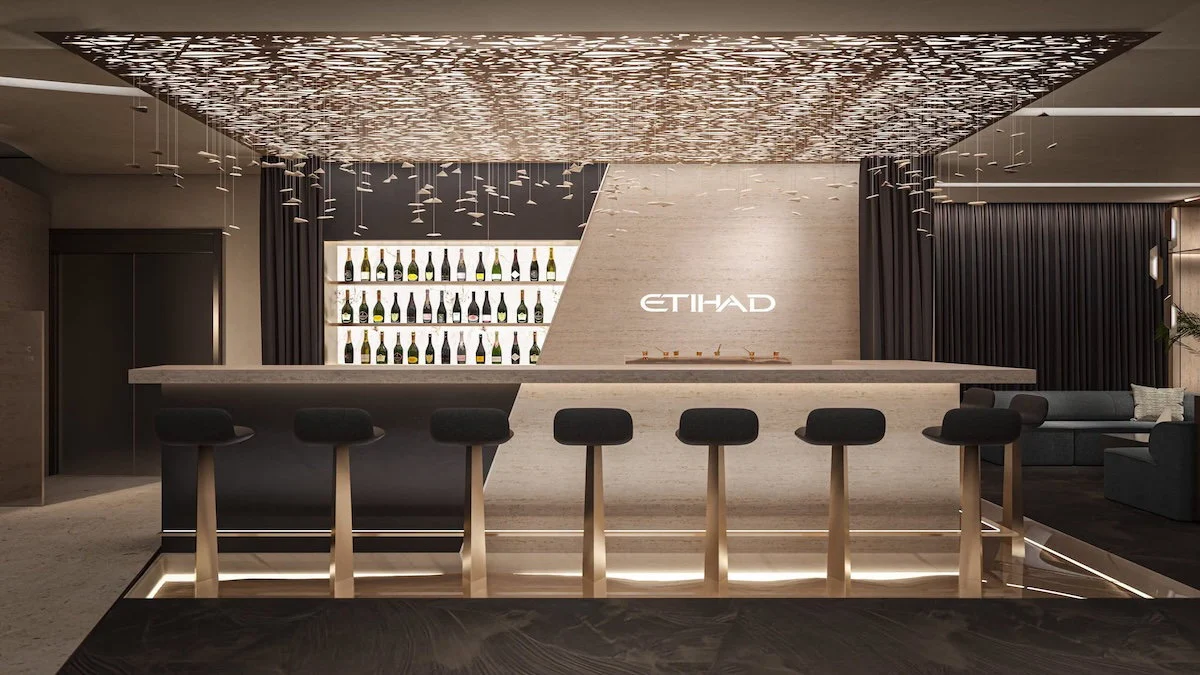
The renderings released by the airline suggest a highly elevated experience, characterized by soft, ambient lighting, private dining areas, and dedicated zones for different classes of service.

One of the most notable features of the new concept is the continued commitment to premium passengers. Etihad has confirmed that every new lounge will feature a dedicated, exclusive space for first-class passengers, distinct from the business-class areas. Furthermore, the inclusion of a private suite specifically for "The Residence"—the airline’s ultra-exclusive offering found on its Airbus A380 aircraft—indicates that Etihad intends to cater to the highest tier of luxury travelers at major hubs where the A380 operates.
The architectural renderings showcase:

- Refined Dining: A focus on bespoke culinary spaces that move away from traditional buffet setups toward more curated, restaurant-style service.
- Privacy-Centric Seating: Intimate nooks and private rooms designed for both productivity and rest, acknowledging the modern traveler’s need for solitude.
- Sophisticated Lighting: A transition from stark, functional lighting to warm, layered illumination that mimics high-end hospitality environments.
Official Perspectives and Branding
Etihad’s executive team has positioned this move as a critical component of its "Beyond Borders" strategy. According to the airline, this branding isn’t just a marketing slogan; it is a commitment to consistency.
"As we expand our lounge network, we have an opportunity to create a more consistent premium experience on the ground while continuing to bring the warmth and character of Abu Dhabi to our guests around the world," an airline spokesperson noted.

By standardizing the "touchpoints"—the tactile sensations of the furniture, the color temperature of the lighting, and the flow of the space—Etihad hopes to build brand loyalty that persists even when the passenger is thousands of miles away from their home base in the UAE.
Strategic Implications: Can a Network Expand?
The announcement of a new design template naturally raises the question of network scalability. Does Etihad truly have the operational footprint to justify an expansive global network of proprietary lounges?

Currently, Etihad operates a "boutique" model compared to the aggressive, high-frequency hub-and-spoke model of its regional rival, Emirates. While Emirates dominates routes with multiple daily flights to major global cities, Etihad’s frequency is often more measured.
The Challenges of Expansion
- Frequency and Capacity: Maintaining a dedicated, high-end lounge is costly. It requires a significant volume of premium passengers to ensure the facility is utilized efficiently. If an airline only operates one flight per day to a specific city, the cost-per-passenger for a high-end lounge can be prohibitively expensive.
- Airport Real Estate: Securing prime real estate in high-traffic airports like Singapore, Tokyo, or New York is notoriously difficult and expensive.
- The "Boutique" Balance: Etihad’s current strength lies in its ability to offer a highly personalized, premium service. Overextending its physical infrastructure could potentially dilute the exclusivity that currently defines its brand.
Potential Strategic Shifts
Despite these challenges, there are compelling reasons for Etihad to explore select expansions. If the airline plans to increase its service to key economic hubs, a proprietary lounge acts as a significant competitive advantage in winning over corporate travelers. If a passenger has to choose between a generic contract lounge and an exclusive, brand-consistent Etihad sanctuary, the lounge experience becomes a primary deciding factor in airline loyalty.

Looking Toward 2027
The aviation industry is watching the London Heathrow project closely. If the reality of the lounge meets the standard set by the digital renderings, Etihad will have successfully set a new benchmark for "outstation" luxury.
However, the true test will be the subsequent years. Will the airline prioritize quality over quantity, as it has done in the past, or will it attempt a more aggressive push into foreign markets? The most likely outcome is a targeted, strategic growth where lounges are built only in cities where Etihad’s flight frequencies and premium passenger demand justify the investment.

For the traveler, the promise is simple: a more predictable, luxurious, and culturally resonant experience that honors the journey as much as the destination. As Etihad moves toward its 2027 deadline, the focus remains on whether this "sand to superstructure" concept can truly be translated into the realities of global airport operations.
Ultimately, Etihad is betting that by investing in the "ground game," it can solidify its position as a preferred carrier for the global traveler—a move that, while risky in terms of capital expenditure, may prove vital in the long-term competition for the premium market.