








By Erica York, Senior Economist, Center for Federal Tax Policy
Main Facts
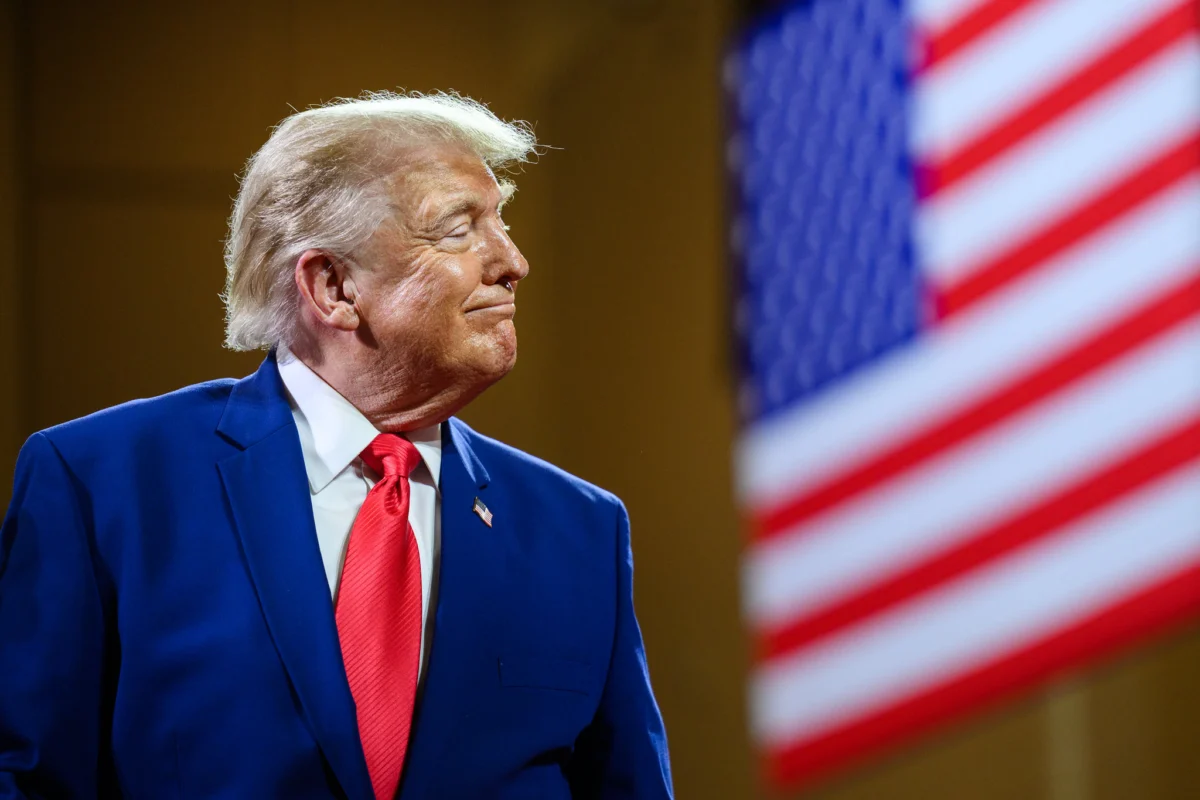
At the Republican National Convention in Dallas, President Trump made a sweeping political and economic pledge: a direct payment of $5,000 to every adult citizen in the United States. However, this headline-grabbing proposal comes with a significant political caveat—it is conditional upon Republicans maintaining control of both the House of Representatives and the Senate in the upcoming midterm elections.
The rationale behind the proposal was later elaborated on by Vice President JD Vance. Defending the initiative on social media and in press appearances, Vance argued that the administration’s newly enacted tariffs are generating a massive influx of federal revenue, creating a financial surplus that can and should be shared directly with the American public in the form of a "citizen dividend."
Despite its populist appeal, the proposal faces heavy criticism from economists and fiscal policy analysts. Distributing $5,000 to roughly 250 million voting-age adults in the United States would carry an eye-watering price tag of approximately $1.25 trillion. This massive expenditure lacks formal legislative details, notably omitting any proposed income caps or wealth limitations that would restrict the payouts to lower- and middle-income families.
Crucially, this new spending program would collide directly with an already deteriorating federal budget. The Congressional Budget Office (CBO) projects that the U.S. government is on track to run a staggering budget deficit of nearly $1.9 trillion for fiscal year 2027. Injecting an additional $1.25 trillion in unoffset spending would balloon the single-year deficit to nearly $3 trillion. Even accounting for the projected new income generated by the administration’s aggressive tariff regime, economists warn that the policy would dangerously destabilize federal finances, risk accelerating inflation, and trigger adverse reactions in global financial markets.
Chronology of Events and Policy Shifts
To understand how the administration arrived at the $5,000 dividend proposal, it is necessary to examine the timeline of trade policy and revenue shifts that have defined President Trump’s current term:
- Calendar Year 2024: Prior to the implementation of the administration’s expanded trade barriers, U.S. customs duties operated under baseline historical parameters, bringing in roughly $79 billion annually in total receipts.
- Calendar Year 2025: Following his return to office and the immediate execution of several sweeping rounds of new tariffs on international imports, federal customs collections surged dramatically, hitting an annualized total of $264 billion.
- Late 2025 to Early 2026: Federal revenue collections from trade began to experience severe volatility. Customs receipts dipped—and at times turned negative on a net basis—as the federal government was forced to issue massive refunds to comply with federal court rulings, culminating in the Supreme Court striking down key components of the administration’s tariff schedule as unconstitutional or outside executive authority.
- The Republican National Convention (Mid-2026): Standing before party delegates in Dallas, President Trump officially unveiled the $5,000 dividend promise, framing it as a direct reward for voters who secure a sustained legislative majority for the GOP in the upcoming midterms.
- Post-Convention Defense (Late 2026): Vice President JD Vance publicly backed the proposal, asserting that tariff-generated wealth should bypass traditional government programs and flow straight to the pockets of everyday citizens. Independent economic institutions, including the Tax Foundation, immediately began publishing fiscal impact models demonstrating a catastrophic mismatch between the cost of the dividend and the actual net revenue generated by the tariffs.
Supporting Data and Economic Modeling
Proponents of the $5,000 dividend frequently point to the gross revenue generated by import taxes as proof that the government can afford the program. However, a deeper look at the data reveals a stark disconnect between gross receipts and genuine net fiscal impact.
1. The Reality of Gross vs. Net Tariff Revenue
While it is true that tariff collections spiked to $264 billion in 2025 following the initial wave of protectionist measures, those figures represent gross collections before accounting for systemic economic feedback loops. Independent economic modeling indicates that once the dust settles and legal challenges are fully processed, Trump’s new tariffs will generate roughly $125 billion in net revenue for the federal government in 2027. Over a ten-year window spanning from 2026 through 2035, the cumulative net revenue is projected to reach approximately $1.4 trillion.
2. Why Net Revenue Falls Short
Two primary economic factors explain why gross tariff numbers cannot be treated as pure disposable surplus:
- Import Suppression: Tariffs are designed to make foreign goods more expensive, which inherently reduces the volume of goods imported into the United States. As imports decline, the revenue generated by pre-existing, baseline tariffs also falls.
- Tax Base Erosion: Every dollar collected via tariffs imposes an economic burden that ripples through the broader economy. This reduces the revenue bases of other vital federal funding mechanisms—such as individual income taxes and payroll taxes—ultimately cannibalizing traditional streams of federal income.
3. The Math of the $5,000 Payout
With an eligible adult population of roughly 250 million people, a universal $5,000 check demands $1.25 trillion in immediate outlays.
- The net tariff revenue projected for 2027 ($125 billion) covers only about 10 percent of the total cost of a single round of dividend payments.
- To fully pay for the $1.25 trillion program using net tariff receipts alone, the federal government would have to hoard nearly a decade’s worth of total tariff gains, entirely undermining the argument that the money is sitting idly in the Treasury waiting to be distributed.
Official Responses and Political Reactions
The proposal has drawn sharp lines between the executive branch and independent fiscal analysts, while illuminating deep ideological divides over trade and taxation.
- The White House Defense: The administration continues to champion the narrative of trade-funded prosperity. Vice President JD Vance and economic advisors maintain that tariffs function as a direct tax on foreign nations and corporations, viewing the resulting capital as an unexploited resource that rightfully belongs to the American worker. By tying the payout to congressional control, the administration has also transformed the dividend into a high-stakes campaign rallying cry designed to mobilize the populist base ahead of the midterms.
- Fiscal Watchdogs and Economists: Independent policy organizations have pushed back aggressively against the rhetoric. Economists emphasize that tariffs are not paid by foreign governments, but are instead absorbed by domestic businesses, importers, and ultimately American consumers through higher retail prices. Analysts stress that funding a multi-trillion-dollar check-distribution program via import taxes amounts to a shell game—taxing Americans at the cash register through higher prices on goods, only to hand a portion of that money back to them via a deficit-boosting government check.
Broader Economic Implications
Beyond the immediate budgetary arithmetic, a deficit-financed dividend of this magnitude carries profound risks for the broader American economy.
1. The Inflationary Spiral
Inflation remains a persistent economic concern, consistently running above the Federal Reserve’s stated 2-percent target. Injecting $1.25 trillion of fresh liquidity directly into the consumer market—without any matching increase in the production of goods and services—would inevitably fuel demand-pull inflation. Consumers would likely find that the purchasing power of their $5,000 check is quickly eroded by a new wave of economy-wide price hikes, leaving working-class families structurally worse off.
2. Market Confidence and Interest Rates
Financial markets are highly sensitive to sovereign debt trajectories. Announcing a $1.25 trillion untargeted spending program while the federal deficit is already hurtling toward $1.9 trillion would send a powerful, negative signal to global investors: that the United States is fundamentally unconcerned with fiscal restraint. This loss of confidence could trigger upward pressure on benchmark interest rates, increasing borrowing costs for mortgages, auto loans, and corporate investments, thereby chilling overall economic growth.
3. Structural Harm to Domestic Enterprises
Rather than pursuing complex and economically distorting redistribution schemes funded by trade barriers, policy experts argue that the administration would better serve the public by dismantling the tariffs altogether. By artificially raising the cost of vital manufacturing inputs and consumer goods, current trade policies place a heavy, regressive burden on U.S. businesses and workers.
Ultimately, while a $5,000 check may offer short-term political posturing, the long-term economic prescription is clear: adding trillions to the national debt to fund consumer handouts will only exacerbate the structural deficits, inflationary pressures, and cost-of-living challenges that the proposal claims to solve.