







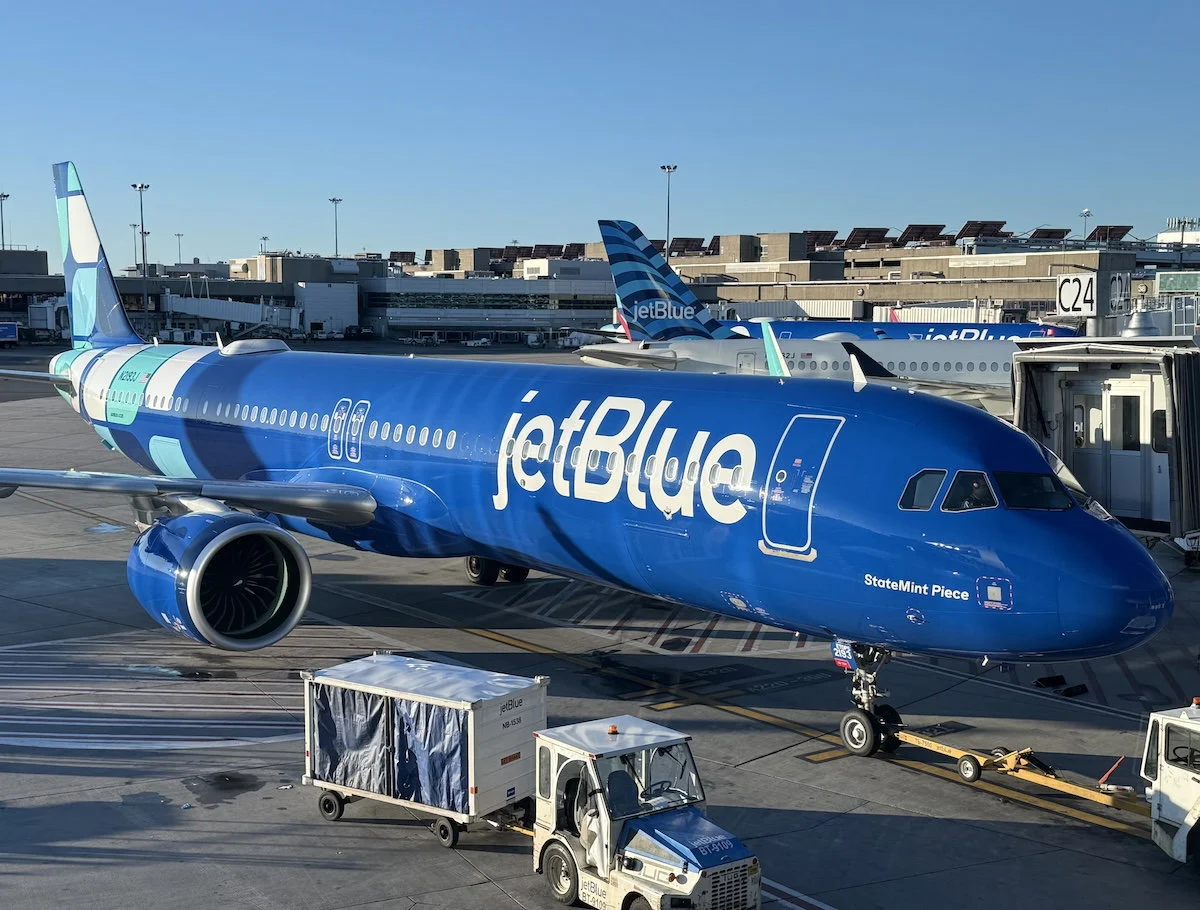
The era of “digital isolation” at 35,000 feet is rapidly drawing to a close. For years, the promise of in-flight connectivity was often undermined by sluggish speeds, intermittent dropouts, and the sheer frustration of trying to load a basic webpage while crossing the Atlantic. While industry disruptors like SpaceX’s Starlink have recently seized headlines with their low-latency, high-speed satellite constellations, the incumbent giant, Viasat, has just fired back with a technological leap of its own.
With the official entry into service of the Viasat-3 Flight 2 (F2) satellite, the company is set to fundamentally reshape the passenger experience for millions of travelers across the Americas. As major carriers like American Airlines, Delta Air Lines, and JetBlue continue to transition toward free, gate-to-gate Wi-Fi models, the strain on existing network infrastructure has reached a breaking point. This long-awaited capacity boost is not merely a technical upgrade; it is a vital necessity for the future of the connected cabin.
The Evolution of the Connected Cabin: From Luxury to Utility
In the early days of in-flight connectivity, simply having the ability to send an email from an aircraft was considered a technological marvel. Viasat quickly established itself as the “gold standard” in this nascent market, providing speeds that allowed for streaming and video conferencing long before competitors could keep pace.
However, the rapid democratization of high-speed data has created a paradox for providers. As airlines have begun offering complimentary Wi-Fi, user engagement has skyrocketed. Where once only a handful of passengers paid for “premium” access, now entire cabins are logged onto the network simultaneously. This surge in traffic, combined with the aging capacity of older satellite generations, has led to the common complaint of “excruciatingly slow” speeds. The industry found itself in a race against its own success: as the service became more accessible, the quality of the service inevitably dipped.
Chronology: The Road to the Viasat-3 Milestone
The journey to the current state of the network has been a complex process of engineering and regulatory navigation. The Viasat-3 constellation was designed to solve the bandwidth crisis through sheer scale.
- November 2025: The Viasat-3 Flight 2 satellite is successfully launched, marking a significant step forward in the company’s expansion plan for the Americas.
- April 2026: Viasat-3 Flight 3 follows, targeting the Asia-Pacific region, further solidifying the company’s global reach.
- Late 2026: Following the launch, the satellites underwent rigorous testing and orbital positioning. A critical phase involved securing regulatory approvals from aviation and communications authorities to ensure that the high-capacity beams were optimized for the dense, high-traffic corridors used by commercial airlines.
- Current Status: With all regulatory hurdles cleared and the constellation fully integrated, the Viasat-3 F2 satellite is now officially “live” and operational, providing a massive influx of bandwidth to the North and South American markets.
Supporting Data: By the Numbers
The technical specifications of the Viasat-3 constellation are staggering, representing a massive leap over the company’s previous generations of hardware.

The most significant metric is the sheer increase in throughput. The introduction of the Viasat-3 F2 satellite adds over one terabit per second of capacity in the Americas alone. To put this in perspective, this upgrade effectively doubles the network’s total capacity.
While the maximum theoretical speed of an individual connection may not see a dramatic spike, the reliability of that speed will be transformed. By increasing the total “pipe” size, Viasat is mitigating the impact of high-usage periods. Even when every passenger on a wide-body aircraft is streaming high-definition content, the increased bandwidth ensures that the network remains responsive rather than collapsing under the weight of concurrent requests.
Furthermore, the new satellites utilize adaptive beam-forming technology. This allows the network to dynamically shift capacity to where it is needed most—such as high-traffic routes between major hubs like New York, Los Angeles, and Chicago—ensuring that resources are not wasted on idle space over the ocean or unpopulated regions.
Official Perspectives: The Vision of Viasat Leadership
Viasat CEO Mark Dankberg has been vocal about the significance of this milestone, framing it not just as a speed boost, but as an architectural transformation of satellite communications.
“With the VS3 constellation now fully operational, we have substantially expanded our ability to deliver high-quality connectivity where demand is growing fastest,” Dankberg stated in a recent press briefing. He emphasized that the development introduces new forms of resilience, protecting the network from the types of interference that have plagued older satellite systems.
Dankberg’s comments highlight a specific technological edge: the VS3 satellites are designed with unprecedented solar power generation and thermal dissipation capabilities. “We believe that the VS3 satellites are the most advanced commercial satellites in the world in terms of adaptive beam-forming for cost efficiencies and user performance improvements,” he noted. By treating these satellites as “economical data centers in space,” Viasat is betting that they can maintain this performance lead even as the total number of connected devices continues to climb.
Implications for Airlines and Passengers
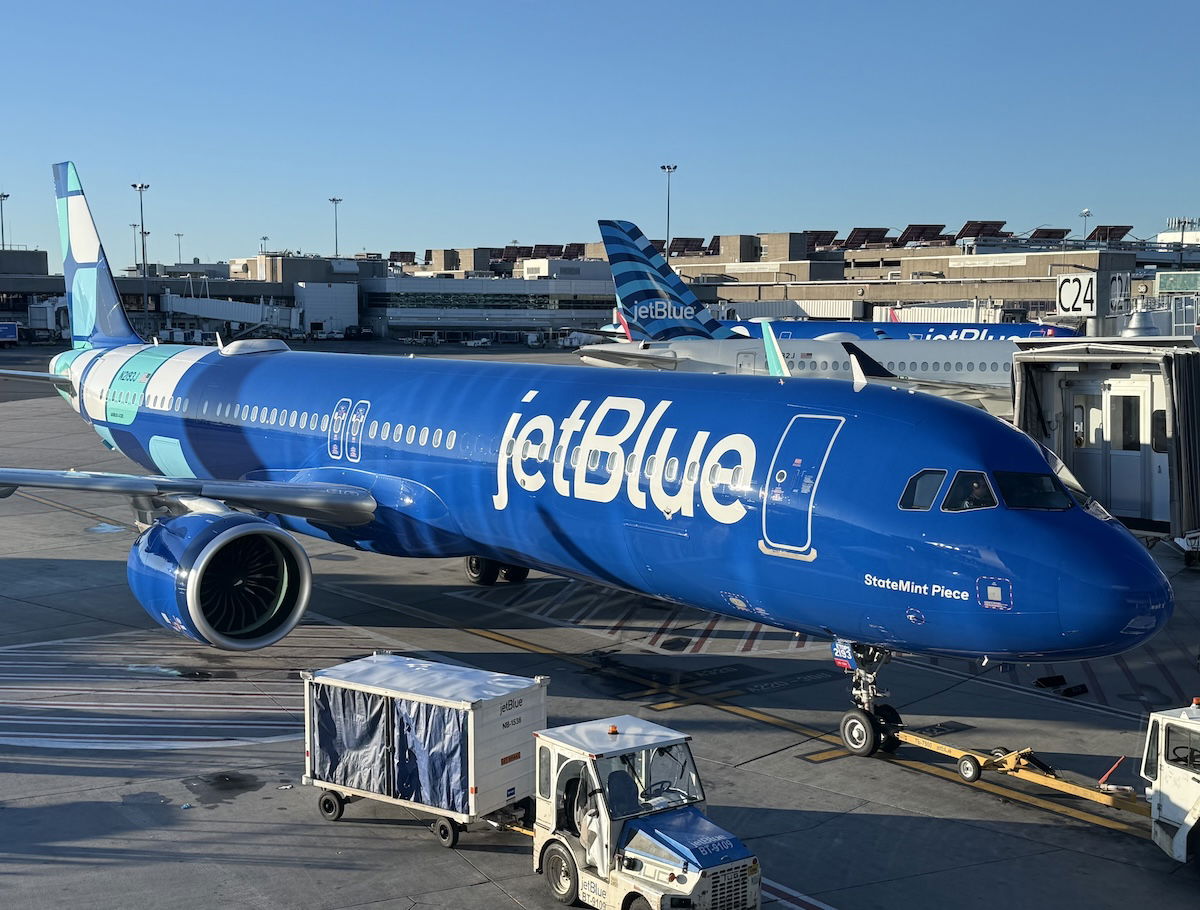
For passengers flying on American, Delta, and JetBlue, the implications are immediate. These three carriers represent the largest footprint of Viasat-equipped aircraft in the United States.
The “Free Wi-Fi” Impact
The move toward complimentary, ad-supported, or loyalty-member-only Wi-Fi has been a win for consumers but a headache for network operators. With the Viasat-3 capacity boost, airlines can finally deliver on the promise of a consistent “at-home” browsing experience. For the business traveler, this means the ability to participate in Zoom calls or access cloud-based enterprise software without the constant threat of latency-induced crashes. For the leisure traveler, it means a more reliable streaming experience for entertainment platforms like Netflix, Disney+, or YouTube.
The Competitive Landscape
While Viasat’s upgrade is a monumental achievement, it is not occurring in a vacuum. SpaceX’s Starlink continues to aggressively sign deals with airlines, boasting lower latency due to its Low Earth Orbit (LEO) configuration.
Industry analysts suggest that Viasat’s strategy is not necessarily to beat Starlink on raw latency, but to provide a robust, high-capacity, and highly reliable alternative that is already integrated into the existing fleets of the world’s largest airlines. The cost and complexity of retrofitting a fleet of hundreds of aircraft with new hardware are significant; Viasat’s ability to upgrade the network at the source (in orbit) provides a seamless advantage to the airlines that currently rely on its service.
The Bottom Line
The activation of the Viasat-3 F2 satellite marks a turning point in the battle for the connected sky. While it may not represent the absolute theoretical limit of what satellite internet can achieve, it provides a much-needed injection of capacity that will stabilize the experience for millions of travelers.
For the average passenger, the "buffering" icon may soon become a relic of the past. As we look toward the future, the integration of these massive orbital data centers ensures that in-flight connectivity is no longer a luxury feature, but a standard utility—as fundamental to the flight experience as the seat itself. The question remains: how will the industry evolve as demand continues to grow? With Viasat’s new constellation, the industry is finally well-positioned to answer that challenge.