







Main Facts
A decade has passed since the release of the "Better Way" tax blueprint, a foundational legislative framework orchestrated by then-Speaker of the House Paul Ryan and Ways and Means Chairman Kevin Brady. This comprehensive policy document laid the groundwork for the Tax Cuts and Jobs Act (TCJA) of 2017—the most sweeping overhaul of the United States federal tax code in more than three decades.
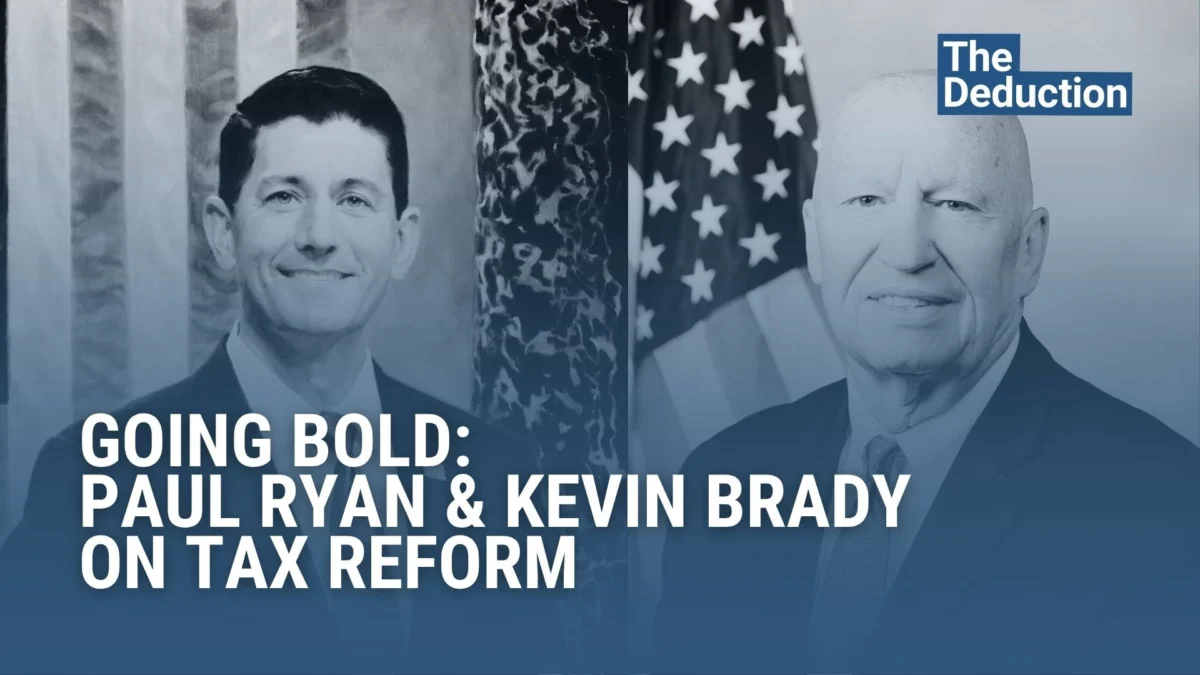
The significance of this milestone is the focus of a special anniversary episode of the policy podcast The Deduction, hosted by Erica York and Kyle Hulehan. In this installment, the hosts sit down with Ryan and Brady to dissect the genesis of the blueprint, the strategic gambles that defined its creation, the proposals that ultimately fell by the wayside, and the retrospective lessons learned regarding its economic footprint.
As Washington D.C. approaches a critical juncture of fiscal policy debates—marked by looming expirations of key TCJA provisions, a mounting national debt, impending Social Security insolvency, and the economic ripple effects of modern protectionist tariffs—policymakers face mounting pressure. The next iteration of American tax reform will demand not only bold legislative visions but also a rigorous, sober examination of the economic trade-offs inherent in any fiscal overhaul.
Chronology of Reform: From "Better Way" to the TCJA
The trajectory of the Tax Cuts and Jobs Act of 2017 was not formed in a vacuum; it was the product of years of policy incubation, political maneuvering, and strategic coalition-building within the Republican caucus.
- 2014–2015 (The Laying of Foundations): Following years of divided government and stalled grand bargains on tax reform—most notably the failed Obama-era efforts and the Simpson-Bowles commission reports—House Republican leadership recognized the need for a unified, proactive policy agenda. Work began quietly behind the scenes on what would become a comprehensive governing platform.
- June 2016 (The Rollout of the "Better Way" Blueprint): Speaker Paul Ryan and Ways and Means Chairman Kevin Brady officially unveiled the "Better Way" tax reform blueprint. Designed as part of a broader policy agenda covering poverty, national security, the economy, and the Constitution, the tax segment proposed a dramatic simplification of the individual income tax brackets, a steep reduction in the corporate tax rate, and a shift toward a territorial tax system.
- November–December 2017 (Legislative Sprint to the TCJA): Capitalizing on unified party control of the White House and both chambers of Congress, Republicans used the budget reconciliation process to fast-track the legislation. Despite intense partisan debate, zero Democratic votes, and frantic last-minute hand-written amendments, Congress passed the Tax Cuts and Jobs Act. President Donald J. Trump signed it into law on December 22, 2017.
- 2018–2024 (Implementation and Economic Adaptation): The post-passage era saw businesses adjust to a permanent 21 percent corporate tax rate and temporary individual tax cuts. Throughout this period, economists analyzed the law’s impact on domestic investment, wage growth, and federal revenues.
- 2025 and Beyond (The Looming Cliff): With many of the individual provisions and tax brackets established by the TCJA slated to expire at the end of 2025, the debate over the future of American tax policy has returned to center stage, serving as the backdrop for the retrospective discussions featured on The Deduction.
Supporting Data and Policy Mechanics
To understand the enduring legacy of the "Better Way" blueprint and the resulting TCJA, one must examine the core structural changes they introduced to the U.S. tax architecture, as well as the political casualties left along the way.
The Corporate Tax Overhaul
Prior to 2017, the United States maintained a top federal corporate income tax rate of 35 percent—the highest among industrialized Organisation for Economic Co-operation and Development (OECD) nations. This uncompetitive rate encouraged multinational corporations to engage in corporate inversions and keep foreign earnings parked overseas. The "Better Way" blueprint and the subsequent TCJA permanently slashed the corporate rate to 21 percent and transitioned the U.S. from a worldwide taxation system to a territorial system. Proponents argued this would repatriate trillions of dollars in foreign-held capital and spur domestic job creation.
Individual Income Tax Restructuring
The framework compressed the previous seven individual income tax brackets while retaining the top marginal rate at 37 percent (down from 39.6 percent) and nearly doubling the standard deduction. This latter move significantly reduced the number of Americans itemizing their deductions, simplifying tax filing for millions of middle-class households. However, to comply with Senate budget reconciliation rules (the Byrd Rule), the individual tax cuts were designed to sunset on December 31, 2025, while the corporate provisions were made permanent.
The Border Adjustment Tax (BAT): A High-Profile Casualty
One of the most ambitious and heavily debated components of the original "Better Way" blueprint was the Border Adjustment Tax. Modeled on destination-based cash flow taxation principles, the BAT would have levied a tax on imports while exempting exports from taxation. Proponents, including prominent economists and key Republican tax writers, argued it would generate significant revenue, encourage domestic manufacturing, and eliminate incentives for companies to shift supply chains abroad.
However, the proposal sparked fierce pushback from a diverse coalition of retailers, importers, and energy companies who relied heavily on foreign supply chains, warning it would drive up consumer prices. Ultimately, internal political friction and intense lobbying led to the abandonment of the BAT—a pivot that Ryan and Brady reflect upon in their anniversary interview as a major lesson in the art of the possible during legislative reform.
Official Responses and Perspectives
Reflecting on a decade of tax policy evolution brings a diverse array of viewpoints from the original architects, economic analysts, and modern lawmakers.
Speaking on The Deduction, former Speaker Paul Ryan defended the foundational philosophy of the "Better Way" plan, emphasizing that the primary goal was to restore American economic competitiveness on the global stage. "We knew we were swimming against a tide of international capital flight," Ryan noted. "By lowering the corporate rate and fixing our broken international tax rules, we unlocked investment that had been trapped overseas for decades."
Former Chairman Kevin Brady echoed these sentiments, highlighting the political hurdles required to achieve generational reform. "Tax reform is notoriously difficult because every single line in the tax code has a constituency protecting it," Brady explained during the podcast. "When we built the ‘Better Way’ blueprint, we understood we needed a comprehensive vision that couldn’t be chipped away piece by piece. We had to change the entire paradigm of how Washington views economic growth."
Critics of the legislation, however, offer a starkly different evaluation. Throughout the legislative process and in the years since, progressive lawmakers and independent economic think tanks have argued that the TCJA disproportionately benefited corporations and high-income earners while failing to pay for itself through economic growth. They point to subsequent increases in the federal deficit as evidence that the tax cuts severely constrained government revenues at a time when long-term fiscal pressures were already mounting.
Implications for Future Tax Policy and Economic Stability
As the United States looks toward the future of its tax code, the lessons drawn from the "Better Way" blueprint and the 2017 tax cuts carry profound implications for upcoming legislative battles.
The 2025 Expiration Cliff
The immediate horizon is dominated by the impending expiration of the TCJA’s individual provisions. If Congress fails to act, millions of American households will face a significant tax hike as standard deductions shrink and individual tax brackets revert to their pre-2017 levels. Lawmakers will be forced to choose between extending the cuts—at a projected multi-trillion-dollar cost to the federal treasury—or allowing them to lapse, a politically treacherous prospect in an era of heightened economic anxiety.
Fiscal Realities: Debt and Entitlements
Compounding the legislative challenge is the rapidly deteriorating macroeconomic environment. With the national debt reaching historic highs and entitlement programs like Social Security and Medicare racing toward insolvency within the decade, future tax reform cannot be viewed in isolation. Policymakers must reconcile the desire for pro-growth tax policy with the undeniable mathematical reality of entitlement obligations and rising federal borrowing costs.
The Return of Protectionism and Tariffs
Furthermore, the modern economic landscape is increasingly shaped by trade protectionism and sweeping tariffs—tools that fundamentally alter supply chains, consumer prices, and corporate behavior. Unlike the globalist, pro-trade assumptions underpinning parts of the original 2016 debates, contemporary economic strategy places a heavier emphasis on industrial policy and trade barriers. Navigating the intersection of tax reform and tariff policy will require a new generation of leaders to balance domestic manufacturing goals with inflationary pressures.
Ultimately, as Erica York and Kyle Hulehan explore with the architects of the "Better Way" plan, the history of the 2017 tax cuts serves as both a roadmap and a cautionary tale. Achieving bold legislative reform is entirely possible with unified vision and political courage, but the long-term success of any tax code rewrite depends on its ability to withstand shifting economic tides, fiscal constraints, and the test of time.