








In a significant move toward tightening platform security and reclaiming the integrity of the living room ecosystem, home appliance titan LG Electronics USA has announced a sweeping crackdown on smart TV applications that transform consumer televisions into residential proxy nodes. The decision follows a blistering security report that exposed the alarming prevalence of third-party software development kits (SDKs) lurking within the webOS application store.
These SDKs, often bundled into seemingly innocuous software like casual games, screensavers, and utility apps, effectively turn a user’s smart TV into a gateway for third-party internet traffic. For the average consumer, this means their home IP address—and the bandwidth associated with it—is being sold and routed to unknown entities without a clear understanding of the long-term security implications.
The Chronology of a Privacy Breach
The catalyst for this shift in policy was a comprehensive investigation released on July 2, 2026, by the security research firm Spur. The research shed light on a quiet, monetization-driven trend that had been festering within the smart TV app ecosystem for years.
- Early July 2026: Spur publishes a diagnostic report detailing how "Residential Proxy SDKs" are being embedded into smart TV applications. The findings revealed that 42% of apps on LG’s webOS and over 25% of apps on Samsung’s Tizen OS were capable of turning devices into proxy nodes.
- Mid-July 2026: KrebsOnSecurity brings these findings to the attention of LG Electronics, prompting an immediate internal review of the webOS app store.
- July 22, 2026: LG Senior Vice President John Taylor issues a formal statement confirming that the company is actively purging these apps. Developers who fail to remove the proxy functionality are officially placed on notice that their applications will be suspended from the store.
This rapid response marks a departure from the "laissez-faire" attitude many hardware manufacturers have historically taken toward third-party app store content. By positioning residential proxy networks as an "unintended use" for smart TVs, LG has signaled that it is finally taking responsibility for the security posture of the hardware it places in millions of homes.
The Anatomy of the Residential Proxy Economy
To understand why this is a systemic problem, one must look at the business model of residential proxy providers. App developers, often struggling to monetize free games or utilities, are offered a financial incentive to integrate SDKs provided by companies like Bright Data.
Once integrated, these SDKs turn the TV into a "peer" in a residential proxy network. The proxy provider then rents this "residential IP"—which is far more valuable than a data-center IP because it appears to come from a legitimate home network—to corporate clients. These clients use the network for various purposes, most notably large-scale web scraping, market research, and ad verification.
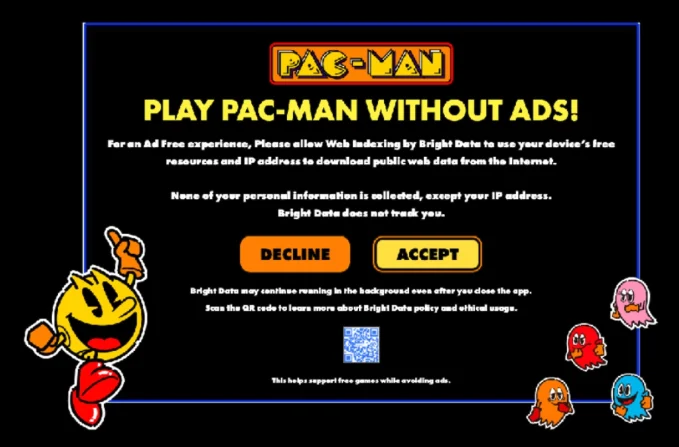
While the providers argue that this is a "consensual" exchange, the reality of the user experience is far more murky. As noted in the Spur report, the consent prompts are often buried deep within the terms of service or presented as a "choice" between watching advertisements or agreeing to share bandwidth. For a family with children, a single click on a "Yes" prompt can turn their living room television into a permanent node in a global, opaque traffic-routing network.
Supporting Data: The Scale of the Intrusion
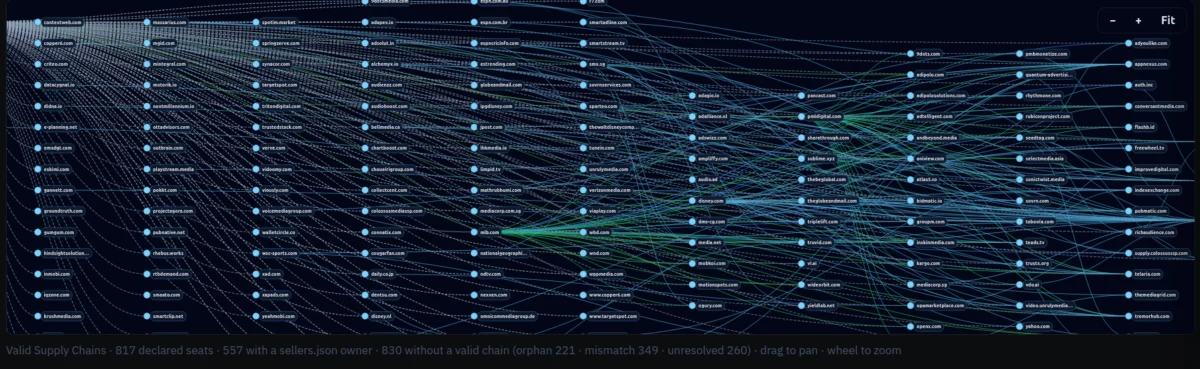
The data provided by Spur is sobering. The prevalence of these SDKs is not limited to fringe developers; they were found in widely used, mainstream apps. The inclusion of these components in simple games like Pac-Man demonstrates how pervasive the practice had become.
Furthermore, the audit conducted by Spur highlights a critical asymmetry in the power dynamic between the app developer and the user. The average consumer treats their smart TV as an appliance, not a computer. They lack the technical tools to audit the outbound traffic of their television or to monitor whether their IP address is being utilized to mask illegal or unethical web activity.
When a television acts as a proxy, it essentially inherits the risk of the traffic passing through it. If a proxy user engages in malicious activity—such as accessing restricted content or launching low-level network probes—the logs will point back to the owner’s home IP address, potentially leading to the blacklisting of that IP by major websites or, in extreme cases, unwanted attention from service providers.

Official Responses and Corporate Defensiveness
The industry response to these findings has been a study in contrast. LG, facing potential reputational damage, has pivoted to a stance of strict oversight.
"A residential proxy network is not an intended use for LG smart TVs," said John Taylor, LG Senior Vice President. "LG Electronics is working with developers to remove the residential proxy option from their apps on the webOS platform. If this option is not removed, these apps will be suspended."
Conversely, the proxy providers themselves, such as Bright Data, maintain that their practices are above board. In a statement provided to the press, Bright Data emphasized that their network is "built on consent and responsibility." They cite independent audits by firms like PwC and claim to enforce rigorous "know-your-customer" (KYC) protocols to ensure their services are used only for "legitimate business research."
However, security researchers like Trevor Sutter of Spur remain skeptical of these assurances. The core of their argument is not necessarily that proxy networks are inherently evil, but that the delivery mechanism—embedding them in appliances that lack transparency and user-controlled firewalls—is fundamentally flawed. A consent prompt for a 12-year-old playing a game is not a valid foundation for a network security architecture.
Broader Implications: The "IoT" Security Crisis
This incident is emblematic of a broader crisis in the Internet of Things (IoT) landscape. As our appliances become more "intelligent," they increasingly function as fully-fledged computers, yet they are rarely managed with the same level of security rigor as a laptop or a smartphone.
The discovery that LG monitors have been silently installing software to promote McAfee antivirus subscriptions—without explicit user approval via Windows Update—further complicates the company’s narrative of "platform quality." When hardware manufacturers treat their products as advertising billboards or data-harvesting endpoints, they degrade the fundamental trust between the brand and the consumer.
The Path Forward
For the average user, the implications are clear:
- Increased Vigilance: Consumers should be wary of free apps that request unusual permissions or offer "ad-free" experiences in exchange for "network participation."
- Network Monitoring: Advanced users should consider monitoring their home network traffic to identify devices that are initiating large, persistent connections to unknown external servers.
- Pressure for Accountability: The success of the Spur report in forcing LG’s hand proves that public pressure and rigorous independent research are the most effective tools for corporate accountability.
LG’s commitment to "strengthen our evaluation process for developer-submitted apps" is a necessary first step. However, it also serves as a warning to the industry. As smart TVs become the central hub for the modern digital home, they are increasingly becoming targets for both legitimate monetization schemes and malicious actors. The manufacturers who win the market in the coming decade will not necessarily be those with the brightest screens or the thinnest bezels, but those who can guarantee that the "smart" in smart TV does not come at the expense of user privacy and network security.
As we move toward a future where every device in our home is connected, the "proxy node" scandal should serve as a wake-up call. We must demand that our appliances be designed with the user’s autonomy as the primary feature, not as a byproduct of a monetization strategy. Until then, the onus remains on the consumer to stay informed, stay suspicious, and hold the manufacturers accountable for the software that lives on their screens.