









The digital landscape of 2024 was defined by a single, seismic event: the systematic compromise of Snowflake, a premier cloud-computing provider, which left more than 165 major organizations reeling. At the center of this cyber-maelstrom was Connor Riley Moucka, a 26-year-old Canadian software engineer from Kitchener, Ontario. Once dismissed by some as a mere nuisance, Moucka has now pleaded guilty to a sprawling conspiracy that exposed the sensitive data of hundreds of millions of individuals, ranging from corporate executives to the highest levels of American government.
This report examines the rise and fall of a threat actor who exploited the weakest link in modern security—human reliance on insecure credentials—to orchestrate one of the most consequential cybercrime sprees in recent memory.
The Main Facts: A Digital Reign of Terror
Connor Riley Moucka, operating under the aliases "Judische" and "Waifu," stood as a pivotal figure in a multinational hacking ring that functioned with brutal efficiency. Between February and October 2024, Moucka and his cohorts systematically targeted Snowflake customer accounts that failed to enforce multi-factor authentication (MFA).
By harvesting stolen login credentials, the group gained unauthorized access to massive troves of cloud-hosted data. Their victims included household names such as Ticketmaster, LendingTree, Advance Auto Parts, and Neiman Marcus. The breach was not merely an act of data theft; it was a campaign of digital terrorism. The conspirators exfiltrated terabytes of information, including Social Security numbers, banking credentials, passport data, and even sensitive Drug Enforcement Administration (DEA) registration numbers.
The financial toll was significant, with the Department of Justice (DOJ) reporting that the group extorted over $2.5 million in ransom payments. However, the psychological and operational impact was far greater. The syndicate engaged in the practice of "re-extortion," where victims who paid the initial ransom were threatened with further data dumps if they did not pay again. In a chilling display of arrogance, Moucka even targeted the families of government officials to exert pressure during these extortion attempts.
Chronology: From Underground Forums to the Courtroom
The trajectory of Moucka’s criminal career can be traced back to 2020, where he began honing his skills in voice phishing and smaller-scale data breaches. However, 2024 marked his transition into a tier-one threat.

- February 2024: The beginning of the Snowflake-specific campaign. Moucka and his co-conspirators begin systematically testing stolen credentials against Snowflake cloud instances.
- September 2024: Investigative journalist Brian Krebs publishes a deep dive into the "Dark Nexus," linking "Judische" (Moucka) to a network of cybercriminals who overlap with extremist groups known for harassing minors.
- October 2024: Following an investigation by the Royal Canadian Mounted Police (RCMP) and the FBI, Moucka is arrested in Ontario on a provisional warrant issued by the United States.
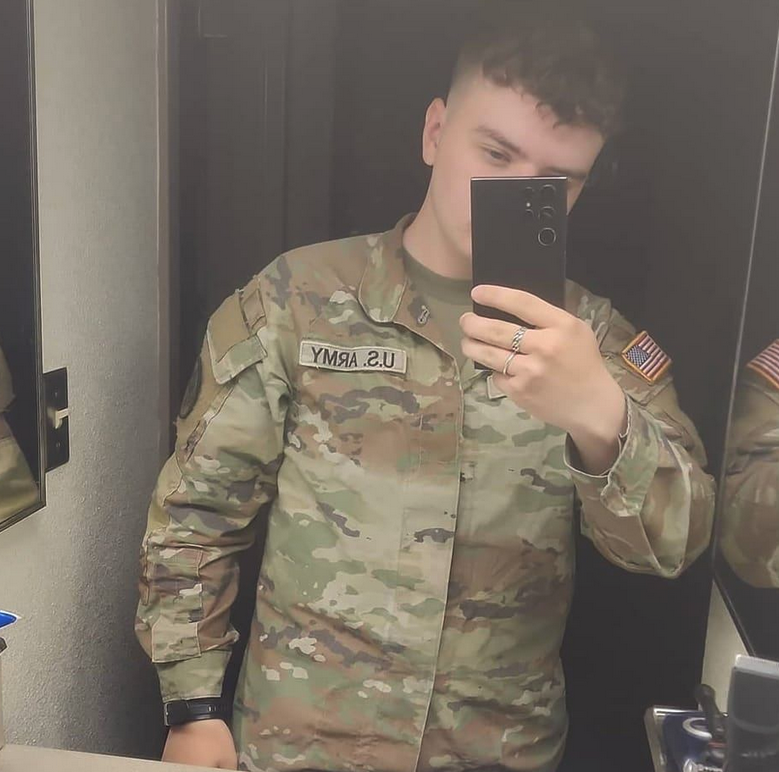
- July 2025: Cameron "Kiberphant0m" Wagenius, a U.S. Army soldier and key co-conspirator, pleads guilty to his role in the scheme.
- Ongoing: The search for the third conspirator, John Erin Binns, continues. Despite his involvement in the 2021 T-Mobile breach and the Snowflake operation, Binns remains at large, shielded by his newly acquired Turkish citizenship.
Supporting Data: The Anatomy of the Breach
The success of the Snowflake operation was predicated on the exploitation of "credential stuffing"—the use of previously leaked usernames and passwords to gain entry into new systems. The group’s reliance on the absence of MFA allowed them to bypass traditional security perimeters with ease.
The Scope of the Damage
The breadth of the stolen information is staggering. According to official federal filings, the data stolen includes:
- Telecommunications Records: Call and text history for over 100 million AT&T customers.
- Governmental Data: DEA registration numbers and internal documents.
- Financial Records: Payroll information, banking details, and credit profiles of millions of corporate employees.
- Personal Identification: Driver’s licenses, passport numbers, and Social Security numbers for a significant portion of the North American population.
The involvement of Cameron Wagenius (Kiberphant0m) added a layer of geopolitical volatility. Wagenius, while stationed in South Korea, allegedly leaked what he claimed were the call logs of then-President-elect Donald Trump and Vice President Kamala Harris, as well as classified schematics purportedly belonging to the U.S. National Security Agency (NSA).
Official Responses and Corporate Accountability
The sheer scale of the Snowflake incident forced a reckoning within the cloud-computing industry. Snowflake, as a platform, was not "hacked" in the traditional sense of a vulnerability in their code; rather, their clients’ accounts were compromised due to poor security hygiene.
Snowflake’s Remediation
In the wake of the disclosures, Snowflake shifted its security posture fundamentally. The company implemented:
- Mandatory MFA: Moving away from optional security, the company began enforcing multi-factor authentication for all users.
- Enhanced Password Complexity: New, more stringent requirements were placed on user credentials to prevent successful brute-force or dictionary attacks.
- Customer Communication: Snowflake initiated widespread outreach programs to help their client base secure their respective configurations against similar credential-stuffing attacks.
The Department of Justice
The DOJ’s handling of the case underscores the gravity of the crimes. By prosecuting Moucka and Wagenius, the U.S. government is sending a clear message regarding the intersection of cybercrime and national security. The sentencing for Moucka is scheduled for October 27, where he faces a potential 30-year prison sentence.
Implications: The New Era of Cyber-Extortion
The saga of Connor Riley Moucka and his collaborators offers several sobering lessons for the modern digital economy.
The Persistence of the "Insider" Threat
The involvement of Cameron Wagenius—a U.S. Army soldier—highlights the danger of the "insider" or "state-adjacent" threat actor. When individuals with access to military or sensitive institutional hardware turn to cybercrime, the traditional boundaries of law enforcement are tested.
The "Turkish Shield"
The case of John Erin Binns, who remains out of reach in Turkey, illustrates the geopolitical complications of modern digital justice. As cybercriminals increasingly seek refuge in jurisdictions that do not have extradition treaties with the United States, international cooperation becomes the only viable path forward. The fact that Binns, an American, has successfully obtained Turkish citizenship to avoid trial for the T-Mobile and Snowflake breaches represents a growing trend of "digital exile."
The Death of Privacy by Convenience
Ultimately, the Snowflake breach was a failure of convenience over security. For years, companies prioritized ease of access for employees over the robust security of MFA. The extortion of 165 organizations proved that this trade-off is no longer sustainable.
Conclusion
Connor Riley Moucka’s guilty plea marks the end of a chapter in the 2024 cyber-threat landscape, but it does not signal the end of the threat. The case remains a textbook example of how a small group of technically proficient, highly motivated individuals can leverage the interconnectedness of global cloud services to hold the private sector and government entities hostage.
As the legal system prepares to sentence Moucka, the broader industry must grapple with the reality that the "Judisches" and "Kiberphant0ms" of the world are not operating in a vacuum. They are operating in a world where data is the most valuable currency, and where security lapses—no matter how minor—can lead to global consequences. The lesson of 2024 is clear: in the digital age, security is not an optional feature; it is the fundamental requirement for survival.