







In the high-stakes world of global finance, the line between a traditional banking institution and a technology powerhouse is increasingly blurred. For Bank of America (BofA), the nation’s second-largest bank by assets, maintaining a competitive edge requires more than just capital—it requires a constant pulse on the bleeding edge of software, data science, and artificial intelligence.
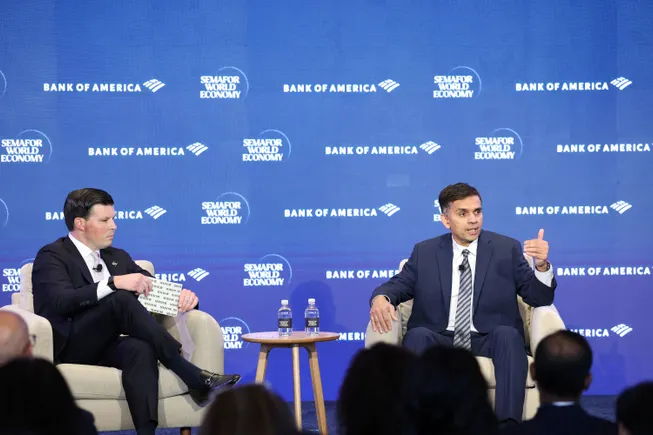
On October 7, the Charlotte-based financial giant hosted its 15th annual Technology Innovation Summit in San Francisco, an invitation-only gathering that serves as a vital bridge between the bank’s massive $3.5 trillion infrastructure and the agile, disruptive world of Silicon Valley startups. According to Hari Gopalkrishnan, Bank of America’s Chief Technology and Information Officer, the event is more than a networking opportunity; it is a strategic crucible capable of fundamentally shifting the bank’s internal tech roadmap.
The Strategic Anatomy of the Summit
The summit acts as a high-level intersection for roughly 500 hand-picked tech founders and venture investors, who are brought into a room with the bank’s top leadership from its global technology, investment banking, and capital markets divisions.
For the bank, the value proposition is twofold: it provides a panoramic view of the current innovation landscape while simultaneously offering a reality check to startups that may have the technology but lack the institutional maturity required to operate within a highly regulated global enterprise.
"It becomes a great way to figure out who else is innovating out there, learn from them, give them our feedback, and eventually, if it’s appropriate, partner with them," Gopalkrishnan noted in an interview leading up to the event.
The results of this 15-year-old tradition speak for themselves. Over the past decade and a half, approximately 7,000 companies have participated in these summits. Of those, one-fifth have successfully transitioned from summit attendees to official BofA vendors. Notable alumni of this pipeline include the data platform Redis and business intelligence giant Tableau (now a subsidiary of Salesforce), both of which have evolved into integral partners for the bank.
Chronology of Influence: From Startups to Scale
The relationship between BofA and the tech ecosystem is not merely transactional; it is educational. The summit creates a feedback loop that begins with the bank identifying a pain point—be it cybersecurity, real-time data processing, or AI-driven automation—and ends with the refinement of a startup’s product to meet enterprise-grade standards.
Phase 1: The Discovery (Pre-Summit)
Bank of America’s scouts identify startups across critical verticals: artificial intelligence, data analytics, enterprise infrastructure, and cybersecurity. The goal is to identify "what the world is thinking" regarding specific technical hurdles, contrasting this against the bank’s internal strategies.
Phase 2: The Consultation (The Summit)
During the event, BofA leaders pose specific, granular problems to groups of founders. For instance, the bank might ask a group of coders how to better manage risk in software testing or how to improve infrastructure modernization. This dialogue forces founders to pivot from "proof of concept" thinking to "enterprise scale" thinking.
Phase 3: The Integration (Post-Summit)
The most promising firms are invited into the bank’s procurement pipeline. However, this often requires the startup to undergo a transformation regarding their approach to governance, multilingual support for cross-border operations, and regulatory compliance.
Supporting Data: The Financial Muscle Behind the Innovation
Bank of America’s commitment to technology is not a modest line item; it is a fundamental pillar of its corporate strategy. The bank currently allocates nearly $14 billion annually to technology initiatives. Of that, roughly $4 billion is directed specifically toward new initiatives and digital transformation.
The urgency of this spending is driven by the rapid evolution of artificial intelligence. CEO Brian Moynihan has been vocal about the bank’s intent to double its AI budget in the coming year. This investment is not speculative; it is designed to optimize software engineering, automate infrastructure management, and bolster defensive capabilities against the unique security risks that AI presents.
The summit provides the "comprehensive view" necessary to ensure this $4 billion investment is directed toward the most viable and robust technologies. By observing how startups approach problem-solving, BofA leadership can validate whether their internal investments align with industry-wide shifts or if they need to "shift gears" entirely to stay ahead of the curve.
Official Responses and Philosophical Alignment
Gopalkrishnan emphasizes that the summit is a two-way street. While the bank gains insights into emerging capabilities, the startups gain a masterclass in the realities of selling to a global, regulated, and massive financial institution.
"The flip side of it is, we actually get to talk to these people about [what] it takes to take the stuff they’re building and implement it at scale at a large enterprise," Gopalkrishnan said.
A recurring theme in these discussions is the "governance gap." Many startups are focused exclusively on speed and novelty, often neglecting the rigorous requirements of banking regulations, third-party risk management, and international data protection laws. By sitting down with these founders, BofA effectively mentors them, articulating the "why" behind the bank’s security requirements. This collaboration leads to a better end-product, as the startup tailors its software to the precise needs of the banking sector, potentially clearing the path for a long-term contract.
Implications for the Future of Banking
The implications of the summit extend beyond the individual success stories of companies like Redis or Tableau. By acting as an anchor institution for tech innovation, Bank of America is shaping the software development standards of the financial services industry.
AI and Beyond
As the bank looks to the future, AI remains the primary focal point. Gopalkrishnan noted that he is particularly keen on discovering firms that can help the bank manage the dual-edged nature of AI: using it to drive efficiency while simultaneously building robust guardrails to counter the risks associated with large language models and generative AI.
Payments and Personalization
Beyond AI, the bank is doubling down on two perennial areas of interest:
- Global Payments: As the world of money movement becomes increasingly digitized and real-time, BofA is looking for new infrastructure that can support faster, more transparent cross-border transactions.
- Marketing and Personalization: Using data to provide a "segment of one" experience for the bank’s millions of customers remains a top priority. Startups that can help the bank synthesize disparate data sets into actionable, personalized insights are finding significant interest from the lender’s leadership.
A Strategic Pivot Point
Ultimately, the most significant implication of the summit is its potential to force an internal pivot. When the collective intelligence of 500 innovators suggests a direction that differs from the bank’s current internal trajectory, BofA leadership has shown a willingness to listen.
"That has helped us go back and inform our strategy," Gopalkrishnan said, acknowledging that the summit often acts as a catalyst for changing the bank’s technical course. In an industry where technological stagnation can be fatal, the ability to pivot based on the insights gained in a single day in San Francisco is arguably the bank’s most valuable asset.
By integrating the external agility of the startup ecosystem with the massive, stable, and highly regulated environment of one of the world’s largest banks, Bank of America is doing more than just buying software—it is building a dynamic, responsive, and future-proof enterprise. The 15th annual Technology Innovation Summit serves as a testament to the fact that in modern finance, the most successful leaders are those who are willing to learn from the very innovators who might one day disrupt them.