






By Gabrielle Saulsbery | Banking Dive
Published: October 1, 2026
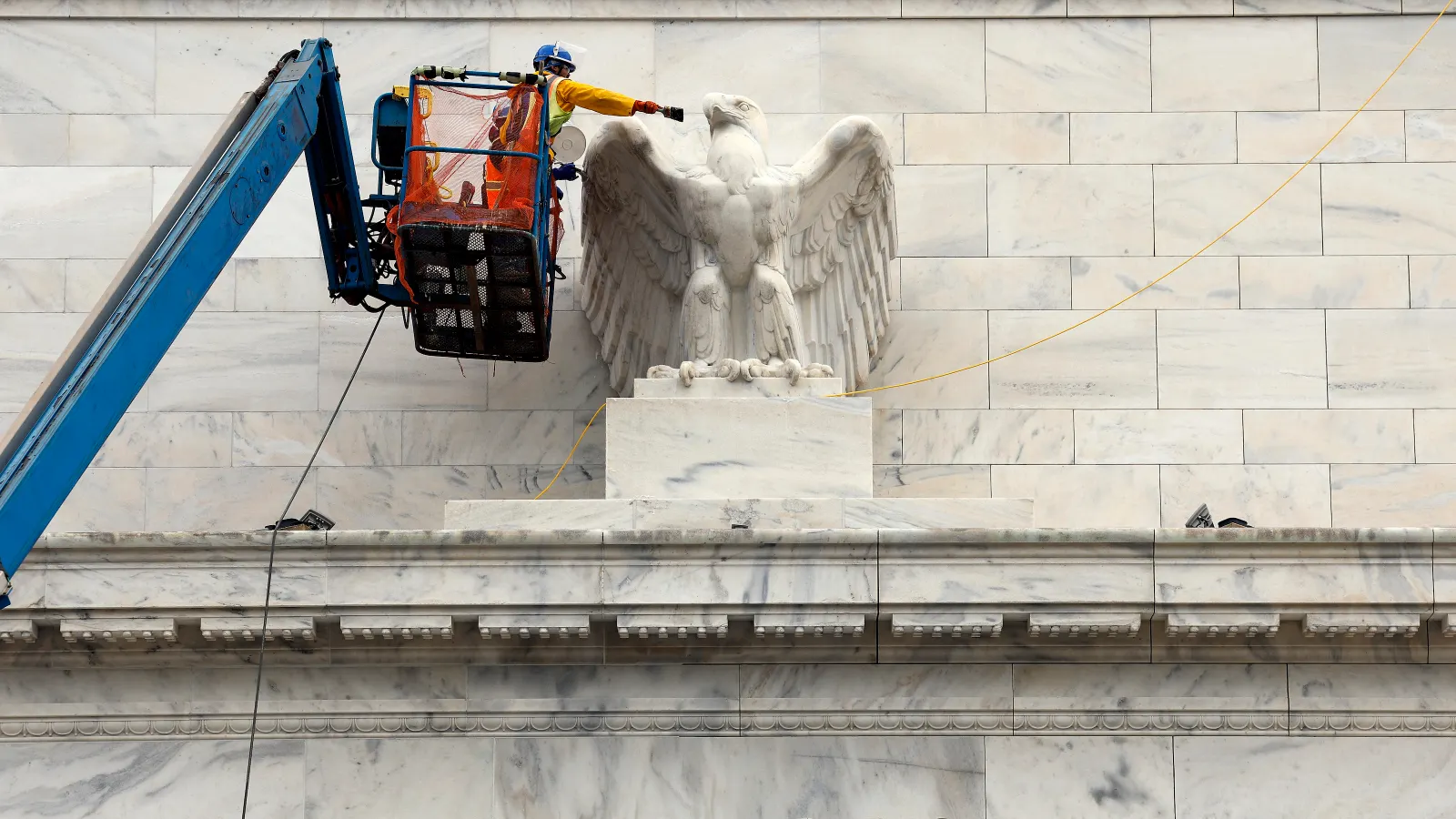
The Federal Reserve Board’s ambitious, multi-billion-dollar effort to modernize the historic Marriner S. Eccles Building complex has moved beyond the realm of simple construction management to become a flashpoint for political controversy in Washington. A long-awaited report released Wednesday by the Office of the Inspector General (OIG) has confirmed that while the central bank’s leadership avoided criminal misconduct, it presided over significant administrative failures that led to ballooning costs and substantial delays.
The findings have reignited tensions between the Federal Reserve and the White House, with President Donald Trump seizing on the report to demand the immediate resignation of former Fed Chair Jerome Powell. As the project enters its final phases, the findings provide a rare, detailed look into how one of the world’s most powerful financial institutions struggled to maintain fiscal discipline on its own home turf.
The Core Findings: A Pattern of Administrative Oversight
The OIG report serves as a scathing indictment of the internal controls surrounding the renovation. While investigators concluded that the board did not violate federal criminal law—and thus found no grounds for a referral to the U.S. Attorney General—the audit painted a picture of a project hampered by a lack of rigorous planning and delayed cost-tracking.
Chief among the OIG’s recommendations is the immediate implementation of a "guaranteed maximum price" (GMP) contract. This mechanism, standard in large-scale commercial construction, shifts the risk of cost overruns from the owner to the contractor. The fact that the Federal Reserve did not utilize such an agreement earlier in the process—waiting until more than three years into construction to obtain a formal project cost estimate—is viewed by critics as a primary driver of the current financial shortfall.
The report noted, "At no point during our evaluation did we find reasonable grounds to believe that a violation of federal criminal law had occurred requiring a referral to the U.S. Attorney General. Further, while our report outlines deficiencies in the management of the renovation project, we did not identify administrative misconduct during our evaluation."
Chronology of a Project in Flux
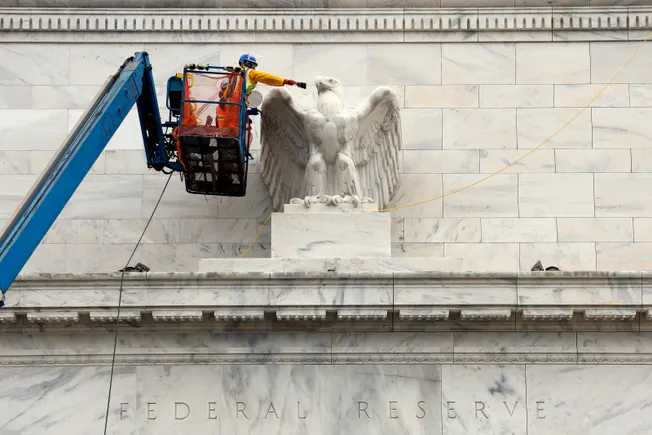
The renovation of the Eccles Building was intended to be a flagship modernization, reflecting the Fed’s stature as a premier financial institution. However, the timeline of the project reveals a steady erosion of budget and efficiency:
- 2020: The project is launched with an initial budget estimated at $1.3 billion.
- Mid-2024: The original deadline for completion arrives and passes, with the project far from finished.
- January 2026: In a startling revelation, the OIG discovers that the Fed did not obtain a formal cost estimate from its construction manager until three and a half years after ground was broken. By this time, costs had already surged past $2 billion.
- January 2026: The Department of Justice issues a subpoena to the Federal Reserve, seeking documents and testimony regarding the renovation, following concerns over the accuracy of previous testimonies provided by leadership.
- August 2026: The Board officially approves a total budget of $2.38 billion for the project.
- October 2026: The OIG releases its final audit, detailing the systemic failure to manage construction costs and calling for immediate corrective action.
- December 2027: The current projected date for the conclusion of all construction activities.
The Political Fallout: Trump’s Demands and Institutional Tensions
The release of the OIG report provided the catalyst for President Donald Trump to escalate his campaign against the Federal Reserve’s leadership. Taking to Truth Social, the President characterized the findings as evidence of profound incompetence and corruption.
"If he doesn’t resign, he should be sued, at the highest level, by the United States Government, for either corruption or incompetence, both of which are completely unacceptable," Trump stated in his post. He confirmed that he has directed Attorney General Todd Blanche to "study" the OIG report, signaling that the legal pressure on the Fed is unlikely to dissipate soon.
The political friction is not new. Throughout 2025, the renovation became a centerpiece of criticism from the White House and the Office of Management and Budget (OMB), led by Director Russ Vought. The combination of interest rate policy disputes and the optics of "gold-plated" construction overruns has created a precarious environment for the Fed, which prides itself on political independence.
Divergent Views: The Congressional Response
The response from Capitol Hill has been equally pointed, though it emphasizes a different set of priorities. Senator Elizabeth Warren (D-MA), the ranking member of the Senate Banking Committee, criticized the project’s management while calling for broader structural reform at the Fed.
"Like Trump’s ballroom and his planned 250-foot triumphal arch, the Fed has overspent and underdelivered on its renovations," Warren said in a statement. "Today’s report underscores something I have long pushed for: Congress must act to improve transparency and accountability at the Federal Reserve."

For proponents of the Fed’s independence, the report is a double-edged sword. While it clears the board of criminal intent, it validates the long-standing complaint that the Fed operates with too little oversight when it comes to its own administrative budgets. The OIG’s recommendation to secure a guaranteed maximum price is widely seen as a baseline expectation for any federal entity, making the board’s failure to do so particularly embarrassing for the institution.
Implications for Future Governance
The OIG’s report carries significant implications for the Federal Reserve’s future operations. Beyond the immediate task of finishing the building by December 2027, the central bank must address the following:
1. Strengthening Internal Procurement Controls
The audit suggests that the Fed’s procurement processes were ill-equipped for a project of this magnitude. Future capital projects will almost certainly face heightened scrutiny and will likely require more rigorous, third-party oversight to satisfy both Congress and the public.
2. Transparency and Public Trust
The Fed relies on the trust of the public to carry out its mandate of monetary policy. When that trust is undermined by reports of "ballooning" costs and administrative neglect, it becomes harder for the institution to defend its decisions on sensitive economic matters. The Board is now under pressure to provide regular, public updates on the renovation’s remaining costs to demonstrate that the $2.38 billion cap will actually hold.
3. Legal and Regulatory Exposure
While the OIG did not find criminal wrongdoing, the ongoing scrutiny from the Department of Justice remains a wild card. The subpoena issued earlier this year implies that investigators are looking for evidence of misrepresentation in previous testimonies. If further evidence emerges, the narrative could shift from one of "administrative incompetence" to one of legal liability.
4. The "Guaranteed Maximum Price" Mandate
The OIG’s explicit recommendation to negotiate a guaranteed maximum price for the remainder of the project is a directive the Board cannot ignore. Failure to do so would leave the Fed vulnerable to even more intense criticism should the 2027 completion date slip or the budget exceed its current ceiling.

Conclusion: A Lesson in Accountability
The saga of the Eccles Building renovation serves as a cautionary tale for federal institutions regarding the risks of mission creep in capital projects. As the Federal Reserve moves toward the final stage of construction, it faces a dual challenge: completing the work without further financial hemorrhaging and restoring a reputation for fiscal stewardship.
For Jerome Powell and the Board of Governors, the months ahead will be defined by their ability to implement the OIG’s recommendations while navigating a highly volatile political landscape. Whether the Fed can survive this period of intense scrutiny with its structural independence intact remains one of the most critical questions in Washington today. As Senator Warren noted, the demand for transparency is no longer coming from the fringes—it has become a central concern for policymakers across the aisle.
The Marriner S. Eccles building, designed to be a symbol of the nation’s economic stability, has, for the moment, become a monument to the complexities of government oversight. Whether that legacy is rectified by the end of 2027 will depend on the Board’s willingness to embrace a new, more transparent era of management.