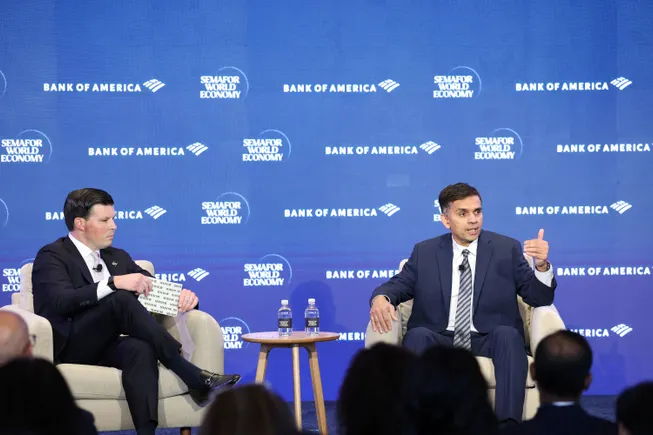










For the modern fintech firm, the path from a nimble, software-driven startup to a fully regulated national bank is often viewed as the ultimate graduation. However, as industry veterans recently underscored at the Federal Reserve Bank of Philadelphia’s annual fintech conference, this transition is not merely a box-ticking exercise in legal compliance. It is a fundamental metamorphosis that requires an absolute, company-wide commitment to regulatory integration.
Jon Auxier, CEO and President of Mercury Bank, delivered a stark message to his peers: a charter pursuit will only succeed when it becomes the company’s overriding objective. For fintech leaders, the transition represents a departure from the "move fast and break things" ethos toward a more structured, rigorous environment where stability and regulatory trust are the primary currencies.
The Strategic Shift: Chartering as an Operational Overhaul
The process of obtaining a national bank charter is an all-consuming endeavor. Auxier, who joined Mercury as chief banking officer last year to shepherd the company through its transition, emphasized that the decision to pursue a charter fundamentally alters the business’s DNA.
"Chartering affects the operations of the business a ton, as it should," Auxier told attendees. Mercury, which recently secured a conditional national bank charter from the Office of the Comptroller of the Currency (OCC), is currently planning for a full operational launch by late 2027.
When asked by industry observers about the optimal timing for a fintech to seek a charter, Auxier’s guidance was pragmatic: "My response is, when you can make this the top priority of your company because that’s what it will take." The transition extends to every function of the organization—from product development and cybersecurity to human resources and legal compliance. It requires a level of organizational maturity that many startups, even those with significant funding, may not yet possess.
Chronology: From Vision to Execution
The journey to becoming a chartered institution is rarely a short-term tactical pivot; it is often a decade-long strategic aspiration.
- 2014–2015: The foundational period for many contemporary fintechs, where the concept of direct bank ownership first appears in internal pitch decks.
- 2020: A watershed year for industry regulatory shifts. Both SoFi and Square Financial Services achieve significant milestones, with SoFi filing for its national bank charter and Square receiving its industrial loan company (ILC) charter.
- 2022: SoFi receives conditional approval from the OCC, marking a successful exit from its reliance on partner banks for core banking services.
- 2023–2024: Mercury accelerates its regulatory path, formally applying for its national bank charter in December 2023.
- 2027 (Projected): The anticipated launch date for Mercury Bank as a fully functional, chartered national institution.
For Mercury, the current pursuit is the fruition of a vision that existed in the company’s original pitch deck nearly ten years ago. As Auxier noted, after years of building the necessary infrastructure and proving out the business model, "now is the right moment to go after it."
The "SoFi" Blueprint: Why Experience Matters
The transition from a pure-play fintech to a bank is fraught with technical and cultural hurdles. Success often depends on bringing in "battle-tested" leadership—executives who have already navigated the labyrinthine requirements of the OCC and the Federal Reserve.
Eric Schuppenhauer, an executive vice president at SoFi Bank, emphasized the importance of hiring individuals who fundamentally "get it." During the conference, Schuppenhauer argued that the process of becoming a bank is not just about hiring consultants, but about embedding experienced operators into the heart of the business.
"Go get the folks that have done it before, put them into the seats, and make sure that they’re driving the processes forward, because people who don’t get it just never get it," Schuppenhauer said.
For SoFi, this strategy paid massive dividends. The firm’s transition allowed it to move away from the constraints of "banking-as-a-service" (BaaS) partnerships, granting it greater control over its balance sheet and product roadmap. The process, once daunting, eventually became "part of our DNA," according to Schuppenhauer.
Supporting Data: The Growth Correlation
The data suggests that the transition to becoming a chartered bank is not just a defensive measure to satisfy regulators—it is a powerful growth catalyst.
When SoFi began its journey to become a bank, it operated with approximately 3 million users. Today, that number has ballooned to 15.8 million customers. The company currently adds roughly 1 million new members per quarter. Schuppenhauer points to the regulatory status as a primary driver of this growth.
By becoming its own bank, SoFi achieved the operational independence necessary to scale at its current velocity. The regulatory oversight that critics often view as a burden, Schuppenhauer views as an engine for development: "We can build faster with more certainty. Strong supervision provides strong innovation."
This sentiment is echoed by Richard Rosenthal, CEO and president of Square Financial Services. Since receiving its ILC charter in 2020, Square has utilized its regulatory foundation to build robust internal controls. "If you have the foundation straight and you’re learning from your customer, the speed at which you can move is really differentiating," Rosenthal noted.
Implications for the Broader Fintech Ecosystem
The trend of fintechs seeking bank charters has profound implications for the broader financial services landscape.
1. The Death of "BaaS" Dependence
For years, the fintech model relied on "renting" a bank charter from legacy institutions. While this model allowed for rapid entry into the market, it also introduced significant counterparty risk and limited the fintech’s ability to control its own interest rate margins or product features. The movement toward full chartering signals a shift toward a more mature market where fintechs are expected to stand on their own financial merits.
2. The Cost of Compliance as a Barrier to Entry
The "overriding objective" mentioned by Auxier comes with a heavy price tag. The legal, audit, and capital requirements to obtain and maintain a national bank charter are substantial. This shift suggests that the era of the "garage-based" banking startup may be coming to an end, favoring larger, better-capitalized players who have the resources to sustain a years-long regulatory approval process.
3. Regulation as a Competitive Advantage
Perhaps the most significant takeaway from the Philadelphia conference is the reframing of regulation. Where once it was viewed as a hurdle to be avoided, it is now being marketed as a feature. A chartered bank offers a level of safety and institutional legitimacy that consumers and corporate partners increasingly demand. As Square and SoFi have demonstrated, once the "legwork" of building controls is complete, the institution is capable of innovating with a speed and confidence that non-chartered firms cannot match.
Conclusion: The Long Road Ahead
The pursuit of a bank charter is not for the faint of heart. As Jon Auxier and his colleagues have made clear, it requires a company-wide pivot that prioritizes long-term stability over short-term expansion. For those fintechs that have the scale, the leadership, and the stomach for deep regulatory integration, the reward is the ability to operate at the center of the financial system.
As we look toward 2027 and beyond, the industry will likely see a thinning of the herd. Only those firms that successfully integrate the "banking mindset" into their operational DNA—treating regulatory compliance not as an obstacle, but as the very foundation of their future growth—will survive the transition. In the new era of fintech, the winners will be those who recognize that, in banking, the rules aren’t just something to follow; they are the platform upon which the next generation of financial innovation is built.