






By Gabrielle Saulsbery | Banking Dive | Published October 5, 2026
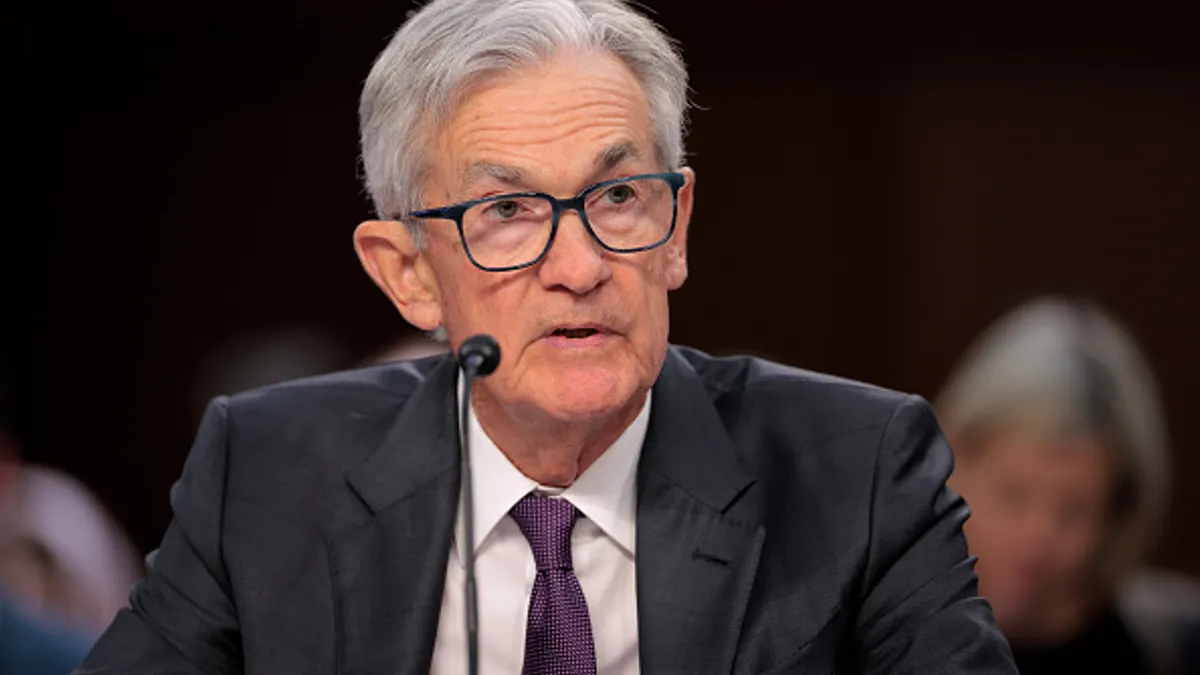
The Department of Justice (DOJ) has officially confirmed that it does not intend to reopen a criminal investigation into former Federal Reserve Chair Jerome Powell regarding the controversial, multi-billion-dollar renovation of the Fed’s flagship facilities in Washington, D.C. This decision, announced Monday, marks a significant, albeit perhaps not final, chapter in a saga that has intertwined federal oversight, executive branch pressure, and questions of institutional accountability.
The confirmation from a DOJ spokesperson follows remarks made by Attorney General Todd Blanche during an interview with Bloomberg TV last Friday. While the DOJ is closing the door on criminal proceedings, Blanche’s comments underscored a distinction between legal criminality and professional failure, leaving the door slightly ajar regarding the broader implications of the project’s ballooning costs.
The Scope of the Controversy: A Financial and Political Quagmire
At the heart of the controversy lies the extensive renovation of the Marriner S. Eccles Building—the historic headquarters of the Federal Reserve—and the adjacent 1951 Constitution Avenue Building. What began as a necessary infrastructure upgrade spiraled into a massive expenditure, drawing intense scrutiny from lawmakers, the public, and ultimately, the White House.
The project, which spanned several years, was characterized by significant budget overruns and complex procurement processes. Critics, including President Donald Trump, have long alleged that the mismanagement of these funds points to deeper issues of corruption or incompetence at the highest levels of the Federal Reserve.
Chronology of the Investigation
The path to the current resolution has been fraught with political friction. To understand how the situation reached this impasse, one must look at the timeline of the investigation:
- January 2026: The DOJ initiates a formal investigation into the Fed’s renovation project amid growing political pressure and allegations of financial irregularities.
- April 2026: The DOJ drops its initial probe. This followed a blistering ruling from a federal judge, who observed that the subpoenas issued during the process appeared to be driven by a "dominant (if not sole) purpose to harass and pressure Powell" to either align with the President’s policy preferences or resign.
- September 2026: The Office of the Inspector General (OIG) releases its highly anticipated report. The report finds evidence of widespread mismanagement and a lack of oversight but explicitly states that there was "neither criminality nor administrative misconduct" in the legal sense.
- October 2026: Attorney General Todd Blanche confirms that the DOJ will not reopen the case, while acknowledging that there remains "more work to do" to understand how the project costs escalated to such an extreme degree.
Findings of the Inspector General
The OIG report serves as the bedrock for the DOJ’s decision to steer clear of criminal charges. The watchdog’s investigation concluded that while the renovation was plagued by poor oversight, it did not cross the threshold into criminal activity.
"It’s pretty clear he [Powell] did not act appropriately as far as oversight, and that’s what the inspector general concluded," Blanche told Bloomberg TV. "Not having any sort of oversight over the folks doing billion-dollar projects isn’t necessarily a crime."
The report highlights a systemic failure within the Fed to maintain adequate budgetary controls. For public institutions, the difference between "mismanagement" and "criminality" is often a matter of intent and statutory violation. According to the OIG, the breakdown was one of process and culture rather than a deliberate attempt to defraud the government.
Official Responses and Political Fallout
The political reaction to the OIG report has been predictably polarized. President Donald Trump, who has been a vocal critic of Powell’s tenure, responded to the findings with characteristic vigor. In a statement on Truth Social, the President demanded that the former Fed Chair resign "IMMEDIATELY."

"If he doesn’t resign, he should be sued, at the highest level, by the United States Government, for either corruption or incompetence, both of which are completely unacceptable," Trump wrote.
In contrast, the Federal Reserve under current leadership has moved toward damage control. Fed Chair Kevin Warsh, in a letter accompanying the OIG report, outlined a path forward intended to restore public and institutional trust. Warsh announced that the Fed intends to hire an independent auditor to verify the accuracy and compliance of all renovation project awards to date.
Furthermore, the Fed is implementing "clear internal controls and standards for budgeting, performance, and oversight for the future," according to Warsh. The objective is to ensure that the bureaucratic failures that allowed the renovation costs to spiral are structurally prevented from recurring.
Implications: Accountability vs. Criminality
The decision by the DOJ to refrain from criminal charges raises profound questions about the nature of accountability in the federal government. By separating the concept of "doing something wrong" from "criminal conduct," the DOJ is effectively signaling that the venue for addressing Powell’s failures is not the courtroom, but rather the boardroom and the court of public opinion.
For many observers, this outcome is unsatisfying. If a multi-billion-dollar project can be mismanaged to the point of public outrage without a criminal nexus, it suggests a gap in current federal oversight mechanisms. Attorney General Blanche himself admitted that there is "more work to do" to understand the financial trajectory of the project, suggesting that the administrative investigation might continue in other forms.

The implications for the Federal Reserve are equally significant. As an institution that prides itself on its independence, the Fed is currently in a defensive posture. The need to bring in an independent auditor is a tacit admission that its internal checks and balances were insufficient. The "Renovation Scandal," as it has been termed, serves as a cautionary tale for federal agencies regarding the risks of large-scale infrastructure projects when oversight is sidelined in favor of administrative convenience.
The Path Forward
As the dust settles, the focus shifts to the Fed’s future. The commitment to rigorous internal controls is a necessary step, but restoring the reputation of an institution like the Federal Reserve requires more than just updated spreadsheets and new audit protocols. It requires a fundamental shift in how the Fed communicates its fiscal responsibilities to the American public.
The DOJ’s decision to close the criminal investigation does not necessarily mean that the matter is settled for Jerome Powell personally. While he is shielded from criminal prosecution, the pressure from the executive branch and the scrutiny of the public remain intense. Whether these factors lead to further civil litigation—as suggested by the President—or whether the focus remains strictly on the Fed’s internal reforms, the case remains a landmark example of how infrastructure projects can become proxies for larger political battles.
In the coming months, the results of the independent audit will be closely watched. If the audit reveals that funds were misappropriated or that the oversight failures were even more egregious than the OIG suggested, the calls for accountability may intensify, regardless of the DOJ’s current stance. For now, the legal system has stepped back, leaving the Federal Reserve to reconcile its internal failings with the demands of an increasingly skeptical public.
Ultimately, the lesson of the Eccles Building renovation is that in the halls of power, administrative oversight is not merely a bureaucratic task—it is a vital component of public trust. When that trust is broken, the consequences extend far beyond the budget of a construction project, touching the very integrity of the institutions that govern the nation’s economy. The Fed’s ability to navigate this period of reform will be the true test of whether it has learned the hard lessons of this multi-billion-dollar oversight failure.