








As meteorological models point toward a potentially record-breaking El Niño cycle, federal and state emergency officials are issuing urgent warnings to homeowners and renters nationwide: standard property insurance policies do not cover flood damage, and the federal government’s mandatory 30-day waiting period means that coverage must be secured proactively, long before a storm touches down.
With historical data highlighting a massive vulnerability gap—nearly a third of all flood claims originate outside high-risk FEMA zones—insurance experts emphasize that waiting for a severe weather forecast is a costly mistake. The clock on a standard flood insurance policy starts the day it is purchased, making dry-weather preparation the single most critical financial defense for property owners heading into the winter storm season.
Main Facts: The Critical 30-Day Rule and the El Niño Threat
The core vulnerability for millions of American households lies in a widespread misconception: the belief that standard homeowners or renters insurance policies protect against water damage caused by rising external water. In reality, traditional policies generally cover internal water disasters—such as a sudden and accidental burst pipe or a malfunctioning washing machine. They strictly exclude surface water, overflowing creeks, torrential rain pooling in streets, and storm surges.
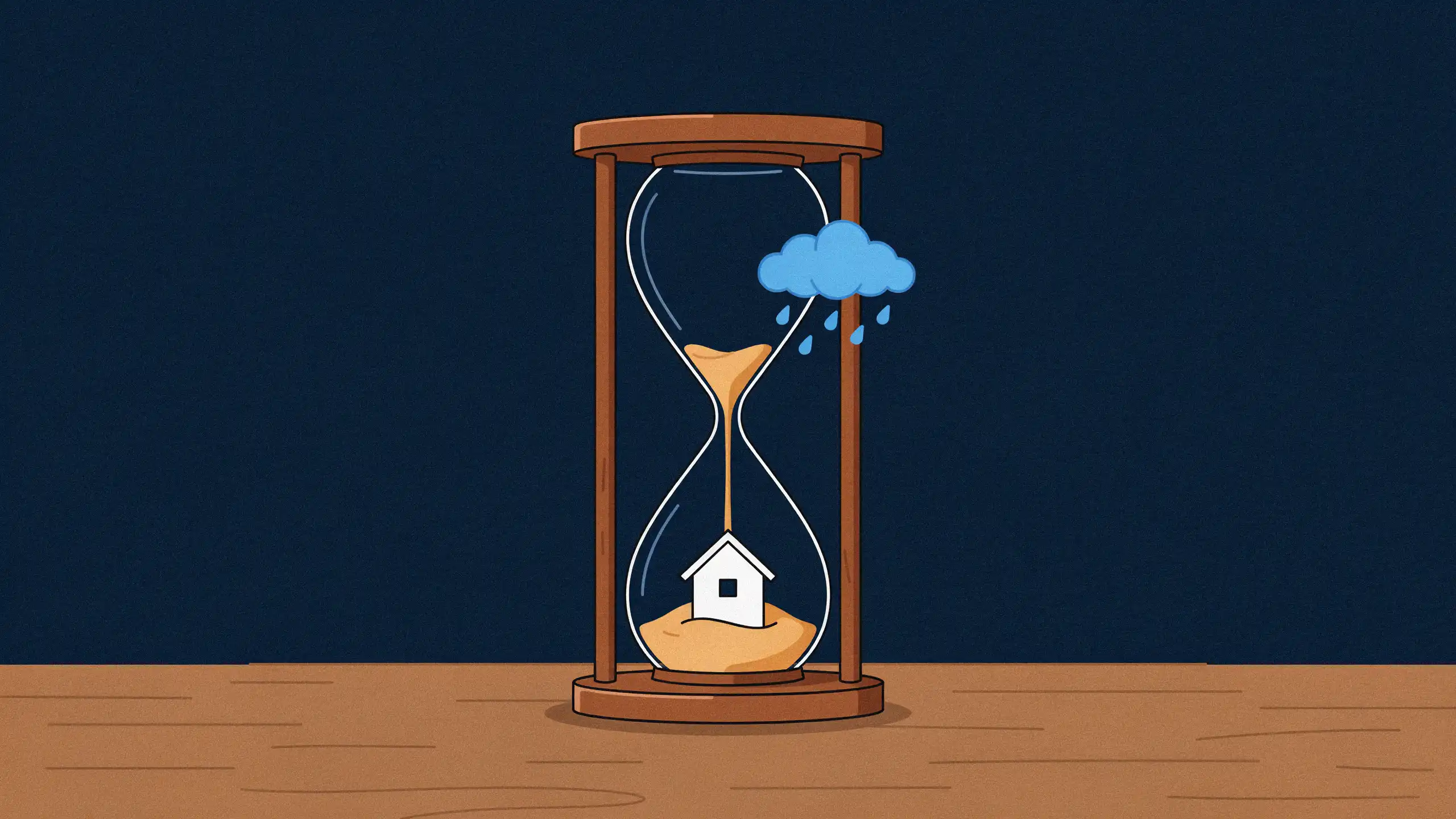
To bridge this gap, property owners must look to specialized policies, most notably through the National Flood Insurance Program (NFIP). However, unlike standard policies that may offer immediate coverage, federal flood insurance features a strict 30-day waiting period before it takes effect.
This administrative delay carries immense weight. If a homeowner waits until a hurricane or atmospheric river appears on a local weather forecast, they are already too late. Any policy purchased after a storm system forms will leave the property completely unprotected during the immediate event.
Compounding this urgency is the meteorological outlook for the season. NOAA forecasters have calculated a staggering 75% probability that the developing El Niño in the Pacific will rank as the strongest on record—dating back to 1950—before the calendar year concludes. Historically, strong El Niño winters alter jet stream patterns, funneling a relentless parade of severe storms across the southern tier of the United States, stretching from California through the Gulf Coast and into Florida.
Chronology: How the Threat Unfolded in 2026
The convergence of severe weather forecasting and administrative deadlines has created a compressed timeline for property owners seeking financial protection this fall.
- September 10, 2026: The National Oceanic and Atmospheric Administration (NOAA) releases updated seasonal models, officially giving 75% odds that the strengthening Pacific El Niño will reach historic proportions by the end of the year. Forecasters warn of severe storm tracks impacting the southern and western regions of the United States.
- Early September 2026: Emergency management agencies across vulnerable states begin mobilizing resources, noting that soil saturation from previous seasons leaves regions exceptionally prone to rapid runoff and flash flooding.
- Mid-September 2026: In response to the intensifying forecast, California state officials formally declare an emergency, anticipating extreme precipitation events akin to previous atmospheric river disasters.
- September 22, 2026: California’s Insurance Commissioner steps forward with a public directive, urging all residents—not just those living along coastlines or major riverbeds—to thoroughly review their property insurance portfolios and secure necessary endorsements before winter weather arrives.
- The October-November Threshold: Emergency planners highlight the calendar math of the NFIP waiting period. A policy purchased in the opening days of October will officially activate by early November, cutting it close to the historical onset of heavy seasonal precipitation.
Supporting Data: The Hidden Dangers Outside FEMA Flood Zones
One of the most persistent myths in real estate and personal finance is that flood insurance is only necessary for individuals whose properties sit squarely inside a designated Special Flood Hazard Area (SFHA). The data tells a drastically different story.
According to long-term tracking by the Federal Emergency Management Agency (FEMA) covering the decade from 2014 through 2024, a striking 29% of all National Flood Insurance Program claims originated outside the zones mapped as high-risk.
[FEMA Claim Distribution (2014–2024)]
--------------------------------------------------
High-Risk FEMA Zones:      [███████████████████] 71%
Moderate- to Low-Risk:     [█████████          ] 29%
--------------------------------------------------
This statistical reality stems from FEMA’s strict legal definition of a flood. Under federal guidelines, a flood is legally classified as a general and temporary condition of partial or complete inundation of two or more acres of normally dry land, or of two or more properties (at least one of which is the policyholder’s).
This means that a homeowner does not need to live near an ocean or a major river to be devastated. Heavy, sustained rainfall that pools across an entire suburban block, or a local creek that swells past its banks due to saturated soil, fully qualifies as a flood event. Properties built on slopes, at the bottom of hills, or in rapidly developing urban areas where concrete prevents natural absorption are routinely exposed to "urban flash flooding" completely independent of federal flood maps.
Furthermore, the mechanics of acquiring federal coverage are standardized. The NFIP partners with more than 48 private insurance companies to write and service policies. Crucially, all participating providers charge the exact same federally regulated rates for identical coverage amounts. This means consumers do not need to shop around for pricing; obtaining a single quote through an existing home insurance agent or via the official federal portal (FloodSmart.gov) provides the baseline federal price.
Federal policies offer structured financial safety nets:
- Building/Structure Coverage: Up to $250,000 for residential structural damage.
- Personal Property/Contents Coverage: Up to $100,000 for personal belongings inside the home (which can be purchased independently by renters).
The sole major exemption to the standard 30-day waiting period occurs when flood insurance is purchased in conjunction with making, increasing, extending, or renewing a mortgage loan. In all other scenarios, the clock begins strictly upon purchase.
Official Responses: Warnings from State and Federal Regulators
As the El Niño winter draws closer, public officials are ramping up public awareness campaigns to prevent the widespread financial devastation seen in past storm cycles.
State insurance regulators, particularly in states prone to dramatic weather swings like California, Florida, and Texas, are utilizing public service announcements to dispel common misconceptions. State commissioners emphasize that waiting for a hurricane watch, severe thunderstorm warning, or atmospheric river advisory to buy coverage is a fatal flaw in policy design.
"Insurance cannot be bought reactively," noted a regional insurance department spokesperson during the recent wave of autumn advisories. "When a storm is visible on satellite imagery, the risk is active, and underwriting rules universally prohibit binding new coverage while a peril is imminent. Homeowners must operate on calendar time, not storm time."
Concurrently, FEMA and private insurance trade groups have leaned into digital tools to simplify the quote-generation process. Platforms like FloodSmart.gov now feature streamlined property-lookup mechanisms designed to help consumers assess their relative risk levels—even if they sit outside formal flood boundaries—and connect them immediately with participating write-your-own (WYO) insurance carriers.
Implications: Financial Vulnerability and the Imperative of Proactive Planning
The financial implications of ignoring the 30-day flood insurance window extend far beyond immediate property repairs; they dictate the long-term economic survival of households.
When an uninsured or underinsured home suffers catastrophic water damage, the financial burden falls almost entirely on the homeowner. While federal disaster assistance—such as grants from FEMA or low-interest loans from the Small Business Administration (SBA)—is frequently publicized following major presidential disaster declarations, these funds are often misunderstood.
- SBA Disaster Loans must be paid back with interest, adding immense long-term debt to families already dealing with displaced living situations and destroyed property.
- FEMA Individual Assistance grants are historically limited in scope, designed primarily to meet emergency housing needs rather than restore a home to its pre-disaster market value. They are rarely sufficient to rebuild a flooded foundation, replace ruined drywall, or purchase new personal belongings.
For renters, the stakes are equally high. While landlords carry insurance for the physical building structure, tenant belongings—furniture, electronics, clothing, and sentimental items—are entirely unprotected by the landlord’s policy. Renters contents-only flood policies represent an affordable, highly specific safety net that prevents total financial loss when street-level or ground-floor flooding breaches an apartment or rental home.
The Bottom Line for Property Owners
As meteorological indicators point toward a turbulent winter driven by a historic El Niño cycle, the window for effective risk mitigation is rapidly narrowing.
Insurance markets operate on strict rules of foresight and calculation. By taking a few moments on a clear, dry day to contact an insurance provider, request a flood quote, and initiate the 30-day waiting period, property owners can transform a potential financial catastrophe into a manageable, insured event. As industry veterans repeatedly advise: The best time to buy flood insurance is long before the water starts to rise.