







For years, the narrative surrounding the American economy has been defined by a looming sense of dread. With household debt levels ballooning to a record-breaking $18.8 trillion, conventional wisdom suggested that the average American household was teetering on the edge of a fiscal cliff. High inflation, coupled with the persistent pressure of high interest rates, painted a picture of a nation struggling to keep its head above water.
However, a groundbreaking new survey of 1,028 U.S. adults conducted by Lexington Law reveals a startlingly different reality. While the headline debt numbers are indeed historic, the day-to-day experience of the American consumer is characterized by a high degree of financial responsibility. The data suggests a profound "debt paradox": most Americans are working harder than ever to manage their obligations, yet they are finding it nearly impossible to make meaningful progress on their balances.
Main Facts: The Illusion of Irresponsibility
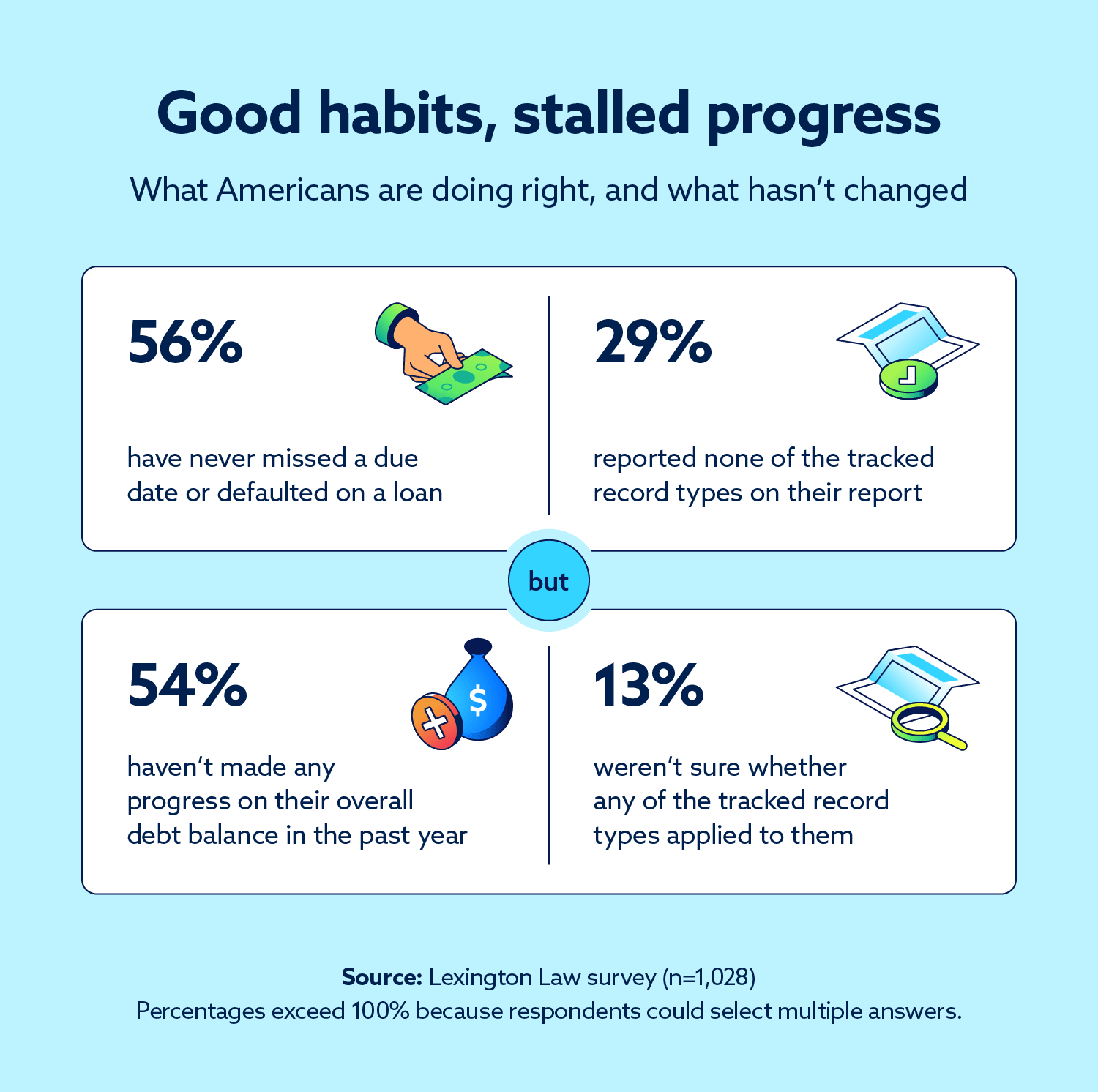
The prevailing assumption—that high debt is a symptom of widespread reckless spending or missed payments—is not supported by the data. In fact, 56% of survey respondents have never missed a due date or defaulted on a loan. Furthermore, 29% of those surveyed reported that their credit reports were entirely free of derogatory markers, such as collections, bankruptcies, or late payments.
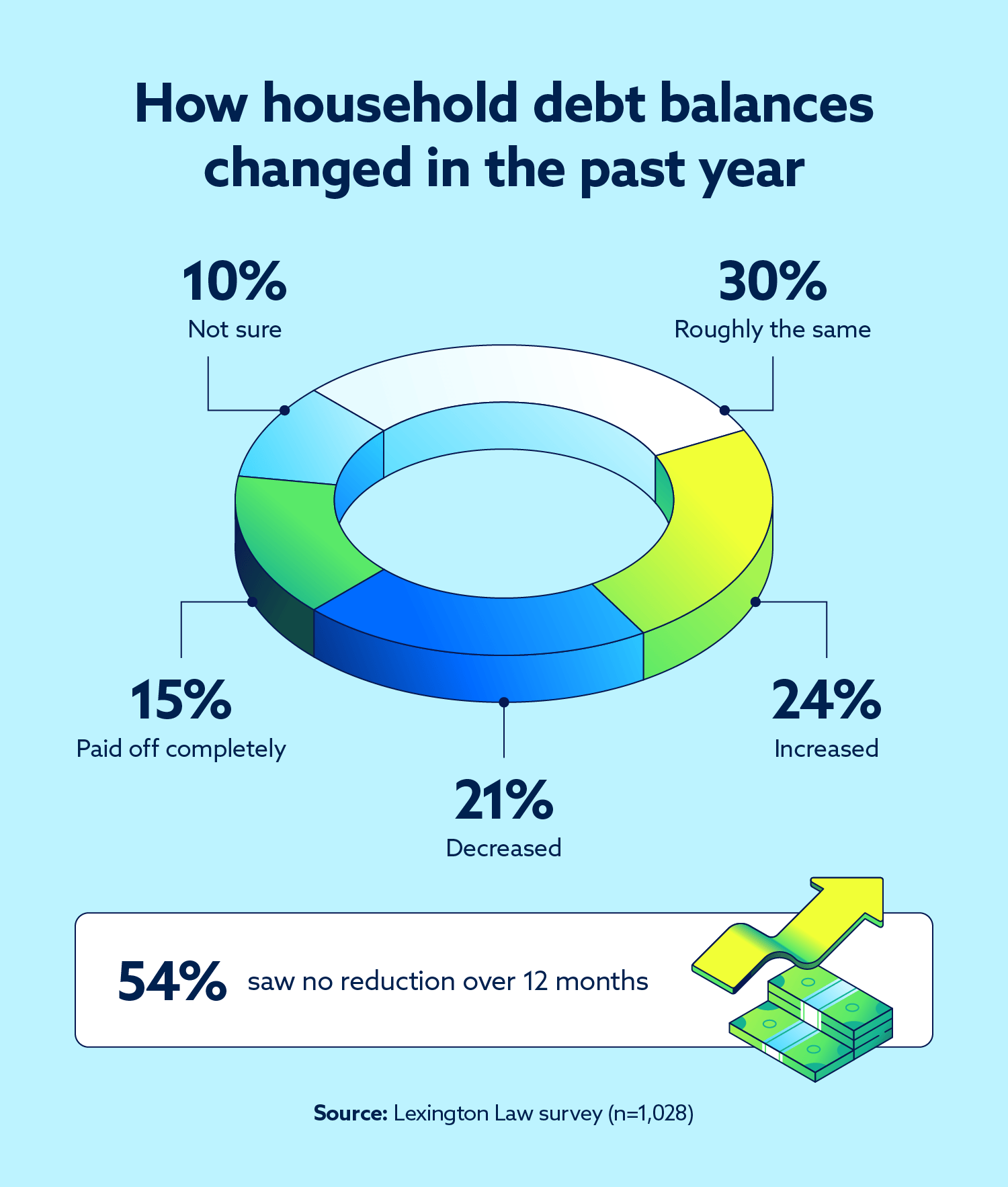
These figures indicate that the majority of Americans are not "deadbeats"; they are diligent, consistent, and disciplined. Yet, this discipline is failing to yield the traditional rewards of debt reduction. Over half (54%) of the respondents noted that their total debt balance has remained stagnant or increased over the past 12 months. When we isolate those who are actively paying their bills on time, we still find that their balances are barely moving. This suggests that the issue is not behavioral—it is systemic.

Chronology of Financial Strain
To understand the current state of American debt, we must look at how these pressures have accumulated over the last few years.
The Build-Up: Following the initial economic shifts of the early 2020s, many households utilized credit as a bridge to manage rising costs for essential goods. This led to a reliance on revolving debt, particularly credit cards, which now account for 43% of household debt, outpacing mortgages (27%) and auto loans (22%).
The Plateau: By 2025, the "cushion" provided by pandemic-era savings had largely evaporated. Households entered a phase of maintenance, where the primary goal shifted from growth to survival. The survey data reflects this: 30% of respondents said their debt stayed the same over the last year, and 24% saw it increase.
The Current Standoff: As of mid-2026, we are in a state of stalled progress. Only 21% of respondents saw their debt shrink, and a meager 15% managed to pay it off entirely. The chronology here is clear: the period of high interest rates has effectively turned the "minimum payment" trap into a permanent feature of the modern American middle-class experience.

Supporting Data: The Anatomy of Household Debt
The survey provides a granular look at how debt is distributed across the American landscape. While 41% of respondents carry $10,000 or more in non-mortgage debt, the distribution is surprisingly wide.
Key Debt Distribution Metrics:
- Credit Cards (43%): The primary source of unsecured debt, carrying the highest interest rates and the least amount of protection.
- Mortgages (27%): While significant, these are secured assets and often considered "good debt."
- Auto and Personal Loans (22% and 19%): These represent the middle-tier obligations that keep many households locked in payment cycles.
The most concerning statistic is the lack of movement in balances. Even among those who are "doing everything right"—making on-time payments and avoiding new debt—the principal remains largely untouched. This is a direct consequence of current interest rate environments, where a significant portion of every payment is consumed by interest rather than principal reduction.
The Consequences of Slipping
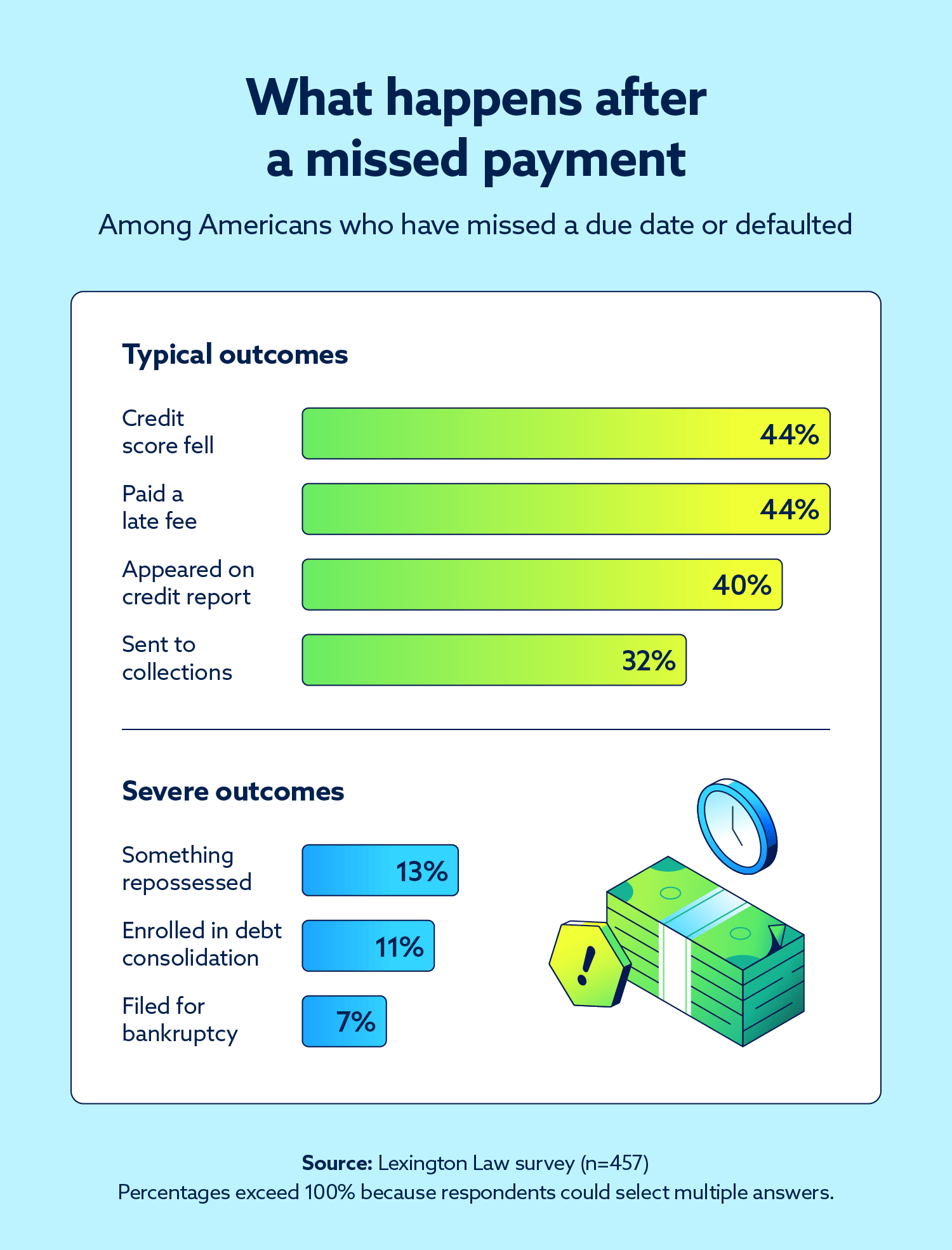
While the majority of Americans maintain clean credit histories, the minority who do experience a "missed payment" event face a cascading series of negative consequences. The survey found that 45% of respondents have missed a due date or defaulted at some point in their lives.
When a payment is missed, the reaction is swift and often devastating to one’s financial standing:
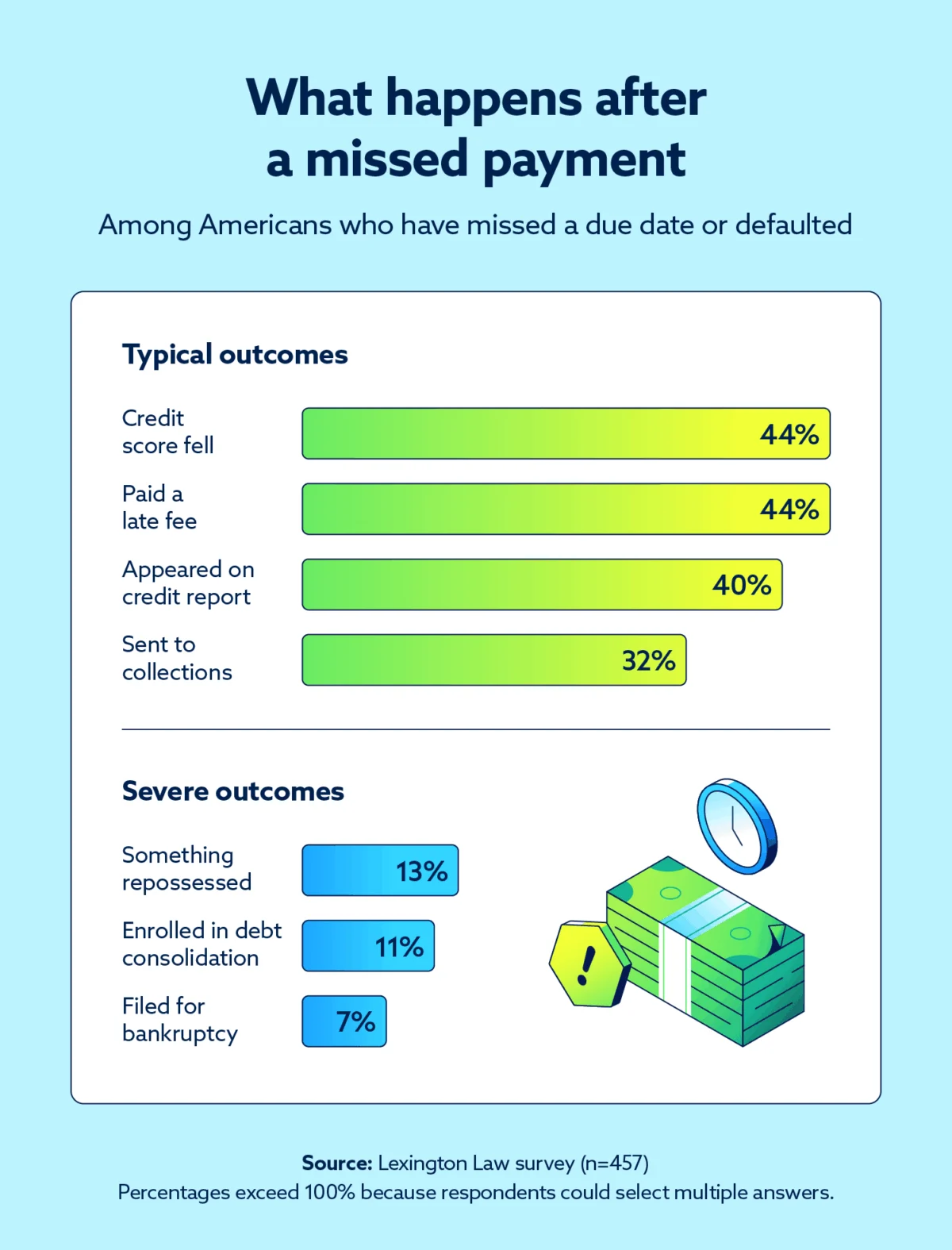
- 44% saw an immediate drop in their credit score.
- 44% incurred late fees, which often exacerbate the cycle of debt.
- 40% saw the incident reflected on their credit report, creating a long-term blemish.
- 32% were pushed into the collections process.
The most alarming aspect of this sequence is the inaction that follows. Despite the availability of consumer protections, only 17% of those who experienced a negative financial event attempted to contact their lender to negotiate. This suggests a significant gap in financial literacy or a sense of fatalism, where consumers believe that once a mistake is made, they have no recourse.
Official Perspectives: The Role of Credit Transparency
The survey highlights a dangerous "blind spot" in American financial life: 13% of respondents were unsure if they had negative items, such as collections or missed payments, on their reports.
Moriah Beaver, an associate attorney at Lexington Law, emphasizes that credit reports are not just static documents—they are living representations of a consumer’s financial identity that require constant vigilance.
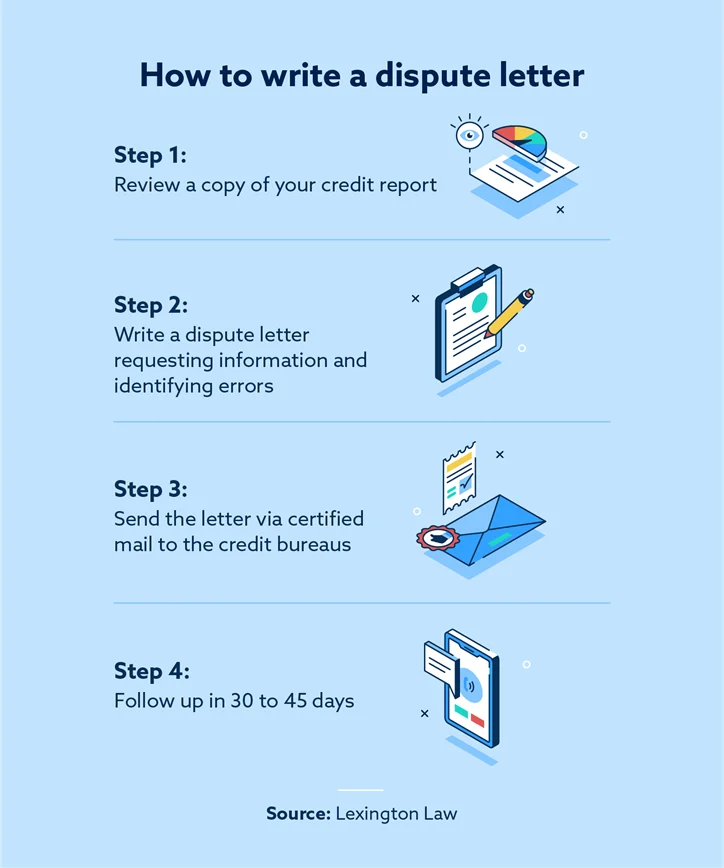
"Under the Fair Credit Reporting Act (FCRA), you have the right to dispute information you believe is inaccurate or incomplete," Beaver explains. "The credit reporting agencies have a legal responsibility to investigate these disputes. Many consumers simply do not realize that errors—or outdated information—can remain on their reports, holding them back even when they are doing everything else right."
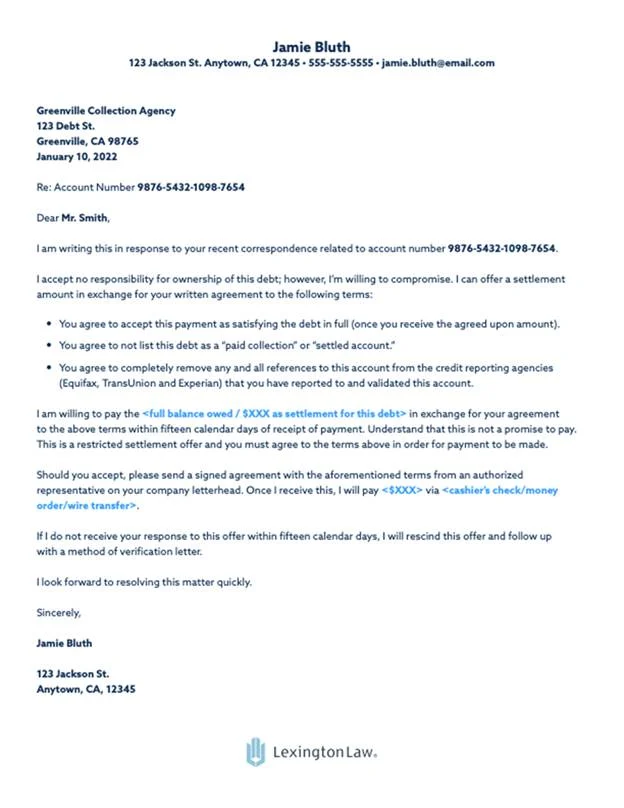
Beaver advises that when a consumer identifies an inaccuracy, they must document everything: the specific account, the date of the error, and the reported status across all three major credit bureaus. However, she notes that the complexity of these reports often makes it difficult for the average person to navigate the dispute process effectively. This is where professional intervention, such as an attorney-led review, can provide the necessary legal leverage to ensure that a consumer’s credit report accurately reflects their actual behavior.
Implications for the Future
The implications of this data are profound. We are seeing a shift in the American psyche: the "middle-income" bracket, specifically those earning between $50,000 and $99,999, is now the most anxious about credit. These are the households that have enough to lose to be worried, but not enough financial "margin" to absorb a sudden shock.
The "Fair Credit" Trap
Those with "fair" credit scores are currently the most vulnerable. They are more likely to carry credit card and "Buy Now, Pay Later" balances and are the most likely to report that their debt is stalled or growing. This group is caught in a feedback loop: their credit score limits their access to lower-interest debt, which forces them into higher-interest products, which in turn keeps their balances from shrinking.
Moving Forward
The data suggests that the path to financial recovery is not just about "paying more." For many, it is about "paying smarter." This involves:
- Auditing the Report: Regular monitoring through sites like annualcreditreport.com is no longer optional—it is a necessity.
- Asserting Rights: Utilizing the FCRA to remove inaccurate or unsubstantiated derogatory marks can provide an immediate boost to credit scores, potentially opening doors to better debt consolidation options.
- Negotiation: Moving away from the "passive" acceptance of late fees and negative marks toward proactive negotiation with creditors.
The "Debt Paradox" reveals that while individual Americans are fundamentally disciplined, the current financial architecture is designed to keep them in a cycle of debt. To break that cycle, consumers must transition from being passive observers of their credit reports to active, informed advocates for their own financial health.
As the economy continues to fluctuate, the divide between those who understand their credit reports and those who do not will likely widen. The message from the survey is clear: if you are working hard and your balance isn’t moving, the problem might not be your wallet—it might be your credit report. It is time to look closer.
Methodology:
This report is based on a survey of 1,028 U.S. adults, conducted by Centiment for Lexington Law Firm between August 12 and August 17, 2026. The margin of error for the total sample is +/- 3% at a 95% confidence level. Data remains unweighted.
Disclaimer: This article is for informational purposes only and does not constitute legal or financial advice. Readers should consult with qualified professionals regarding their specific financial situations.