Introduction: The New Imperative in Supply Chain Resilience
In an era defined by volatile consumer expectations and rapid market shifts, inventory logistics has evolved from a back-office administrative chore into a core strategic driver of corporate profitability. Modern businesses can no longer afford to treat supply chain management as an afterthought. From sourcing raw materials to the final delivery at a customer’s doorstep, every link in the inventory chain dictates a company’s operational efficiency, cash flow health, and brand reputation.

To achieve sustainable growth, executives and small business owners alike must master the foundational components of inventory logistics: meticulous sourcing and procurement, real-time inventory control, smart warehousing, agile order fulfillment, and optimized transportation management.

Main Facts: Deconstructing the Core Pillars of Inventory Logistics
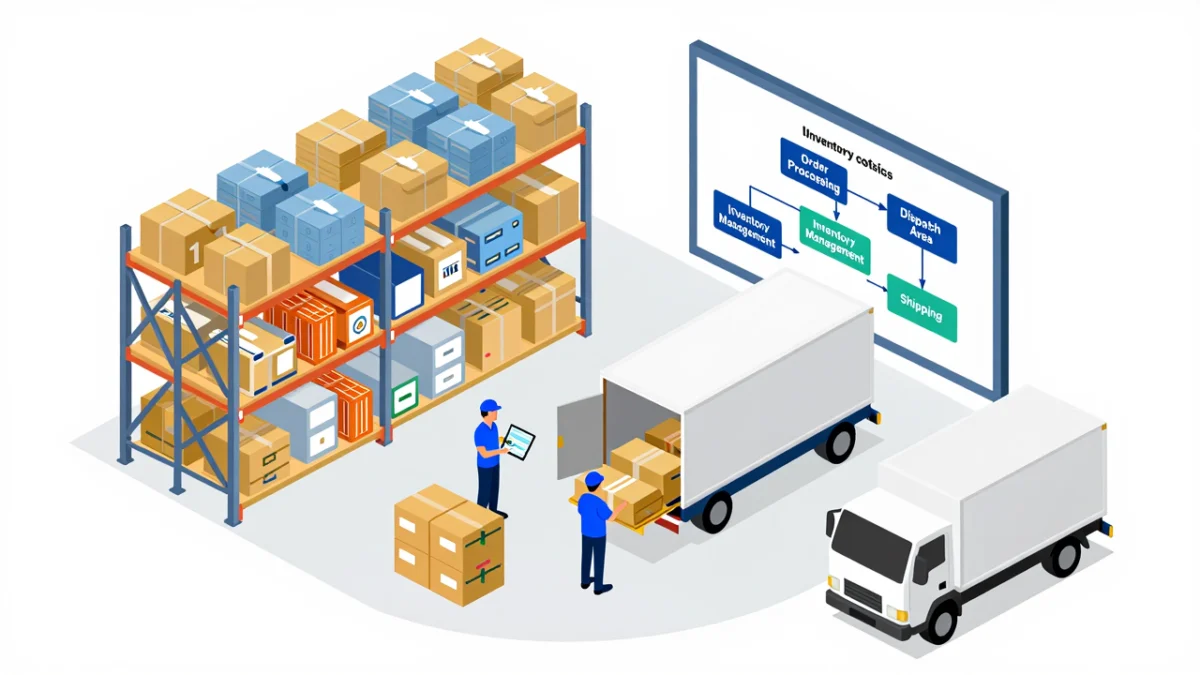
Effective inventory logistics guarantees a seamless flow of goods from suppliers to end-users. At its heart, the discipline rests on five critical operational pillars:

- Sourcing and Procurement: Establishing reliable supplier networks and accurately forecasting material needs to align supply with actual production realities.
- Inventory Control: Implementing robust tracking mechanisms to monitor stock levels dynamically, thereby eliminating the twin threats of debilitating stockouts and costly overstocking.
- Storage and Organization: Optimizing warehouse layouts and utilizing advanced storage techniques to maximize space utilization and accelerate fulfillment speeds.
- Order Fulfillment: Streamlining the picking, packing, and shipping processes to guarantee accuracy and speed.
- Transportation Management: Deploying intelligent route planning and advanced tracking technologies to reduce transit times and distribution overhead.
Complementing these pillars are industry frameworks such as the 7 Cs of Logistics (Customer, Cost, Communication, Control, Convenience, Coordination, and Compliance) and the 7 Pillars of Logistics (Transportation, Inventory Management, Warehousing, Order Fulfillment, Supply Chain Management, Demand Planning, and Customer Service), which provide a holistic blueprint for enterprise-wide alignment.

Chronology: The Evolution of Inventory Management from Static Ledgers to Real-Time AI
The practice of tracking and moving goods has undergone a profound technological transformation over the past several decades:

- The Pre-Digital Era (Late 20th Century): Businesses relied primarily on manual ledger systems, physical stock counts, and retrospective auditing. Lead times were lengthy, and inventory discrepancies were accepted as an inevitable cost of doing business.
- The Rise of Enterprise Resource Planning (ERP): The introduction of computer databases allowed companies to centralize purchasing and stock data, drastically reducing human error and improving basic record-keeping.
- The Just-In-Time (JIT) Revolution: Popularized in manufacturing, JIT methodologies shifted the focus toward reducing holding costs by ordering stock only as needed for production or immediate sale.
- The Modern Era (AI, IoT, and Cloud Integration): Today, inventory logistics is powered by artificial intelligence, Internet of Things (IoT) sensors, and cloud-based software. Real-time visibility, automated reordering, and predictive analytics have turned reactive supply chains into proactive, resilient ecosystems.
Supporting Data and Best Practices: Metrics that Matter
Navigating inventory logistics successfully requires a commitment to data-driven decision-making. Industry benchmarks show that leveraging advanced analytics and automated systems can fundamentally alter a company’s financial trajectory:

- Demand Forecasting Accuracy: Utilizing predictive analytics can boost inventory turnover rates by 10% to 20% while slashing inventory holding costs by 20% to 30%.
- Warehouse Space Optimization: Redesigning warehouse layouts and implementing ABC inventory analysis—which categorizes stock based on value and consumption frequency—can increase usable storage space by up to 30%.
- Audit and Tracking Efficiency: Regular cycle counts and real-time tracking systems elevate average inventory accuracy, directly reducing costly shrinkage and fulfillment errors.
Essential Inventory Performance Metrics
To gauge operational health, supply chain managers must continuously monitor specific key performance indicators:

- Holding Costs: Tracking the total expense of storing unsold goods. Reducing these costs directly supercharges profitability.
- Order Accuracy and Lead Times: Measuring how quickly and correctly orders move from initial placement to customer delivery.
- Inventory Turnover Ratio: Evaluating how frequently inventory is sold and replaced over a given period.
| Strategy / Component | Key Action | Strategic Outcome |
|---|---|---|
| Sourcing & Procurement | Forecast demand precisely; build strategic supplier partnerships | Aligns inventory with real market needs, minimizes procurement costs |
| Inventory Control | Implement real-time tracking and regular cycle audits | Prevents stockouts, curtails excess stock, and preserves cash flow |
| Storage & Warehousing | Redesign layouts; deploy ABC analysis and automation | Boosts space utilization by 30% and accelerates picking speeds |
| Order Fulfillment | Utilize integrated software for picking, packing, and tracking | Minimizes transit damage and enhances customer satisfaction |
| Distribution & Shipping | Leverage GPS, IoT, and Transportation Management Systems (TMS) | Cuts delivery times, slashes shipping costs, and ensures full transparency |
Official Perspectives and Industry Insights
Supply chain experts and industry thought leaders emphasize that technology integration is no longer a luxury, but a baseline requirement for market survival.

According to logistics specialists, the integration of Vendor Managed Inventory (VMI) and cloud-based procurement platforms has fundamentally changed how B2B partners interact. By granting suppliers visibility into real-time demand signals, enterprises can reduce stockouts and excess inventory cushions by up to 30%.

Furthermore, institutions focusing on trade compliance and shipping note that adopting Transportation Management Systems (TMS) is essential for mitigating the impact of extended global lead times. Automated route planning not only burns less fuel—contributing to corporate sustainability goals—but also protects profit margins against volatile carrier pricing.

Implications: Overcoming Common Challenges for Future Growth
Despite technological advancements, businesses frequently stumble when facing persistent logistical hurdles. Understanding these challenges is the first step toward overcoming them:

1. Inaccurate Inventory Data
- The Challenge: Discrepancies between digital records and physical stock lead to delayed shipments and frustrated customers.
- The Solution: Institute regular, rotational inventory audits alongside real-time tracking technologies (such as RFID and IoT sensors) to ensure single-source-of-truth visibility.
2. Escalating Carrying Costs and Supply Chain Volatility
- The Challenge: Unpredictable lead times and poor demand forecasting trap vital capital in dead stock.
- The Solution: Adopt Just-In-Time (JIT) methodologies, calculate Economic Order Quantities (EOQ), and deploy robust safety stock strategies to buffer against sudden demand spikes without over-committing financial resources.
3. Technology Integration and Workforce Readiness
- The Challenge: Purchasing advanced software or automation robotics is useless if warehouse staff lack proper training.
- The Solution: Invest in scalable technological solutions paired with comprehensive employee onboarding programs. Fostering a culture of digital literacy guarantees that your team can fully exploit modern inventory management systems (IMS).
Conclusion
Mastering inventory logistics is a continuous journey of refinement, technological adoption, and strategic alignment. By establishing rigorous sourcing protocols, embracing advanced demand forecasting, optimizing warehouse storage, and tracking performance metrics with clinical precision, organizations can turn their supply chains into competitive advantages.

The path forward requires proactive leadership, continuous investment in scalable technologies, and an unwavering commitment to operational excellence. By tackling logistical challenges head-on, businesses will not only reduce overhead costs and streamline workflows, but also secure the ultimate prize: lasting customer loyalty and sustained profitability.