Main Facts
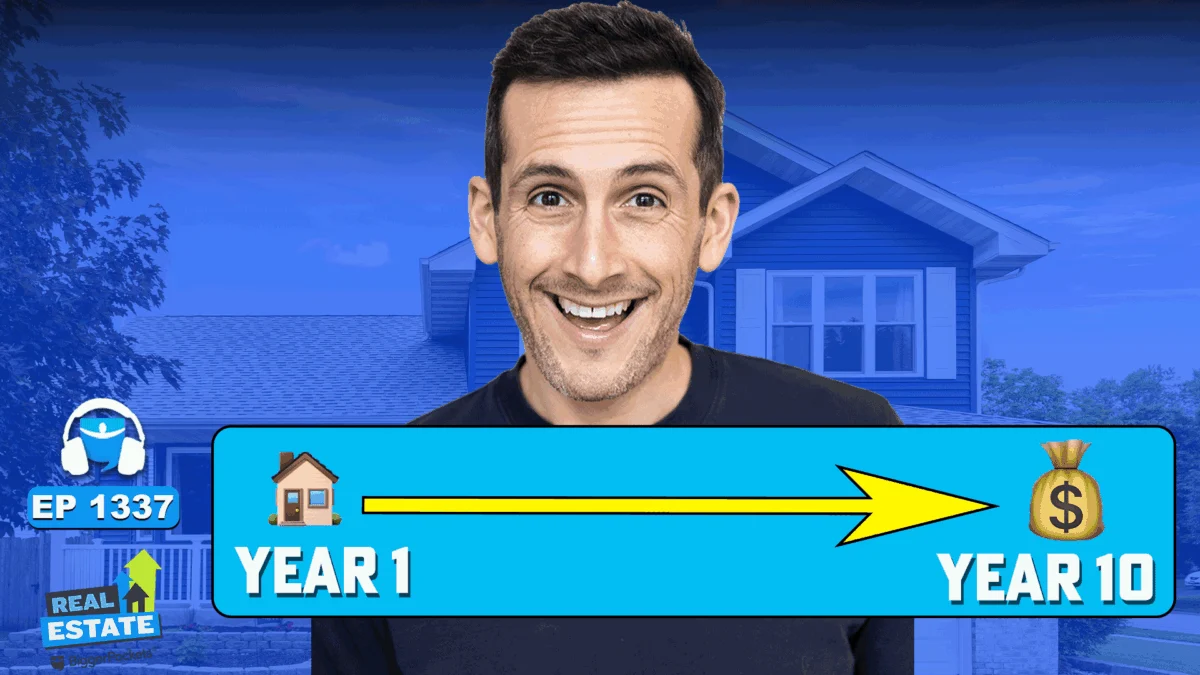
Transitioning from elite athletic competition to the world of business and real estate investment is a journey fraught with unique psychological and financial hazards. Recently, eight-time Olympic medalist and short-track speed skating legend Apolo Anton Ohno sat down with Dave Meyer, Chief Investment Officer at BiggerPockets, to discuss his post-athletic reinvention.
The core takeaway from Ohno’s transition is that building sustainable wealth—particularly through real estate—does not require exceptional genius; rather, it demands patience, discipline, accountability, and a willingness to play the long game. Ohno drew powerful parallels between the rigorous training cycles required to reach the Olympic podium and the cyclical, often grueling nature of real estate investing and entrepreneurship.
Key themes from the discussion included:
- The "Great Divorce": The psychological shock of shedding an all-consuming athletic identity and rebuilding a professional persona from scratch.
- The Cost of Inexperience: Ohno’s personal losses during the 2006–2008 financial crisis due to blind trust and a lack of due diligence.
- The GAS Principle (General Adaptation Syndrome): Understanding how to balance high-intensity work with structured recovery to avoid debilitating burnout.
- The Power of Community: Why an investor’s network, mentorship, and interpersonal relationships serve as their ultimate competitive advantage.
Chronology: From the Ice to the Boardroom
The Peak of Athletic Achievement
For nearly two decades, Apolo Anton Ohno’s life was strictly calibrated to a singular metric: speed. As a short-track speed skater, Ohno competed across three Winter Olympic Games, capturing eight medals and cementing his status as one of the most decorated Winter Olympians in United States history. Every decision he made—from sleep schedules to nutritional intake—was filtered through a singular question: Does this make me faster? Does this make me stronger?
The "Great Divorce"
When Ohno retired from competitive skating 16 years ago, he encountered an invisible opponent he had never trained to face. He describes this phase as the "great divorce"—a sudden, jarring separation from an identity that had defined his existence since childhood.
"It feels like a finger snap in which everything you’ve done has revolved around this one particular thing," Ohno explained to Meyer. "The calls start to get more quiet… and more importantly, you just don’t really know what the hell you’re good at."
For athletes, corporate executives, and W-2 workers alike, stepping away from a lifelong path creates a profound identity crisis. Ohno noted that wearing spandex and skating in circles offered no transferable framework for running a modern business.
Early Missteps and the 2008 Financial Crisis
Driven initially by financial incentives and a lack of clear strategic direction, Ohno dove into the investment world during the height of the mid-2000s real estate boom (2006–2008). Operating as a passive investor in private funds and promissory notes, he placed blind trust in a group of operators who were quietly engaging in mortgage fraud.
When the market collapsed, those operators filed for personal bankruptcy, wiping out Ohno’s capital while he was still actively training for competition. Rather than deflecting blame entirely, Ohno realized he had to undergo a fundamental shift in perspective: he had to radically own his decisions, institute strict verification protocols, and accept the expensive "tuition" paid to the school of hard knocks.
Rebuilding and the Intersection of Business and Wellness
Today, Ohno operates at the nexus of high-performance business and wellness, mentoring entrepreneurs and investing in health-tech companies and stable commercial real estate portfolios, such as industrial assets. He has successfully channeled the discipline of his athletic career into sustainable business practices.
Supporting Data and Athletic Parallels to Real Estate
While many prospective investors view real estate as a high-stakes gamble reserved for financial insiders, veterans of the industry and elite athletes alike argue that the asset class is remarkably forgiving over long temporal horizons.
The Forgiving Nature of Real Estate
- Compounding Time: Just as Olympic success is built over a four-to-eight-year quadrennial training cycle, real estate rewards patience. Short-term market fluctuations, tenant turnover, and economic downturns can be weathered if an investor maintains a long-term outlook.
- Peer Success Rates: Ohno noted that approximately 80% of his retired Olympic cohort who achieved post-athletic success transitioned directly into real estate development, commercial brokerage, or residential sales. Figures like speed skater Chad Hedrick and developer Ryan Bedford successfully ported their rigorous work ethics into property markets.
- Cyclical Performance: Markets are not linear; they move in cycles. Whether an economic season favors buyers through high negotiation leverage or rewards long-term holders through organic appreciation, adaptability is key.
The GAS Principle in Entrepreneurship
Ohno introduced the General Adaptation Syndrome (GAS) framework—comprising alarm, resistance, and exhaustion—to illustrate how physical and mental energy must be managed.
- Alarm & Resistance: Pushing through long hours of intense labor.
- Exhaustion & Burnout: Occurs when an individual undergoes prolonged periods of hard work without experiencing tangible progress or adequate relief.
- Periodization: Just as athletes do not train at 100% capacity every day, entrepreneurs must implement micro-recoveries and structured rest into their schedules to preserve cognitive sharpness.
Insights and Operational Strategies
Ohno and Meyer shared actionable mental models and operational philosophies designed to help small-scale entrepreneurs and real estate investors optimize their performance.
1. Shorten the Decision-Making Loop
To eliminate decision fatigue, Ohno advocates for pre-planning routine choices. During his athletic career, he organized his training gear for every day of the week on the preceding Sunday, removing the mental friction of deciding whether or not to train. In business, automating repetitive tasks and establishing rigid daily habits (such as calling three contractors or reviewing specific deal metrics daily) neutralizes procrastination.
2. Embrace Fear-Setting
Citing entrepreneur Tim Ferris’s concept of "fear-setting," Ohno emphasized the importance of writing down worst-case scenarios. Articulating what one is truly afraid of strips the unknown of its paralyzing power, allowing the mind to construct rational, defensive counter-strategies.
3. Cultivate Radical Accountability
In both sports and real estate, pointing fingers at bad business partners, macroeconomic headwinds, or fluctuating interest rates delays recovery. True progress begins the moment an investor stops playing the victim and assumes total responsibility for their portfolio and partnership decisions.
4. The Power of the Network
For independent operators who lack institutional capital, human capital is the ultimate superpower. Real estate remains a fundamentally relational industry. As Ohno observed during his visits to major commercial real estate conventions, deals are ultimately forged over handshakes, shared meals, and mutual trust rather than cold, corporate transactions.
Implications for Modern Investors and Entrepreneurs
The convergence of elite athletic philosophy and real estate investing offers profound implications for today’s wealth builders.
- Mindset Over Metrics: While financial literacy, underwriting, and market analysis are critical, psychological resilience and emotional regulation dictate long-term survival. Investors who fail to manage their internal psychology frequently overtrade, exit positions prematurely, or succumb to burnout.
- Trust But Verify: Ohno’s experience with fraudulent fund managers underscores the necessity of rigorous due diligence. Blind faith—even in trusted social circles—is a liability. Investors must build robust legal and advisory teams to scrutinize every transaction.
- Redefining Hustle Culture: Modern entrepreneurial culture often glorifies endless exertion. However, Ohno’s insights suggest that sustainable wealth creation requires honoring human physiology. High-quality decision-making stems from a well-rested, physically optimized mind, not from continuous self-exhaustion.
By treating real estate not as a get-rich-quick scheme, but as a long-term craft requiring discipline, continuous learning, and community engagement, everyday investors can emulate the endurance of an Olympian—and cross the finish line toward true financial freedom.