








The landscape of frequent flyer programs has undergone a radical transformation over the past decade. Once defined by the simple act of earning miles through flight distance, loyalty programs have evolved into complex financial ecosystems where points are treated as a distinct, liquid currency. At the forefront of this evolution is the Air France-KLM Flying Blue program. Renowned for its generous access to premium cabin awards—particularly for those holding elite status—Flying Blue has recently introduced a sophisticated financial tool for its members: the "Subscribe to Miles" program.
This service allows members to move away from the traditional, often sporadic, methods of point acquisition, opting instead for a recurring, automated model of mileage accumulation. While the program offers a compelling cost-per-mile proposition, it also requires a strategic approach to ensure that the capital invested yields a genuine return on investment.
The Evolution of Mileage Acquisition: From Flying to Financing
For years, the standard path to building a Flying Blue balance involved flying on Air France, KLM, or their SkyTeam partners, or leveraging credit card sign-up bonuses. While Flying Blue has historically sold miles directly to consumers—often through targeted promotions—these sales were typically one-off transactions.
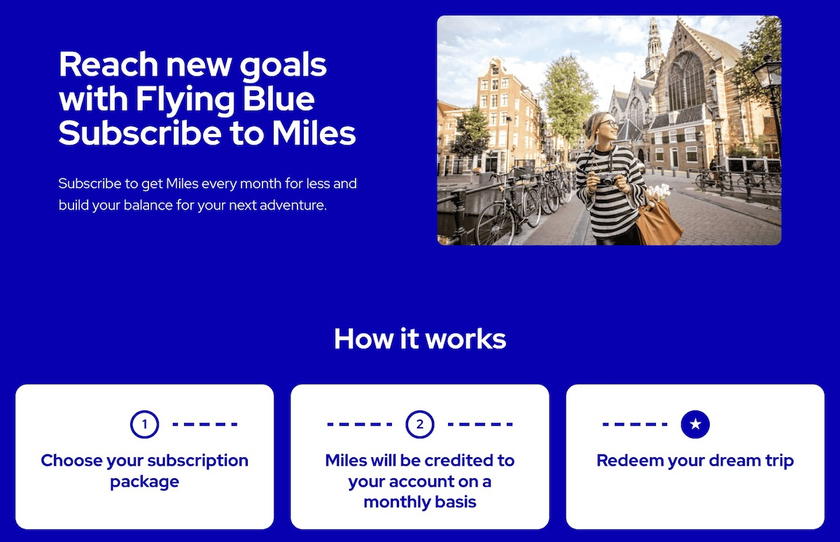
In late 2024, the airline group shifted its strategy, introducing the "Subscribe to Miles" concept. This move aligns with broader trends in the aviation industry, where airlines are increasingly looking for recurring revenue streams that insulate them from the volatility of ticket sales. By enabling members to purchase a set amount of miles on a monthly basis at a fixed cost, Flying Blue has effectively turned its loyalty currency into a subscription-based asset. The recent expansion of this program to include higher-tier bundles signals that the airline is banking on a segment of travelers who prefer to “drip-feed” their accounts to prepare for high-value redemptions.
Understanding the "Subscribe to Miles" Tiers
The strength of the program lies in its tiered structure, which incentivizes higher-volume subscriptions by lowering the effective cost per mile. Below is the current breakdown of the five subscription tiers offered by Flying Blue:
| Package | Miles per Month | Cost per Month | Cost per Mile (Approx.) |
|---|---|---|---|
| Starter | 2,000 | $34.20 | 1.71 cents |
| Smart | 5,000 | $79.00 | 1.58 cents |
| Advanced | 10,000 | $146.00 | 1.46 cents |
| Complete | 17,000 | $227.80 | 1.34 cents |
| Complete+ | 30,000 | $402.00 | 1.34 cents |
Key Regulatory Constraints and Terms
Before committing to a subscription, it is vital to understand the operational rules governing the service:
- Commitment Period: Subscribers must commit to a minimum of three months. This is a critical factor for travelers who may only need a one-time "top-off" for an immediate award booking.
- Expiration Policy: Miles earned through the subscription are subject to the standard Flying Blue expiration policy (24 months of inactivity). However, the subscription itself acts as a recurring activity, effectively preventing mileage expiration for as long as the subscription remains active.
- Currency and Value: All costs are fixed and include taxes and fees, providing price transparency that is often missing from volatile flash sales.
The Strategic Argument: Why and When to Subscribe
The primary criticism leveled against mileage subscriptions is the risk of "trapping" capital in a program that may devalue its redemption rates with little notice. However, for the seasoned traveler, the math can occasionally tilt in the subscriber’s favor.
The Case for Value
The primary value proposition of "Subscribe to Miles" is the ability to acquire miles at a rate of 1.34 cents per mile (in the higher tiers). When compared to the standard cost of purchasing miles directly—which can often exceed 2.5 to 3 cents per mile—the subscription represents a significant discount. If a traveler intends to book a business class ticket to Europe or Asia—where the cash price might be $4,000 but the award cost is 100,000 miles—the math becomes highly favorable. At a cost of 1.34 cents per mile, the 100,000 miles would cost roughly $1,340, representing a substantial discount off the retail airfare.
The "Top-Off" Strategy
The most logical use case for this program is for members who are consistently short of a specific redemption goal. By subscribing for the minimum three-month period, a member can efficiently bridge the gap between their current balance and a desired premium-cabin award. This is often more cost-effective than buying miles at the full, non-discounted rate during a moment of urgency.
Industry Implications and Airline Strategy
The introduction of this subscription model reflects a broader shift in how major legacy carriers view their loyalty programs. By creating a predictable monthly cash inflow, Air France-KLM is essentially transforming their frequent flyer program into a fintech-adjacent business.
From the airline’s perspective, this strategy serves two purposes:
- Revenue Smoothing: It creates a predictable stream of non-ticket revenue, which is highly valued by investors and helps stabilize cash flows during off-peak travel seasons.
- Member Lock-in: By encouraging members to build their balances through the subscription, the airline ensures that those members remain committed to the SkyTeam ecosystem, reducing the likelihood that they will migrate to a competitor’s loyalty program.
Expert Analysis: Is It Worth the Commitment?
While the offer is attractive, it should not be viewed as a "get rich quick" scheme for travel. As with any financial product, the risk lies in the lack of flexibility.
"One should never sign up for one of these services unless you have a clear, specific strategy in mind," notes aviation loyalty expert Ben Schlappig. "You must have crunched the numbers and verified that the miles you are buying will actually lead to an outsized redemption value. If you buy miles at 1.34 cents but then redeem them for economy class tickets at a low valuation, you have effectively lost money."
Alternatives to Consider
Before clicking "subscribe," travelers should compare this option against other methods of acquiring Flying Blue miles:
- Transferable Credit Card Points: For many, the most economical way to earn Flying Blue miles remains transferring points from programs like American Express Membership Rewards, Chase Ultimate Rewards, or Capital One. These programs often run transfer bonuses, which can increase the value of your points significantly.
- Promotional Miles Sales: Flying Blue occasionally offers bonuses on outright mileage purchases. While the "Subscribe to Miles" program offers a better per-mile rate than standard sales, a major promotional event might occasionally offer a better value proposition.
Conclusion: A Tool for the Disciplined Traveler
The Flying Blue "Subscribe to Miles" program is a sophisticated addition to the frequent flyer ecosystem. It offers a consistent, lower-cost path to acquiring the miles necessary for high-end, premium-cabin travel, provided the member is disciplined.
It is not a product for the casual traveler who flies once every few years. Rather, it is a tool for the "power user"—the traveler who has a specific, high-value redemption in sight and has the financial awareness to calculate the cost-per-cent value of their travel.
Ultimately, while the subscription model is an effective way for Air France-KLM to keep members engaged and on the "hamster wheel" of loyalty, it can be a boon for the savvy consumer if used as a surgical, short-term tool rather than a long-term savings account. As the airline industry continues to digitize and monetize loyalty, participants must remain vigilant, treating their mileage balances with the same fiscal scrutiny as their personal savings.