









DENVER — As Election Day approaches, voters across the Centennial State are preparing to render judgment on a pivotal fiscal fork in the road. On the ballot are two competing, mutually exclusive income tax measures that represent starkly different economic philosophies.
The choice before the electorate is clear-cut yet deeply consequential: Colorado can either enshrine its current competitive flat tax structure or dismantle a nearly four-decade-old fiscal precedent to adopt a progressive, graduated-rate income tax system that carries some of the highest marginal rates in the region.
The outcome of this high-stakes showdown will not only reshape the state’s revenue collection mechanisms but will also send powerful signals to the broader national debate over state-level tax competitiveness, small business vitality, and economic mobility.
Main Facts: The Competing Ballot Measures
At the center of this electoral battle are two distinct legislative proposals: Amendment 87 and Proposition 136.
Amendment 87: The Graduated Income Tax and Spending Amendment
Amendment 87 is a combined constitutional amendment and statutory package designed to upend Colorado’s flat-tax regime.
- Constitutional Change: It seeks to alter the state constitution to explicitly authorize a graduated-rate individual and corporate income tax. By strategically structuring the amendment to remove existing restrictive language rather than adding new text, proponents crafted the measure to bypass Colorado’s stricter 55 percent threshold for constitutional changes, allowing it to pass with a simple majority.
- New Statutory Rates: Alongside the constitutional shift, the measure establishes a new progressive rate schedule for individuals and corporations earning above specific thresholds:
- 7.4 percent on taxable income between $500,000 and $750,000;
- 7.9 percent on income between $750,000 and $1 million; and
- 8.4 percent on all income exceeding $1 million.
- The Marriage Penalty: The proposal embeds strict income bracket thresholds that apply identically to single filers and married couples filing jointly. Because these brackets do not scale for married households, the policy introduces an aggressive marriage penalty. For example, a dual-earning couple where each partner makes $500,000 would face an immediate marriage penalty of $16,575.
Proposition 136: The Flat Tax Cap
Positioned as a direct counterweight to Amendment 87, Proposition 136 is an initiated statute that seeks to cap both individual and corporate income tax rates at the current flat rate of 4.4 percent.
While Proposition 136 also requires only a simple majority to pass, it operates as a statutory constraint rather than a constitutional mandate. Because it can be modified by future legislatures or overridden by subsequent voter initiatives, its primary function on the 2026 ballot is to serve as an explicit policy alternative to Amendment 87.
Under state election rules, if both measures pass, the one receiving the highest number of votes will prevail on conflicting provisions—triggering complex legal questions that the state’s official voter guide, the "Blue Book," acknowledges will likely require judicial intervention to untangle.
Chronology: From Progressive Origins to the Flat Tax Revolution
To understand the weight of the current ballot measures, it is necessary to examine Colorado’s unique fiscal history.
Pre-1987: The Era of Graduated Rates
For much of the 20th century, Colorado relied on a progressive, graduated-rate income tax structure. For 24 consecutive years leading up to the late 1980s, the state’s top marginal rate was capped at 8 percent, levied on income exceeding $10,000.
1987: Colorado Pioneers the Flat Tax
That landscape shifted dramatically in 1987 when Colorado became the very first state in the nation to voluntarily abandon its graduated-rate structure in favor of a single, flat-rate income tax. In doing so, the state compressed its top rate down to 5 percent—matching what had previously been the marginal rate applied to middle-income earners making between $4,000 and $5,000.
The Decades of Rate Reductions
Over the subsequent decades, the flat tax proved to be a durable and politically popular feature of Colorado’s fiscal framework. Because a flat tax applies a uniform rate across all taxable income, policymakers found that rate cuts benefited all taxpayers equally, making reductions both politically attractive and harder to upwardly revise. Through various legislative adjustments and voter-approved measures, the flat tax rate has steadily dropped, resting today at 4.4 percent.
If Amendment 87 succeeds, it will effectively undo nearly 40 years of fiscal history, returning Colorado to the ranks of states with progressive tax structures.
Supporting Data: Small Business Impact and Regional Competitiveness
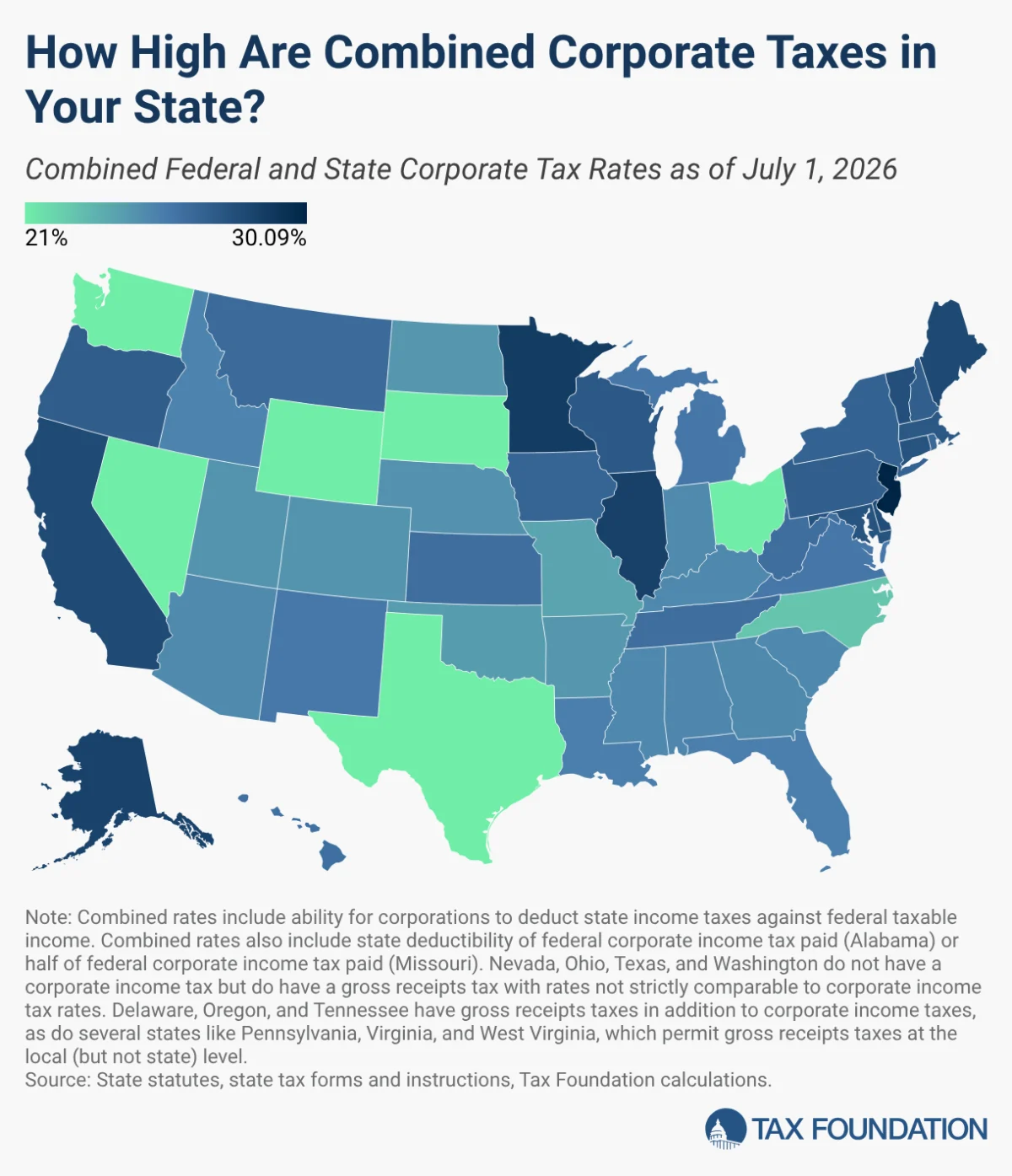
Proponents of Amendment 87 argue that higher tax brackets targeting individuals and corporations making over $500,000 are a necessary tool to secure additional funding for education, healthcare, and childcare. However, detailed tax and economic data reveal that these high-income thresholds hit Colorado’s economic engine disproportionately hard: its small business community.
The Small Business Nexus
According to data from the Small Business Administration (SBA), Colorado is home to approximately 731,000 small businesses, which collectively employ nearly 49 percent of the state’s workforce.
The vast majority of these enterprises are structured as "pass-through" entities—such as S corporations, partnerships, and Limited Liability Companies (LLCs). Pass-through businesses do not pay the corporate income tax; instead, their profits "pass through" to the owners’ individual income tax returns.
Internal Revenue Service (IRS) data highlights the direct overlap between high-income earners and small business ownership in the state:
- Out of 53,640 Colorado filers reporting adjusted gross incomes above $500,000, 30,850 report partnership or S corporation income.
- An additional 14,310 report other business or professional income.
- On average, households earning $500,000 or more derive 27 percent more income from business operations than they do from traditional wages.
Consequently, imposing a top rate of 8.4 percent on incomes above $500,000 functions not merely as a tax on high earners, but as a direct tax on small business capitalization, risk-taking, and expansion.
Lessons from Other States
Economic research into similar tax hikes in peer states demonstrates the risks of aggressive progressive rate adjustments:
- California: Following the approval of top-bracket tax increases in 2012, economic studies indicate that out-migration, reduced in-state investment, and taxpayer avoidance strategies eroded an estimated 61 percent of anticipated revenue gains while doing broad harm to the state’s economic momentum.
- New Jersey: A study by the New Jersey Department of the Treasury found that the 2004 implementation of an 8.97 percent top rate on incomes over $500,000 accelerated out-migration, driving out approximately 20,000 residents over a five-year period.
- New York: According to data from the Citizens Budget Commission, New York’s share of the nation’s millionaires dropped from 12.7 percent in 2010 to 8.7 percent in 2022, resulting in an estimated $10.7 billion shortfall in potential individual income tax collections.
Furthermore, economic analysts point out that many filers crossing the $500,000 threshold do so only sporadically—such as in the year they sell a family business or liquidate an investment property after decades of labor. For these individuals, a steep progressive surtax acts as a heavy penalty on a lifetime of entrepreneurial entrepreneurship realized all at once.
Official Responses and Perspectives
The debate surrounding Amendment 87 and Proposition 136 has sharply divided business leaders, labor groups, and fiscal policy experts across the state.
- Proponents of Amendment 87 frame the measure as an essential step toward tax fairness and robust public investment. Labor organizations, education advocates, and progressive policy groups argue that Colorado’s flat tax structure places an unfair burden on low- and middle-income families while underfunding vital public services. By asking high-income earners and major corporations to contribute a larger share through graduated brackets, supporters contend the state can sustainably fund schools, expand healthcare access, and lower the cost of childcare for working-class families.
- Opponents and Business Advocates, including chambers of commerce and taxpayer associations, warn that Amendment 87 will inflict severe self-inflicted wounds on Colorado’s thriving economy. They argue that raising the top individual and corporate rates to 8.4 percent will immediately degrade the state’s economic competitiveness, discourage capital investment, and prompt entrepreneurs to look to neighboring low-tax states.
- Proponents of Proposition 136 view their measure as a vital defensive firewall. By attempting to lock in the 4.4 percent rate, they hope to preserve the predictable, pro-growth tax environment that has made Colorado an attractive destination for talent and business relocations over the past several decades.
Implications: Which Side of the Divide Will Colorado Choose?
As the race enters its final stretch, the implications for Colorado’s future are profound.
The two measures present voters with a fundamental philosophical choice. States across the country are increasingly diverging on fiscal policy: some are cutting and flattening income taxes to lure remote workers, capital, and new industries, while others are pursuing progressive revenue models to expand government services.
If Amendment 87 passes, Colorado will pivot away from the flat-tax model it pioneered in 1987, introducing a graduated system with top rates reaching 8.4 percent—a move that could yield short-term revenue gains for targeted public programs, but one that economic models suggest risks long-enduring drag on small business investment and workforce growth.
Conversely, if Proposition 136 prevails or if voters reject Amendment 87, Colorado will reaffirm its commitment to a single, predictable rate structure, remaining tightly aligned with regional peers that have utilized tax cuts to bolster economic resilience.
No matter the outcome on Election Day, the 2026 ballot battle marks a watershed moment in American state taxation, with the economic future of the Centennial State hanging in the balance.