









Bitcoin currently finds itself locked in a high-stakes standoff. As the leading cryptocurrency grinds sideways around the $64,700 mark, the narrative among institutional analysts is becoming increasingly clear: the era of aggressive capitulation has largely subsided, yet the spark of renewed buying pressure remains elusive. While the asset has managed a modest 0.8% gain over the last 24 hours, this represents a mere ripple in a larger, more turbulent pond. Bitcoin remains down approximately 13% over the past month and is hovering nearly 50% below its October peak of $126,080, according to data from CoinGecko.
The market is currently characterized by a lack of conviction. Sellers appear to be exhausted, yet buyers are exercising extreme caution, waiting for a clearer signal from the U.S. Federal Reserve and the broader macroeconomic environment.
The Macro Landscape: A Hawkish Reset
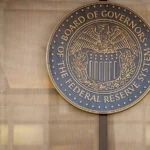
The recent market stagnation is intrinsically linked to the debut of new Federal Reserve Chair Kevin Warsh. His initial policy stance—described by analysts as "hawkish"—sent a tremor through global risk assets. However, Bitcoin’s reaction has been notably nuanced.
James Butterfill, head of research at CoinShares, highlighted that Bitcoin proved "more resilient than anticipated" in the face of the Fed’s shift. During the immediate fallout of the announcement, Bitcoin experienced a decline of just 1.6%, a figure that, while disappointing in absolute terms, outperformed the S&P 500 and the Nasdaq, which fell by 1.2% and 1.3% respectively.
"Higher real-rate expectations are still a headwind for liquidity-sensitive assets, so the market’s initial hawkish interpretation made sense," Butterfill explained. He suggests that while the short-term macro impulse is undoubtedly restrictive, the structural case for Bitcoin as an alternative monetary asset remains intact. The combination of persistent inflation, policy uncertainty, and a more reactive Federal Reserve is, paradoxically, building a longer-term argument for Bitcoin as a hedge against fiat instability.
Chronology of the 2026 Downturn
To understand the current malaise, one must look at the progression of the year 2026.
- Q1-Q2 2026: The market saw a significant reversal from the optimism of 2025. Institutional interest, previously marked by over $20 billion in ETF inflows, began to cool significantly.
- Early June 2026: As rumors of a hawkish Fed shift gained momentum, Bitcoin began a period of consolidation.
- June 19, 2026: The Fed’s policy announcement triggered a brief sell-off, but the expected "capitulation" never materialized. CoinShares reported that digital asset ETP outflows slowed to $149 million, suggesting that the "weak hands" had already exited the market.
- Late June 2026: The market entered a phase of range-bound trading, with participants closely monitoring long-end Treasury yields and oil prices as primary indicators of the next move.
Supporting Data: Liquidation Maps and Distribution
The technical underpinnings of the current price action point toward a market that is waiting for a catalyst to break its equilibrium. Dean Chen, an analyst at Bitunix, describes the current state not as a trend, but as a standoff.
"ETF flows still point to distribution," Chen noted. U.S. spot Bitcoin ETFs bled roughly $90.7 million on June 18 alone, contributing to a total of approximately $4 billion in outflows over the past month. While the pace of these outflows has moderated, the consistent selling pressure from ETF holders remains a primary obstacle to a sustained rally.
Furthermore, derivatives data provides a glimpse into the market’s internal friction. Liquidation maps show a significant cluster of long liquidations near $61,900, totaling roughly $1.3 billion. Conversely, there are about $870 million in short liquidations clustered near $64,800. The fact that the price has consistently failed to break into either zone suggests a "stabilizing force" is currently absorbing market volatility, preventing a breakdown while simultaneously capping the upside.
Official Responses and Expert Analysis
Industry experts are divided on the timing of a potential recovery. Tim Sun, senior researcher at HashKey, believes that the muted reaction to Chair Warsh’s debut is a sign that the market is currently "rebuilding its read" on the Fed.
"The small drop reflects selling pressure that is nearly exhausted, rather than a return of demand," Sun stated. He argues that for a new trend to emerge, two conditions must be met: a return of broad risk appetite and cooperation from long-end interest rates. Until these variables align, Bitcoin is expected to function purely as a "macro liquidity asset."
Stephen Wundke, strategy and revenue director at Algoz Technologies, points to legislative and geopolitical factors as the potential keys to unlocking the next phase of the cycle. He highlights the U.S. Clarity Act, with a potential vote scheduled for July 4. A failure to pass this legislation could push market-structure clarity into the fourth quarter, further delaying institutional re-entry.
Wundke also notes the ripple effects of the Iran truce, which he expects to impact global inflation metrics in two to three months. "This may well be a bottom," Wundke said, "but we might just be bouncing on it for a little while yet."
Implications: The "Borrow-Instead-of-Sell" Shift
One of the most intriguing developments beneath the surface of the price charts is the change in investor behavior. Rather than selling into the downturn, a significant portion of the holder base is opting to utilize their Bitcoin as collateral.
Peter Smedas, marketing lead at the protocol Chainflip, observed that Bitcoin was the top swap destination over the past 90 days, with $239 million in volume. More importantly, he noted that at the recent BTC Prague conference, the recurring theme among attendees was a preference for borrowing against their holdings rather than liquidating them.
This behavior suggests that long-term holders are becoming increasingly sophisticated in managing their portfolios, preferring to retain exposure to Bitcoin while accessing liquidity for operational needs. This "holding" mindset, if persistent, could eventually create a supply squeeze if and when demand returns to the market.
Looking Ahead: The Looming Expiry
The immediate future holds a significant test for the market. This coming Friday, a $10.9 billion Bitcoin options expiry is scheduled to take place. Such events often act as a focal point for volatility, potentially jolting the market out of its current range.
Sentiment on prediction markets reflects this apprehension. On Myriad, a prediction market platform, traders have become increasingly bearish, with the probability of a drop to $55,000 now sitting at 70%—a 5% increase from the previous week.
As the market approaches this expiry, the consensus is clear: the macro environment is restrictive, the regulatory path is uncertain, and the immediate price action is neutral. Bitcoin is effectively in a "redistribution phase," where the "smart money" is positioned neutrally, waiting for the macroeconomic clouds to clear before committing to a definitive direction.
For the average observer, the message is one of patience. The structural case for Bitcoin remains, but the short-term catalysts required to ignite a new bull run are still in the incubation phase. Investors should remain focused on long-end Treasury yields, the progress of the Clarity Act, and the velocity of ETF flows as the primary indicators of a shift in momentum.