









By PYMNTS | September 18, 2026
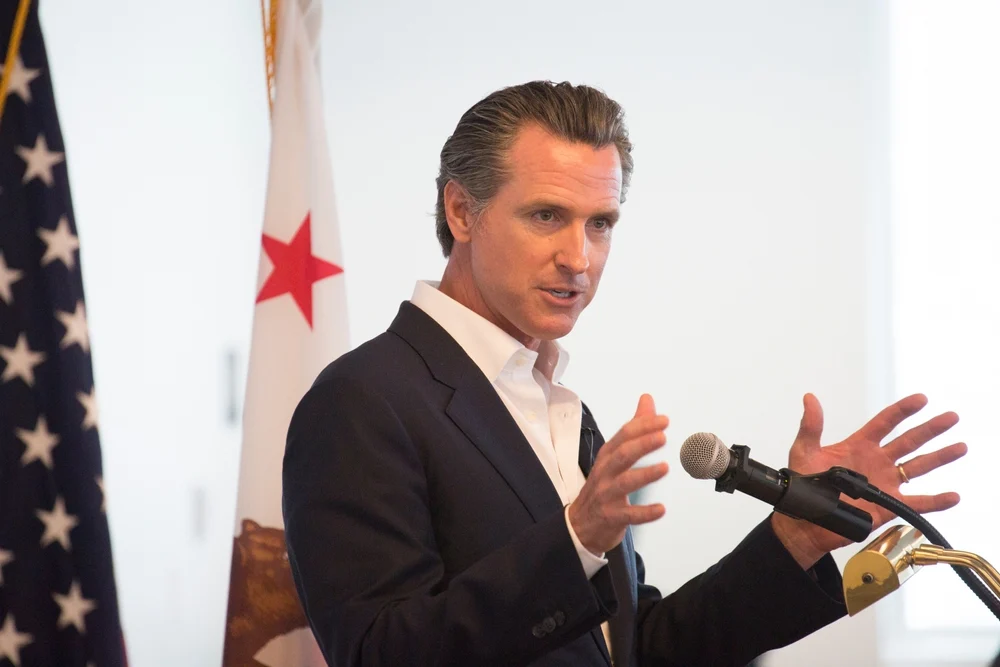
In a decisive move to address what he termed a vacuum in national technology policy, California Governor Gavin Newsom signed a sweeping executive order on Friday, September 18, 2026. The directive immediately convenes a panel of national artificial intelligence (AI) experts tasked with designing an aggressive framework to reinforce and strengthen the state’s already robust laws governing AI safety and security.
The executive order aims to accelerate the deployment of third-party oversight models for frontier AI systems—the most advanced and potentially powerful models developed by tech companies. According to the governor’s office, the newly formed expert group has been given a strict two-month deadline to deliver a comprehensive policy guide.
The mandate underscores California’s continued position as a de facto regulatory capital for the American technology sector, stepping into a legislative space that state leaders argue has been abandoned by the federal government.
Main Facts: What the Executive Order Entails
The newly issued executive order (N-9-26) moves beyond voluntary guidelines, setting up concrete and intrusive verification measures for companies developing frontier AI models. Key proposals under active consideration by the newly convened expert panel include:
- Onsite Independent Verification: Requiring frontier AI developers to embed independent verification organizations directly inside their research and development labs. These teams will be tasked with conducting continuous, on-the-ground audits and safety evaluations.
- Mandatory Auditing of Regulatory Filings: Enforcing strict third-party verification for all AI safety frameworks, algorithmic transparency reports, and risk assessments that frontier firms are legally required to submit under California law.
- The AI "Kill Switch": Advancing technical proposals for the creation of a universal "kill switch" mechanism for frontier models. This mechanism is intended to provide regulators and developers with an absolute, fail-safe method to instantly halt or isolate runaway models in the event of an existential safety crisis.
- Redefined Critical Incidents: Expanding the legal definitions of critical AI safety incidents to formally include "loss-of-control" events—situations where human operators lose predictability or command over an AI model’s decision-making pathways or autonomous actions.
This initiative builds upon a rapidly growing stack of California legislation and executive directives aimed at curbing tech-related harms. Over the past several years, the state has enacted stringent measures targeting deepfakes, algorithmic bias, fraud, consumer data privacy, cybersecurity, workplace disruption, and the protection of children interacting with companion chatbots and social media platforms.
Chronology: California’s Rapid Ascent in AI Legislation
California’s aggressive legislative posture toward artificial intelligence has evolved at a breakneck pace, driven by a series of landmark bill signings and executive actions. A timeline of these regulatory milestones highlights the state’s systemic approach to tech governance:
- May 2026: Governor Newsom signs a pioneering executive order designed to prepare California’s workforce, labor organizations, and small businesses for potential economic displacement and operational disruption caused by the rapid acceleration of AI.
- June 2026: The state convenes the inaugural meeting of California’s Tech Fraud Task Force, a specialized body dedicated to strengthening consumer protections against AI-driven financial and identity fraud.
- August 2026: Newsom announces the rollout of a novel AI cyber-defense program aimed specifically at safeguarding California’s critical infrastructure from automated cyberattacks.
- September 9, 2026: The governor signs a pair of pioneering bills establishing the nation’s first comprehensive framework for independent AI verification organizations and third-party auditors, integrating them directly into product safety pipelines.
- September 10, 2026: California enacts some of the strictest child safety laws in the country, regulating companion chatbots and algorithmic social media interfaces to protect minors from psychological and predatory risks.
- September 18, 2026: Governor Newsom issues Executive Order N-9-26, convening national experts to establish immediate protocols for onsite lab audits and the development of an emergency AI "kill switch."
Supporting Data and Legislative Landscape
The urgency behind California’s regulatory push is fueled by both the unprecedented capabilities of frontier models and the stark regulatory inaction at the federal level.
While federal lawmakers in Washington have debated numerous conceptual frameworks—ranging from voluntary white-house commitments to stalled bipartisan bills—comprehensive, binding federal legislation has largely stalled due to partisan gridlock and heavy lobbying by Silicon Valley stakeholders. In contrast, California accounts for a massive share of global AI research, housing the headquarters of industry giants like OpenAI, Google DeepMind, Meta, and Apple.
The state’s legislative framework now spans an unprecedented breadth of sectors:
- Frontier Model Safety: Mandating risk assessments and baseline safety standards for large-scale foundation models before public deployment.
- Independent Oversight: Establishing state-recognized verification bodies to audit codebases and training methodologies.
- Child Safety & Chatbots: Regulating generative companion bots to prevent emotional manipulation or the exploitation of vulnerable users.
- Deepfakes and Watermarking: Cracking down on sexually explicit non-consensual deepfakes and requiring mandatory cryptographic watermarks for synthetic media.
- Data Privacy: Granting citizens robust mechanisms to block the sale of personal data used for automated profiling and model training.
Official Responses and Political Rhetoric
The friction between state ambitions and federal stagnation was a central theme of Governor Newsom’s remarks accompanying the September 18 executive order.
"The federal government’s abject failure to create any form of meaningful AI oversight or accountability should alarm every American, especially when AI CEOs themselves are begging for regulation," Newsom declared in the official press release. "We’re not waiting to act; we’re going to speed up our work on substantial and responsible AI oversight before it’s too late."
This sentiment echoes previous warnings issued by the governor regarding the unregulated commercialization of emerging technologies. When signing legislation targeting AI companion chatbots in late 2024, Newsom noted: "Emerging technology like chatbots and social media can inspire, educate and connect, but without real guardrails, technology can also exploit, mislead and endanger our kids."
Industry reactions to California’s aggressive stance remain deeply polarized. While smaller startups and civil rights organizations have generally praised the state for prioritizing public safety and democratic accountability, major tech trade associations have repeatedly expressed concern. Industry representatives argue that a fragmented, state-by-state regulatory patchwork could stifle American innovation, disadvantage domestic firms against international competitors—particularly in nations with laxer regulatory environments—and create an impossible compliance burden.
Implications for the Tech Industry and Future Regulation
The implications of Governor Newsom’s latest executive order extend far beyond California’s borders. Because California serves as the economic and intellectual engine of the global technology industry, regulations enacted in Sacramento frequently establish a de facto national standard. Companies are rarely willing to maintain two distinct product lines—one compliant with California law and one for the rest of the country—meaning that California’s rules often dictate nationwide corporate behavior.
1. Operational Realities for AI Labs
If the expert panel’s recommendations are formally codified into law or executive mandate, frontier AI labs will face an unprecedented level of institutional intrusion. Having third-party verification auditors stationed permanently inside R&D facilities transforms the secretive culture of Silicon Valley labs. It introduces a permanent compliance hurdle that could slow down iteration cycles, even as labs race to achieve artificial general intelligence (AGI).
2. The Feasibility of the "Kill Switch"
The concept of an AI "kill switch" has long been a staple of science fiction, but engineering it in practice presents immense technical challenges. Security researchers note that distributed, open-weight models or models deployed across decentralized cloud networks are notoriously difficult to shut down once released into the wild. However, focusing this requirement on centralized frontier labs could force developers to bake hardware-level or architectural shut-off valves into their foundational infrastructure.
3. A Blueprint for Federal Action
By establishing a working model for independent audits and loss-of-control incident reporting, California is effectively providing a turnkey template for future federal legislation. Should a future Congress or federal agency decide to enact binding AI safety rules, they will likely look to the legal and administrative infrastructure currently being built in Sacramento.
As the newly convened panel of national experts begins its two-month sprint toward delivering its guide, all eyes remain on California. The success or failure of these initiatives will likely determine the global trajectory of artificial intelligence governance for decades to come, balancing the boundless promise of machine intelligence against the imperative of human safety.