






In the high-stakes world of real estate, the "final walkthrough" is supposed to be the victory lap. It is the moment when a buyer verifies that the property they’ve spent months negotiating is ready for handover. But for Bogdan, an out-of-state investor looking to build a portfolio in the Detroit metro area, the final walkthrough turned into a scene of chaotic destruction.
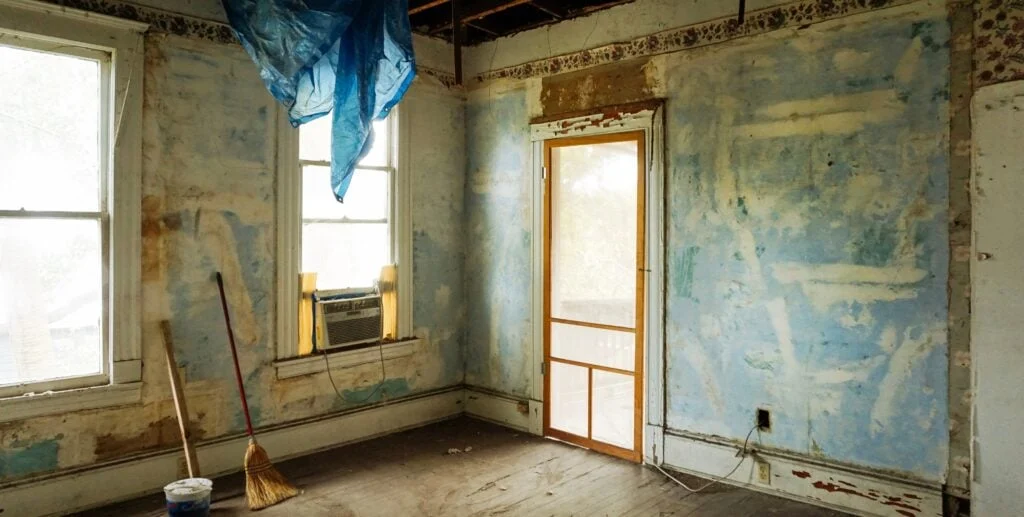
Upon entering his latest acquisition in Warren, Michigan, his agent discovered a burst pipe. The house was flooded. For most, this would be a catastrophic deal-breaker—a signal to walk away, reclaim the earnest money, and cut ties with a property that had suddenly become a structural liability. Instead, Bogdan saw an opportunity. By leveraging a cool-headed approach and a robust support team, he transformed a flooded disaster into his next major win. This is the story of how an investor transitioned from the crushing weight of a New York corporate commute to the freedom of a full-time real estate operator.
The Catalyst: Reclaiming Time from the Corporate Grind
Before he was a real estate entrepreneur, Bogdan lived a life that felt increasingly like a treadmill. Based in New York, he spent two to three hours every day trapped in traffic, commuting to a 9-to-5 job that demanded his mental presence long after he clocked out.
"Sitting in that traffic every day, feeling the stress of a job that followed me home—it just felt like my life was wasting away," Bogdan recalls. For many, the motivation for real estate is purely financial, but for Bogdan, the goal was always "freedom." He defines this not as a specific dollar amount in a bank account, but as the autonomy to spend his minutes on his own terms: with his wife and son, learning new skills, and traveling.
Real estate emerged as his vehicle for this transition. However, he realized early on that real estate wasn’t just a passive investment strategy; it was a business that required the same rigor as any corporate operation, but with the added benefit of building long-term equity and personal sovereignty.
Chronology: A Calculated Path to Scaling
Bogdan’s journey did not happen overnight. He avoided the "get rich quick" trap by spending months on foundational research.
Phase 1: The Foundation
Before purchasing his first property, Bogdan focused on building a team. Having owned a small condo in Nashville, he understood that remote investing requires boots on the ground. He turned to the BiggerPockets community to identify investor-friendly brokers in metro Detroit. This led him to the FIRE Realty Team, where he connected with team lead Joe Hammel and agent Richi Brown.
For the first three months, there were no deals. Instead, there was a deep-dive education period. Bogdan learned the nuances of Michigan neighborhoods, rental demographics, and local governing agencies. He didn’t just want to buy a house; he wanted to understand the ecosystem.
Phase 2: The Turnkey Training Wheels
Bogdan started with "boring" turnkey properties. By putting 15% down and relying on third-party property managers, he gained exposure to the market without the immediate pressure of major renovations. He cycled through several management companies, learning which ones prioritized his bottom line and which ones didn’t. Eventually, he realized that while turnkeys provided stability, they were burning through his capital too quickly to reach his goal of 20 doors by 2026.
Phase 3: The BRRRR Pivot
To scale, Bogdan transitioned to the BRRRR (Buy, Rehab, Rent, Refinance, Repeat) strategy. He sold his New York co-op and his Nashville condo to unlock capital. This allowed him to recycle his down payment, turning a single investment into a revolving engine of growth. He meticulously vetted contractors, learned to manage timelines, and became a student of the "seasoning" periods required for refinancing.
Supporting Data: Analyzing the Three-Property Dilemma
Bogdan’s growth strategy is defined by a rigorous "buy box" that targets properties in the $40,000 to $130,000 range. To understand his methodology, one only needs to look at the three options he was evaluating simultaneously:
- The $40,000 Shell (Warren, MI): A 950-square-foot, three-bed, one-bath property. While the numbers looked attractive on paper, the physical inspection revealed severe structural issues. It was a classic "deal" that would have likely turned into a capital-draining nightmare.
- The $72,000 Hoarder House (Warren, MI): An 870-square-foot home with a basement and garage. The property was cluttered and outdated, but the location was solid, and the bones were intact.
- The $130,000 Keeper (Eastpointe, MI): A 1,000-square-foot, three-bed, two-bath house. This was the "safe" play: tenant-occupied, near his existing properties, and requiring minimal work.
Bogdan chose the $72,000 hoarder house. He recognized that while it wasn’t the easiest property, it offered the highest potential for value-add through renovation, provided he could control the costs—which, as he soon found out, would be tested by the burst pipe during the final walkthrough.
Official Perspectives: The Role of Execution
When asked what separates successful investors from those who "tap out," Richi Brown of the FIRE Realty Team points to mindset. "Most investors think that underwriting a deal is the hard part," Brown notes. "They believe that if the numbers pencil out on a spreadsheet, the profit is guaranteed. But the reality is that the deal is only as good as the execution."
Brown emphasizes that real estate is a business, not a stock. "Poor execution on a renovation, or failing to manage a property manager, will wipe you out of the game. The ones who win are the ones who treat it like a full-time operation, not a side hustle."
Bogdan’s team provided the infrastructure, but Bogdan provided the tenacity. In his first year, he went through three to five property managers and double that number of contractors. He didn’t view these as failures; he viewed them as the "cost of tuition" in the school of real estate.
Implications: The Future of the Portfolio
The implications of Bogdan’s approach are clear: success in real estate is rarely about luck; it is about the systems you build before you ever sign a purchase agreement.
By handling the operations in-house from another state, Bogdan has effectively replaced his W-2 income. The flooded house in Warren was not just a property; it was a test of his resolve. By having a team like the FIRE Realty Team to renegotiate the purchase price in the face of disaster, he demonstrated that a "worse" house on paper can become a "better" deal through expert negotiation and execution.
As he moves toward his target of 20 doors by the end of 2026, Bogdan’s strategy remains consistent:
- Targeting value-add opportunities: Seeking properties that need sweat equity to maximize ARV.
- Strategic acquisitions: Buying below market value on properties with existing upside.
- Relentless management: Overseeing every facet of the business to ensure margins aren’t eroded by inefficiency.
For those looking to follow in his footsteps, the message is clear: Rome wasn’t built in a day, and neither is a real estate portfolio. You need to build your team, refine your buy box, and—above all else—be prepared for the pipes to burst. How you react to that burst pipe will determine whether you are an investor who builds a legacy or one who walks away.