






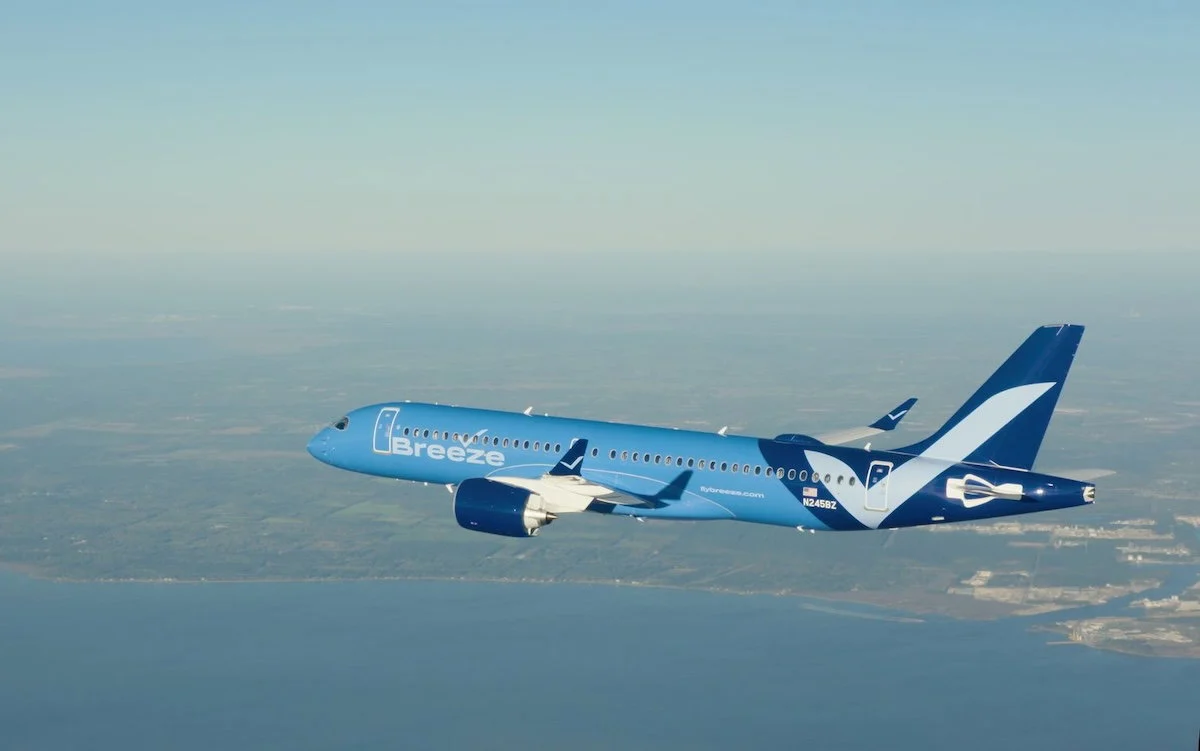
What was intended to be a routine flight from the bustling suburbs of New York to the sun-drenched coast of Florida turned into a spectacle of law enforcement intervention and bewildered passengers. On the night of Tuesday, July 7, 2026, Breeze Airways flight MX581, operating an Airbus A220 from Westchester County Airport (HPN) to Vero Beach Regional Airport (VRB), became the stage for an incident that has since sparked a broader debate regarding airline security protocols, the definition of a "security breach," and the delicate balance between maintaining order and overreacting to minor infractions.
While the incident ultimately resulted in no criminal charges, the sight of local police boarding an aircraft to remove a passenger—coupled with the captain’s directive for all travelers to remain seated—has left many wondering whether the response was a measured safety precaution or a case of administrative overkill.
The Main Facts: A Sky-High Misunderstanding
The incident centered on a single, unauthorized acquisition of a snack item from the onboard service cart. According to initial reports, a male passenger aboard the flight insisted on taking an item from the cart despite being explicitly instructed by the cabin crew that he was not permitted to do so.
When the passenger ignored the flight attendants’ directives and proceeded to help himself, the situation escalated. Rather than a simple resolution, the airline deemed the behavior a disruption of the cabin environment. Upon arrival at Vero Beach, the flight deck issued a "security concern" notification to ground authorities. Consequently, the aircraft was held at the gate, police officers were summoned, and the passenger was forcibly removed from the aircraft in front of a captive audience of fellow travelers.
Chronology of the Event
To understand the gravity of the situation as it unfolded, one must look at the timeline of the disruption:
- Mid-Flight: A passenger attempted to take a snack item from the Breeze Airways buy-on-board cart. Despite being informed by crew members that the transaction was not permitted—or perhaps due to a misunderstanding regarding payment protocols—the passenger persisted.
- The Escalation: The situation transitioned from a customer service dispute to a potential safety violation. Following standard procedure for unruly behavior, the cabin crew alerted the captain to the passenger’s refusal to follow instructions.
- Arrival and Detention: As flight MX581 touched down in Vero Beach, the pilot informed the cabin that a "security issue" had occurred. Passengers were instructed to remain in their seats.
- Law Enforcement Intervention: Officers from the Vero Beach Police Department boarded the aircraft. The passenger was removed from his seat, escorted off the plane, and detained for questioning on the tarmac.
- Resolution: After a thorough investigation by local authorities, it was determined that the "security breach" was, in fact, a petty theft. The passenger paid for the item, and no criminal charges were filed. He was, however, issued a formal trespass warning from the airport.
Supporting Data: The Regulatory Landscape
The incident raises significant questions regarding Federal Aviation Regulations (FARs) and the powers vested in flight crews. Under federal law, passengers are strictly required to follow the instructions of flight attendants. Failure to do so—regardless of the triviality of the request—can be classified as "interference with a crew member."
The "Security Breach" Threshold
Airlines utilize the term "security breach" to trigger an immediate, high-priority response from ground security and local law enforcement. Historically, this term is reserved for unauthorized entry into sterile areas, physical threats, or intoxication. Applying this label to a snack-related incident is highly unusual.
In the modern era of air travel, post-9/11 protocols have made flight crews hypersensitive to any form of defiance. The "zero tolerance" policy adopted by many domestic carriers is designed to prevent small disturbances from spiraling into larger, more dangerous confrontations. However, when a "security breach" is declared, it triggers a massive allocation of public resources—including police time, airport security involvement, and the holding of an entire aircraft, which disrupts ground operations and causes ripple effects for subsequent flights.

Official Responses and Legal Context
The Vero Beach Police Department provided clarity after the event, distancing themselves from the airline’s characterization of the event as a major security threat. By confirming that no criminal charges were filed and that the matter was resolved through payment and a trespass warning, the department effectively signaled that this was a civil dispute masquerading as a security incident.
Breeze Airways, while maintaining a policy of protecting the integrity of their cabin crew, has remained relatively quiet regarding the specifics of why this incident was escalated to a law enforcement level. Typically, airlines prioritize the safety and comfort of the majority of passengers. If the flight crew felt that the passenger’s demeanor was volatile, their decision to involve the police would be viewed as a defensive measure. However, if the passenger was merely stubborn or confused about payment methods, the deployment of police may be seen as a disproportionate use of force and resources.
Implications for Future Air Travel
The "snack cart incident" serves as a case study in the current state of airline-passenger relations. As air travel becomes more commoditized and "buy-on-board" services become the standard, the frequency of friction between passengers and crews over minor transactions is likely to rise.
1. The Cost of Overreaction
When airlines label a minor, non-violent infraction as a "security breach," they risk "crying wolf." The over-deployment of police for non-violent, minor disputes can lead to public skepticism of security warnings. Furthermore, the financial cost of delaying an Airbus A220 at the gate—in terms of fuel, ground handling fees, and crew duty time—is significantly higher than the cost of a bag of chips or a cup of noodles.
2. Customer Service vs. Enforcement
The incident highlights a need for better training in de-escalation. Could the flight attendants have handled the situation by simply documenting the incident and reporting it to the airline’s corporate security after landing, rather than involving the police upon arrival? While crew safety is paramount, there is a middle ground between "ignoring the theft" and "treating the passenger like a security threat."
3. The Passenger Perspective
For the other passengers on board, the experience was undoubtedly stressful. Being told there is a "security issue" creates a climate of fear. Learning, after the fact, that the "threat" was a man wanting a snack can lead to frustration and a loss of faith in the airline’s ability to triage real emergencies from minor inconveniences.
Conclusion: A Lesson in Proportion
Ultimately, the Breeze Airways snack incident is a curious footnote in aviation history. It highlights the inherent tension between the strict, rule-bound environment of an aircraft and the reality of human behavior. While theft—even on a micro-scale—is a violation of the rules, the response should ideally be proportional to the threat.
In this instance, the passenger’s inability to follow simple instructions regarding a snack led to a dramatic and unnecessary scene. Moving forward, both airlines and passengers would benefit from a clearer understanding of when a situation warrants the involvement of law enforcement and when it can be handled through standard administrative channels. As we continue to navigate the complexities of modern air travel, the case of the "snack thief" reminds us that while the skies are regulated, they are still, at their heart, a shared space where common sense should ideally prevail.