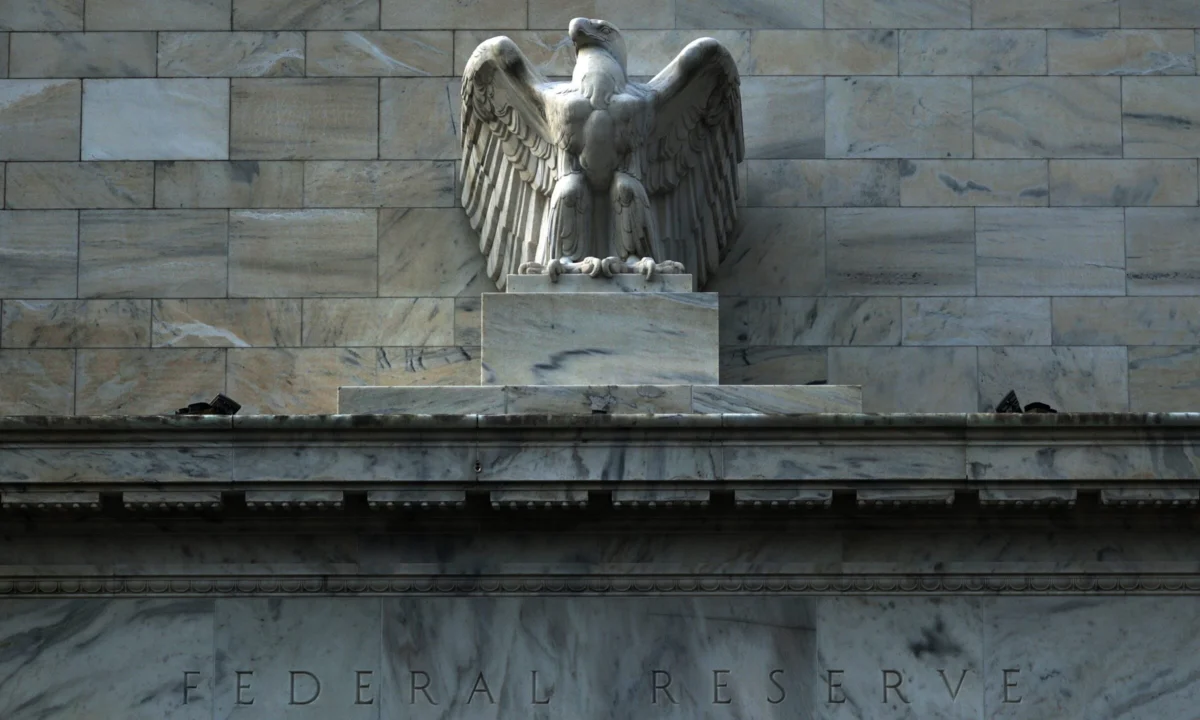










Washington D.C. – Mortgage rates experienced a notable decline this week, a shift not directly attributable to the Federal Reserve’s decision to maintain its benchmark federal funds rate at its current level. Instead, the downward pressure on borrowing costs appears to be largely driven by market optimism surrounding a de-escalation of tensions between the United States and Iran. Developments indicating a potential reopening of the Strait of Hormuz and the possibility of a broader agreement to end the protracted conflict have injected a sense of stability into global markets, which in turn has influenced interest rate expectations.
While the Federal Reserve’s latest meeting concluded without a change to the federal funds rate, the implications of this gathering extend far beyond the immediate decision. Analysts are keenly observing the subtle signals emanating from the central bank, particularly concerning its future trajectory under new leadership. The long-term outlook for monetary policy, more than the present-day pronouncements, is poised to exert a significant influence on mortgage rates in the coming months.
Key Takeaways:
- Geopolitical Influence: A significant factor driving the recent drop in mortgage rates is the perceived easing of geopolitical tensions between the U.S. and Iran, leading to expectations of a more stable global economic environment.
- Fed’s Steady Hand (For Now): The Federal Reserve opted to keep the federal funds rate unchanged, a decision that was largely anticipated by the market.
- Future Fed Direction is Crucial: The market’s attention is shifting towards the Federal Reserve’s forward guidance and the potential for future policy shifts, particularly under new leadership.
- Inflationary Headwinds Remain: Despite some geopolitical relief, persistent inflation remains a key concern for the Federal Reserve, potentially limiting the scope for immediate rate cuts.
- Transparency Concerns: Emerging questions about the Federal Reserve’s communication strategy under its new chair could introduce greater market volatility.
Mortgage Rates See Modest Decline Driven by External Factors
For the week ending June 17th, the average rate on a 30-year fixed-rate mortgage saw a decrease of seven basis points, settling at 6.32% Annual Percentage Rate (APR). This figure, compiled by NerdWallet based on daily APRs recorded over the preceding five business days from Zillow data, reflects a tangible easing of borrowing costs for prospective homeowners. A basis point, for clarity, represents one one-hundredth of a percentage point.
It is crucial to understand that the Federal Reserve does not directly set mortgage rates. However, its actions and pronouncements profoundly impact the broader interest rate environment. While commonly referred to as "raising or cutting interest rates," the Fed’s direct control is limited to the federal funds rate – a short-term lending rate between financial institutions. Nevertheless, this singular rate acts as a foundational element, with changes rippling outward to influence borrowing costs across the entire economy, including mortgages.
Financial institutions that originate mortgages typically price their offerings based on anticipated moves by the Federal Reserve well in advance of official announcements. This forward-looking nature of market pricing means that the central bank’s future outlooks often carry more weight than its immediate decisions. The current market dynamic suggests a potential shift towards a period where predicting the Fed’s precise plans may become more challenging.
The Complex Relationship Between the Federal Reserve and Mortgage Rates
The Federal Reserve’s mandate is to foster maximum employment and stable prices. Its primary tool for achieving these objectives is the manipulation of the federal funds rate. When the economy shows signs of overheating, characterized by rising inflation and a robust job market, the Fed may increase the federal funds rate. This action makes borrowing more expensive, which can cool down economic activity by discouraging consumer spending and business investment. Conversely, during periods of economic weakness or rising unemployment, the Fed may lower the federal funds rate to stimulate the economy. Lower borrowing costs encourage investment and spending, aiming to boost employment and economic growth.
Mortgage rates, while influenced by the federal funds rate, are also subject to a multitude of other factors. These include the yields on U.S. Treasury bonds, particularly the 10-year Treasury note, which serves as a benchmark for long-term interest rates. Investor demand for these bonds, influenced by global economic conditions, inflation expectations, and geopolitical events, plays a significant role. Furthermore, the supply and demand dynamics within the mortgage market itself, including the volume of mortgage-backed securities being issued and purchased by investors, can impact rates. Lender profit margins and the overall health of the housing market also contribute to the final rate offered to consumers.
The recent announcement from the Federal Reserve, keeping the federal funds rate steady, signals a pause in its tightening cycle. This decision was widely expected by economists and market participants, given the mixed economic signals and ongoing inflationary pressures. However, the accompanying statements and economic projections from the Federal Open Market Committee (FOMC) provide crucial insights into the Fed’s assessment of the economic landscape and its potential future actions.
Why Rate Cuts Remain an Unlikely Prospect for the Near Future
The persistent calls from President Trump for lower interest rates, a stance he has maintained throughout his presidency, appeared to be directed towards his appointee as Federal Reserve chair, Kevin Warsh, who assumed the role in May. However, the power to alter the federal funds rate does not rest with the chair alone. Instead, it is a collective decision made by the 12 members of the Federal Open Market Committee (FOMC), each possessing a single vote.
The economic rationale for a significant rate cut at this juncture is not particularly compelling. The Federal Reserve’s dual mandate prioritizes a strong economy characterized by stable prices and full employment. This translates to ensuring that the cost of goods and services remains predictable and that individuals can readily find and maintain employment.
Inflationary Pressures Persist:
Prior to the recent geopolitical tensions involving Iran, inflation was already exceeding the central bank’s target of 2%. The conflict in the Middle East has further exacerbated these inflationary pressures, adding to concerns about the rising cost of goods and services. While the immediate fears of widespread job losses due to the conflict have not materialized, evidence suggests that the labor market remains resilient. This robust employment picture, coupled with elevated inflation, creates a challenging environment for the Fed, potentially limiting its room to maneuver towards aggressive rate cuts.
The Fed’s Balancing Act:
The Federal Reserve typically lowers the federal funds rate when the job market shows signs of weakness, aiming to stimulate economic activity through lower borrowing costs, thereby encouraging reinvestment and hiring. Conversely, when inflation becomes a significant concern, the Fed tends to raise rates to curb spending and investment, thereby cooling down the economy.
Elizabeth Renter, Senior Economist at NerdWallet, elaborates on this delicate balance: "For the Fed, the balance of risks has tilted. Inflation is high and the labor market steady. While inflation may not be high or rising fast enough to warrant an interest rate hike this week, such a move is certainly on the table this year. The same really couldn’t be said a few months ago."
This assessment suggests that while an immediate rate hike might not be on the horizon, the possibility of future increases cannot be discounted. Should a strong consensus emerge among Fed watchers regarding an imminent rate hike, it is reasonable to anticipate an upward trend in mortgage rates. However, the potential for a diplomatic resolution to the conflict in Iran could alter this outlook. If de-escalation leads to a moderation of inflationary pressures, central bankers might opt to maintain current rate levels, hoping that inflation will naturally recede.
Exploring the Landscape of Mortgage Options
For individuals considering purchasing a home or refinancing an existing mortgage, understanding the current rate environment is paramount. The dip in mortgage rates, while driven by external factors, presents an opportunity for some borrowers.
Navigating the Mortgage Market:
Prospective homebuyers and those looking to refinance can leverage online tools and resources to compare offers from various lenders. Personalized rate estimates, often provided with minimal initial information, can offer a snapshot of available options. It is important to note that these initial estimates are typically not a guarantee of the final rate, which will depend on a comprehensive review of the borrower’s creditworthiness, loan-to-value ratio, and other factors.
Key Considerations for Borrowers:
- Credit Score: A strong credit score is crucial for securing the most favorable mortgage rates. Borrowers should review their credit reports for any inaccuracies and take steps to improve their scores if necessary.
- Down Payment: A larger down payment generally leads to a lower loan-to-value ratio, which can result in better interest rates and potentially avoid private mortgage insurance (PMI).
- Loan Type: Different loan types, such as fixed-rate mortgages and adjustable-rate mortgages (ARMs), have different interest rate structures and risk profiles. Borrowers should carefully consider which type best suits their financial situation and risk tolerance.
- Loan Term: The length of the loan term (e.g., 15-year vs. 30-year fixed) will impact both the monthly payment and the total interest paid over the life of the loan.
The Impact of Rate Fluctuations on Homeownership Goals:
The current environment, with mortgage rates showing some volatility, underscores the importance of staying informed and acting decisively when favorable conditions arise. For many, homeownership remains a significant financial goal, and understanding how interest rates influence affordability is critical. The potential for future rate increases, as suggested by some Fed outlooks, adds an element of urgency for those looking to lock in current rates.
A Potentially Less Transparent Central Bank?
A significant undercurrent in the current financial discourse revolves around the potential for increased opacity in the Federal Reserve’s communication strategy. This concern stems from the leadership style and expressed views of the new Fed chair, Kevin Warsh.
The New Era of Fed Communication:
As this report is published, Fed Chair Kevin Warsh is expected to deliver his first press conference in his new capacity. His known predilection for a more restrained approach to public pronouncements from the Fed – he has indicated a preference for fewer public statements – may offer a preview of what to expect during his tenure. This could translate into less frequent press conferences following FOMC meetings, a departure from recent practice.
Scrutiny of Economic Projections:
Furthermore, the Fed’s June meeting includes its Summary of Economic Projections (SEP), a document where FOMC members provide anonymized forecasts for key economic indicators, including the future path of the federal funds rate. Warsh has previously voiced reservations about the utility and potential pitfalls of these public-facing forecasts, arguing that they can hinder the Fed’s ability to adapt quickly to unforeseen economic developments. It is plausible that he may choose not to participate in these projections, or that the format and content of the SEP could undergo significant changes.
The Value of Forward Guidance:
However, there is a strong argument to be made for the benefits of the Fed telegraphing its future intentions. This practice, known as forward guidance, not only helps shape market expectations but can also proactively influence economic behavior in a manner consistent with the Fed’s policy objectives. By providing clarity on its anticipated course of action, the Fed allows businesses and consumers to make more informed financial decisions, thereby contributing to smoother economic transitions.
Elizabeth Renter, NerdWallet economist, emphasizes this point: "Transparency and forward guidance are key to effective monetary policy. When the Fed telegraphs their intentions, markets are less likely to be surprised, leading to less volatile conditions. And when we have an idea of where the Fed will go, it makes it easier for businesses and consumers to make financial decisions."
This is particularly relevant for major financial decisions, such as buying or selling a home. If there is a clear indication that interest rates are likely to fall later in the year, potential buyers might be encouraged to wait, while sellers might be motivated to act sooner. Conversely, a strong expectation of rising rates can cool down the housing market as potential borrowers become hesitant. The ability of markets to reliably anticipate the Fed’s next moves is therefore a critical component of economic stability.
The potential for a less transparent Fed introduces an element of uncertainty that could lead to greater market volatility. This uncertainty, in turn, could make it more challenging for individuals and businesses to plan for the future, potentially impacting investment decisions and overall economic growth. As the Federal Reserve navigates this evolving landscape, its communication strategy will be closely scrutinized for its impact on both financial markets and the broader economy.