









Main Facts: Understanding MOHELA and the Modern Student Loan Landscape
The Missouri Higher Education Loan Authority (MOHELA) occupies a central, highly scrutinized position within the United States higher education finance ecosystem. As one of the primary federal student loan servicers contracted by the U.S. Department of Education, MOHELA manages a massive slice of the overarching $1.7 trillion federal student loan debt portfolio.
For the millions of Americans navigating higher education debt, understanding how MOHELA operates is no longer optional—it is a critical component of personal financial health. Recent data from the Federal Student Aid (FSA) data center highlights the sheer scale of MOHELA’s operations. As of March 2026, the agency manages approximately $315.9 billion in student loan debt for roughly 6.73 million borrowers. This portfolio encompasses loans across all major statuses: active repayment, deferment, forbearance, and those currently within their designated grace periods.
It is vital to clarify a common point of confusion among borrowers: MOHELA does not offer exclusive, proprietary student loan forgiveness programs. Instead, MOHELA functions as an administrative bridge. It acts as the billing, payment processing, and account support hub for federal loans that may ultimately qualify for broader federal relief initiatives. Borrowers assigned to MOHELA must navigate their repayment strategies through federally established programs, most notably the Public Service Loan Forgiveness (PSLF) initiative and various Income-Driven Repayment (IDR) plans.
With shifting administrative oversight and a rapidly evolving regulatory environment, staying informed about MOHELA’s role, your repayment choices, and potential pitfalls is essential to avoiding costly financial missteps.
Chronology: The Evolution of MOHELA and Federal Servicing
To fully understand MOHELA’s current footprint, it is helpful to examine the historical timeline of its operations and its shifting responsibilities within the federal student loan network.
- Decades Past (Private Lending Era): MOHELA originally operated for many years as a traditional state-based private lender and guarantor of student loans, building a long-standing history within the higher education financing sector.
- The Federal Servicing Transition: As the federal government centralized its lending practices—effectively ending the bank-based Federal Family Education Loan (FFEL) program in favor of Direct Loans—MOHELA successfully transitioned into a primary federal loan servicer contracted by the Department of Education.
- June 2022 (The PSLF Handover): MOHELA significantly expanded its public profile when it took over the servicing responsibilities for the Public Service Loan Forgiveness (PSLF) program and the TEACH Grant Program from FedLoan Servicing (PHEAA), which was exiting the federal servicing market. This thrust millions of public sector workers directly into MOHELA’s customer service ecosystem.
- 2023–2025 (The Servicing Crunch): As federal student loan payments resumed following the pandemic-era pause, MOHELA, alongside other major servicers, absorbed an unprecedented volume of customer inquiries, account adjustments, and complex income recertifications, leading to notable operational strains and public scrutiny.
- Recent Years (Centralization via StudentAid.gov): Recognizing processing backlogs and administrative friction under various servicers—including MOHELA—the Department of Education gradually shifted core administration of federal forgiveness programs, such as PSLF, directly in-house to StudentAid.gov, streamlining portions of the oversight while leaving day-to-day loan servicing in the hands of contractors like MOHELA.
Supporting Data: By the Numbers
The mechanics of federal student loans are governed by hard data. When evaluating your standing with MOHELA, consider the following metrics and structural realities:
- $1.7 Trillion: The total size of the U.S. federal student loan debt portfolio, underscoring the macro-level economic significance of federal servicing policies.
- $315.9 Billion: The approximate volume of student loan debt actively managed by MOHELA as of March 2026.
- 6.73 Million: The total number of unique borrowers whose accounts are currently serviced by MOHELA, encompassing all loan phases (repayment, deferment, forbearance, and grace periods).
- 10 Years: The baseline timeline required to successfully earn tax-free loan forgiveness through the Public Service Loan Forgiveness program, provided all qualifying employment and payment criteria are met.
- $17,500: The maximum loan cancellation available under the Teacher Loan Forgiveness program—though this tier is strictly limited to "highly qualified" secondary math and science teachers and special education instructors.
Official Responses and Borrower Experiences
Historically, federal student loan servicers have faced sharp criticism from consumer advocates, lawmakers, and borrowers alike for administrative errors, delayed processing times, and poor communication.
Within this broader context, MOHELA is generally reported by industry experts as one of the more manageable servicers to work with relative to its peers. However, because MOHELA absorbed a dramatically larger share of borrower accounts following the exit of other servicers and the end of the payment pause, customer satisfaction metrics have faced pressure. Industry watchers and consumer advocates anticipate a steady stream of borrower complaints regarding hold times, processing delays for IDR recertifications, and communication gaps.
Real-world experiences captured via borrower surveys highlight these operational friction points. For instance, one student loan debtor shared the following account regarding the PSLF tracking process:
"MOHELA took more than six months to process my PSLF forms and didn’t do it correctly the first time. But when I called, they fixed my counts relatively quickly."
— Student Loan Planner Reader Survey
This sentiment underscores a vital takeaway for anyone with MOHELA-serviced loans: proactive account monitoring is mandatory. Whether you are tracking qualifying PSLF payments or verifying your income recertification for an IDR plan, relying entirely on automated servicer tracking without periodic manual audits can lead to unwelcome surprises.
Implications: Your Federal Loan Forgiveness and Repayment Options
If your federal student loans are serviced by MOHELA, you have several distinct pathways toward loan forgiveness, reduction, or discharge. Evaluating these options carefully can save you tens of thousands of dollars over the lifetime of your debt.
1. Public Service Loan Forgiveness (PSLF)
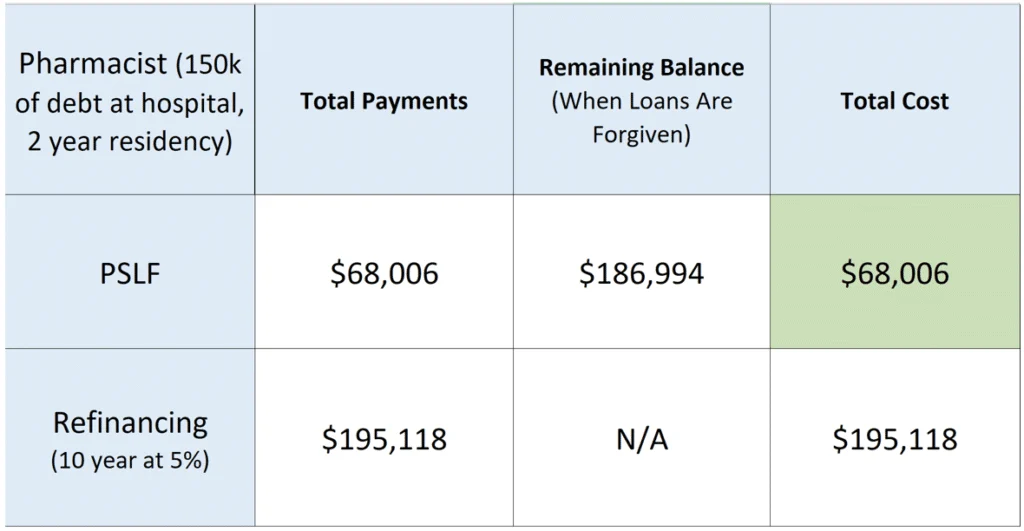
The PSLF program remains the gold standard for debt relief for public sector employees, offering tax-free forgiveness of your remaining federal loan balance after 10 years of consistent public service employment.
- Eligibility Requirements: You must work full-time for a qualifying employer (such as a government organization, 501(c)(3) non-profit, or other eligible public service entity), make 120 qualifying monthly payments under an accepted repayment plan, and hold Direct Loans.
- Administrative Tools: While MOHELA previously managed the entirety of the PSLF portfolio, the Department of Education now utilizes the PSLF Help Tool on StudentAid.gov. Borrowers should use this portal to submit their Employment Certification Forms (ECFs) annually.
- Best Practice: Keep meticulous records of your employment certifications and payment counts to bridge any gaps caused by servicer transitions.
2. Income-Driven Repayment (IDR) Forgiveness
Income-driven repayment plans scale your monthly financial obligations based on your adjusted gross income (AGI) and family size. Depending on the specific plan structure and your borrowing history, any remaining balance on your federal loans is automatically forgiven after 20 to 30 years of qualifying payments.
- The Changing IDR Landscape: Repayment options depend heavily on when your loans were originally disbursed. Borrowers who receive new federal loans or consolidate existing debt may find themselves transitioning away from older plans (such as IBR, PAYE, and ICR) toward newer structures like the Repayment Assistance Plan (RAP) or Tiered Standard Repayment plans. Furthermore, legacy plans like PAYE and ICR are scheduled to sunset entirely.
- Annual Recertification: IDR plans require you to recertify your income and family size annually to maintain your calculated monthly payment. Failing to do so can result in abrupt payment spikes.
- The IDR "Tax Bomb": Unlike PSLF forgiveness—which is federally tax-free—forgiveness achieved through standard IDR timeline thresholds (20 to 30 years) is currently treated as taxable income by the IRS. Borrowers pursuing IDR forgiveness must plan ahead and save for this potential tax liability.
3. Teacher Loan Forgiveness
For educators working in low-income schools, the Teacher Loan Forgiveness program offers up to $17,500 in targeted loan cancellation.
- The Caveat: The maximum $17,500 relief tier is restricted exclusively to "highly qualified" secondary-level math and science teachers and special education instructors. General education teachers at the elementary or secondary level cap out at $5,000.
- Strategic Note: Education finance experts frequently advise that most career teachers are better off pursuing Public Service Loan Forgiveness (PSLF) instead. Because PSLF forgives the entirety of the remaining balance tax-free after 10 years—whereas Teacher Loan Forgiveness only wipes out a flat dollar amount—PSLF typically yields a far superior financial outcome for educators with high debt loads.
4. Alternative Forgiveness, Cancellation, and Discharge Provisions
Beyond PSLF and IDR, specific life circumstances or institutional failures can qualify borrowers for complete loan discharge. These alternative pathways include:
- Borrower Defense to Repayment: For students misled or defrauded by their higher education institution.
- Total and Permanent Disability (TPD) Discharge: For borrowers medically certified as totally and permanently disabled.
- Closed School Discharge: For individuals whose colleges shut down while they were enrolled or shortly after withdrawing.
- Closed School, False Certification, and Bankruptcy Discharges: Handled under strict statutory frameworks outlined directly on StudentAid.gov.
Exploring Alternative Relief and Refinancing Strategies
For borrowers who do not qualify for federal forgiveness programs—or for those balancing a mix of federal and private debt—exploring state-based programs, professional debt relief initiatives, or private refinancing can be a prudent next step.
Many state governments operate localized student loan repayment assistance programs designed to incentivize professionals to work in underserved geographic areas or critical industries. For example, specialized loan forgiveness and repayment grants exist for nurses working in rural health clinics and attorneys practicing public defense or legal aid work.
Conversely, if loan forgiveness is mathematically unviable for your career trajectory, refinancing your student loans through private lenders (such as SoFi, Earnest, or Credible) can secure lower fixed or variable interest rates and better repayment terms—often accompanied by substantial cash-back bonuses. However, refinancing federal loans into private loans permanently strips away access to federal protections, including income-driven repayment plans, federal forbearance options, and PSLF eligibility.
What Should You Do Next?
Navigating the complexities of MOHELA servicing, federal forgiveness criteria, and long-term repayment optimization requires a personalized strategy. Borrowers unsure of their optimal path forward should take advantage of digital assessment tools—such as structured 11-question student loan quizzes—or consult with accredited financial planners who specialize in student debt optimization to build a custom roadmap for their financial future.