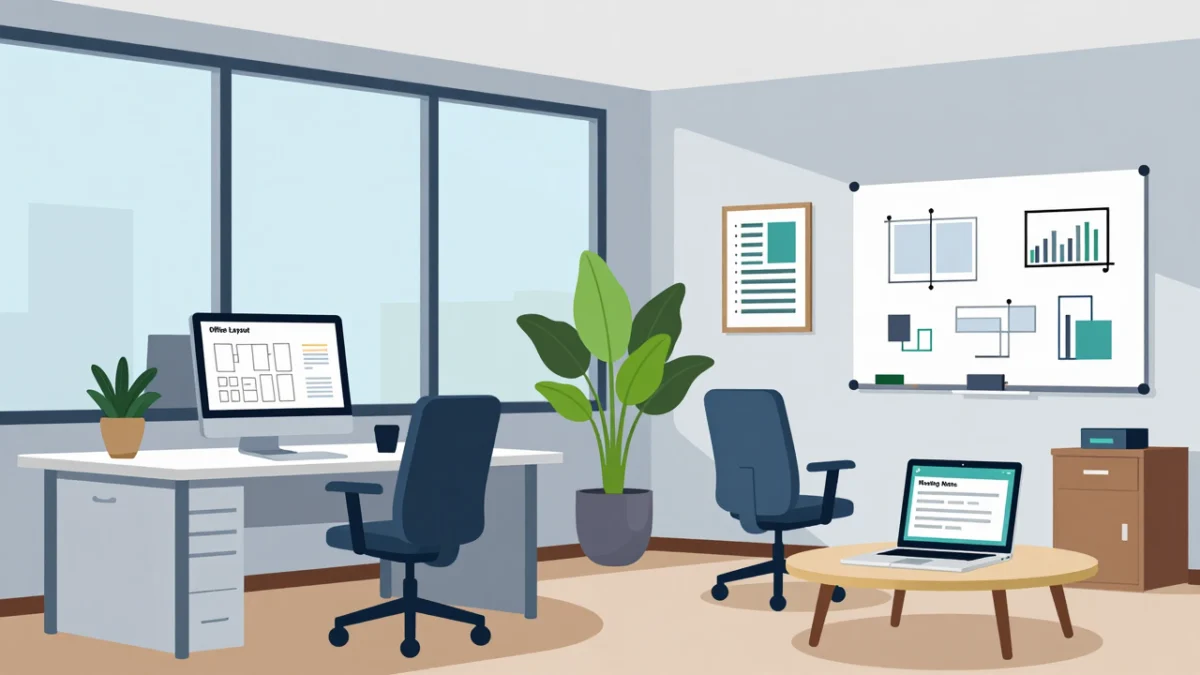
As organizations around the globe continue to navigate the permanent shifts brought on by hybrid work models, maximizing physical workspaces has transitioned from a logistical convenience to an executive priority. Choosing the right office space planning software is no longer just about drawing digital floor plans—it is about controlling operational expenditure, enhancing employee satisfaction, and making data-backed real estate decisions.
Whether your enterprise is managing a bustling coworking hub or a corporate headquarters transitioning to hot-desking, modern workspace management tools are reshaping the modern professional environment.
Main Facts: The Core of Modern Office Space Management
At its foundational level, office space planning software is a digital suite designed to streamline how organizations allocate, monitor, and manage their physical footprints. In an era where attendance fluctuates daily due to hybrid schedules, these platforms act as the operational backbone for desk assignments, meeting room reservations, and resource tracking.
Key capabilities of contemporary workspace platforms include:
Real-Time Occupancy Tracking: Monitoring how often desks, conference rooms, and collaborative zones are actually used.
Interactive Floor Plans: Dynamic, visual layouts that give employees a real-time view of available spaces.
Calendar and Chat Integrations: Seamless synchronization with enterprise tools like Google Workspace, Microsoft 365, Slack, and Microsoft Teams to eliminate scheduling conflicts.
Data-Driven Analytics: Providing facilities managers with concrete metrics to downsize underutilized real estate or redesign bottlenecks.
By deploying these systems, businesses can significantly reduce overhead costs tied to vacant commercial square footage while boosting day-to-day productivity for teams operating on flexible schedules.
Chronology: The Evolution of Workspace Management
To understand why office space planning software has become indispensable, it is helpful to examine how workplace management has evolved over the past decade:
The Pre-2020 Era (Fixed Allocations): Real estate strategies were straightforward. Every employee had a dedicated desk, and meeting rooms were booked via rudimentary, localized calendar systems. Floor plans were maintained on static PDFs or physical blueprints.
The 2020–2022 Disruption (Emergency Flexibility): The global shift to remote work forced companies to rethink physical offices entirely. Organizations scrambled for temporary software solutions to manage social distancing, staggered in-office days, and rapid capacity tracking.
The 2023–2025 Transition (The Hybrid Standard): As hybrid models solidified, makeshift solutions proved insufficient. Companies required robust, scalable software capable of handling dynamic hot-desking, neighbourhood seating arrangements, and multi-location management.
The 2026 Landscape (AI-Driven Ecosystems): Today, office space planning software integrates predictive analytics, automated booking rules, and advanced hardware sensors. Platforms no longer just record where people sit; they forecast attendance trends and autonomously optimize layouts based on team collaboration patterns.
Supporting Data: Feature Sets, Pricing Models, and Market Options
Selecting the right software requires a careful balancing act between essential features, user experience, and budgetary constraints. The market offers a wide spectrum of tools tailored to different organizational sizes and needs.
Leading Software Options and Pricing Tiers
Archie
Target Audience: Coworking spaces and agile small-to-medium businesses.
Pricing Model: Value-focused, starting at $2.8 per desk and $8 per room, with a mandatory minimum monthly fee of $159.
Pricing Model: Tailored packages starting around $60 per user, per year.
Nexudus
Target Audience: Large flexible workspaces and shared offices.
Pricing Model: Starts at $150 per month for up to 80 users.
Robin and Envoy
Target Audience: Organizations prioritizing intuitive desk and visitor management.
Pricing Model: Per-user subscription models with customized enterprise quotes upon inquiry.
RoomSketcher & SmartDraw
Target Audience: Teams primarily focused on detailed interior design, architectural layout drafting, and visual floor plan creation.
Essential Feature Checklist
When evaluating software options, decision-makers should prioritize solutions that offer:
Responsive Mobile Applications: Allowing staff and managers to handle bookings and view layouts on the go.
Granular Permission Controls: Restricting certain floors or zones to specific departments or project teams.
Visitor Management Integration: Streamlining check-ins for clients and contractors alongside internal desk booking.
Official Responses and Industry Insights
Facility management professionals and workplace strategists emphasize that software implementation is only as good as the corporate strategy behind it. According to industry experts, the primary roadblock to successful software adoption is rarely the technology itself, but rather human resistance to change.
"When implementing a new workspace platform, user adoption resistance is almost guaranteed if employees feel the tool is overly bureaucratic," notes a leading workplace operations consultant. "The key is selecting interfaces that require zero training and integrate directly into the chat platforms your team already uses every single day, like Slack or Microsoft Teams."
Furthermore, facilities directors highlight data accuracy as a vital operational metric. Outdated floor layouts or ghost bookings—where desks are reserved but left empty—can artificially skew occupancy data, leading executives to make misguided real estate downsizing decisions. Regular audits, coupled with automated sensor-based check-ins, are increasingly recommended by software vendors to maintain data integrity.
Implications: Challenges and Future Trends
Adopting office space planning software carries profound long-term implications for corporate culture, financial health, and operational agility. However, organizations must navigate several common challenges to realize these benefits.
Overcoming Implementation Challenges
Integration Complexity: Connecting workspace management apps with legacy HR directories and enterprise calendars can lead to data discrepancies. A phased rollout backed by dedicated IT support is essential.
Data Accuracy & Governance: Without strict booking policies (such as automatic release rules for unclaimed desks), software analytics become unreliable.
Scalability: As businesses expand or contract, the chosen software must seamlessly adapt to multi-location footprints without requiring a complete system overhaul.
Future Trends Shaping the Market
Looking ahead, the office space planning sector is being heavily influenced by emerging technologies:
Artificial Intelligence and Predictive Modeling: Next-generation tools utilize AI to analyze historical attendance patterns, automatically suggesting optimal seating arrangements for project teams before they even step into the office.
IoT and Sensor Integration: The blending of software with Internet of Things (IoT) hardware—such as thermal desk sensors and smart lighting—will allow for completely automated workspace tracking.
Enhanced Focus on Employee Wellbeing: Future iterations are expected to incorporate environmental monitoring (air quality, temperature, and noise levels) directly into booking apps, allowing employees to reserve zones that match their optimal working conditions.
Conclusion
Optimizing your corporate footprint in a hybrid work environment requires moving beyond guesswork and investing in dedicated technological infrastructure. By carefully assessing your organization’s unique needs—whether that involves prioritizing granular desk-booking features, advanced occupancy analytics, or budget-friendly pricing models—you can select a platform that scales with your business.
Tools like Archie, OfficeSpace, and Nexudus offer diverse pathways to transforming how your team collaborates and utilizes physical space. By prioritizing user experience, seamless integrations, and continuous layout reviews, organizations can foster a productive, adaptable workspace that satisfies both executive cost-cutting goals and employee lifestyle demands.