









The journey of real estate investing rarely follows a straight line. While beginners often master the initial framework of buying a first property, the subsequent phases present complex strategic, financial, and emotional decisions. Whether an investor is looking to scale their portfolio by tapping into existing home equity, trying to secure stable housing for a disabled family member, or transitioning from self-management to hiring a professional property manager, the risks intensify past the introductory deal.
In a recent episode of the Real Estate Rookie Podcast, hosts Ashley Kehr and Tony J. Robinson unpacked these exact milestones, offering expert guidance to help investors navigate the nuanced layers of property ownership with confidence.
Main Facts: Core Real Estate Challenges Explored
As real estate portfolios mature, investors inevitably encounter hurdles that cannot be solved with basic introductory formulas. The recent podcast discussion centered around three pivotal dilemmas faced by modern investors and everyday families:
- Tapping Home Equity: Using existing equity via a Home Equity Line of Credit (HELOC) or a cash-out refinance is a popular strategy to fund a down payment on a new rental property. However, this creates new debt that must be carefully underwritten to avoid destroying cash flow.
- Family-Driven Housing Solutions: Real estate can serve as a vehicle to help loved ones, such as providing stable housing for a disabled family member. Investors must weigh the pros and cons of building an Accessory Dwelling Unit (ADU) on a parent’s property versus purchasing an independent condo.
- Vetting Property Managers: Transitioning management duties to a third party is crucial for scaling, but failing to thoroughly vet a property manager’s experience, hidden fees, and tenant communication processes can result in plummeting returns and tenant turnover.
Chronology: The Evolution of an Investor’s Journey
Understanding when and how these strategic decisions arise is essential for long-term success. The typical progression of a growing real estate investor unfolds across distinct stages:
Phase 1: Securing the First Deal and Accumulating Equity
An investor purchases their initial long-term rental or primary residence. Over several years—often aided by market appreciation or low-interest-rate environments like the COVID-era 2.5% rates—the property builds significant equity.
Phase 2: The Urge to Scale and Financial Underwriting
After owning a property for several years (such as an eight-year-old long-term rental), the investor looks to buy their next property. They consider utilizing the accumulated equity through refinancing or a HELOC. This is where many rookies stumble, failing to account for fluctuating interest rates, the new monthly liability, and worst-case financial scenarios.
Phase 3: Life Events and Intersecting Real Estate Goals
Beyond pure portfolio growth, investors often face personal real estate challenges. For instance, a family member may require specialized housing due to a disability or behavioral challenges that prevent them from maintaining standard roommate situations. The investor must then evaluate creative housing solutions, balancing emotional family dynamics with financial viability and tax implications.
Phase 4: Professionalizing Operations
As the portfolio expands, the investor reaches a threshold where self-management becomes unsustainable. At this juncture, the focus shifts to sourcing, vetting, and onboarding professional property managers to safeguard asset value and preserve personal time.
Supporting Data & Financial Mechanics: HELOCs vs. Cash-Out Refis
To effectively utilize home equity, investors must understand the distinct financial mechanics of the tools at their disposal. According to the analysis provided by Tony J. Robinson and Ashley Kehr, comparing financing vehicles requires looking closely at how they interact with existing debt.
Home Equity Line of Credit (HELOC)
- How it works: The original mortgage remains untouched. A HELOC acts as a second mortgage or a revolving line of credit.
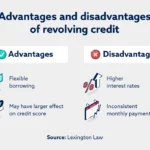
- Payment structure: Similar to a credit card, borrowers only pay interest on the exact amount of funds they draw. If the line of credit sits unused, there is no monthly payment attached to it.
- Example in practice: An investor with a locked-in 2.5% interest rate on their primary mortgage can open a HELOC to secure down payment funds for a new property without sacrificing their historically low primary interest rate.
Cash-Out Refinance
- How it works: The original mortgage is completely replaced by a brand-new, larger mortgage. The borrower receives the financial difference between the old loan balance and the new loan amount in cash.
- Risk factor: If prevailing interest rates are significantly higher than the original mortgage rate, the overall monthly debt service increases substantially across the entire balance of the property.
Underwriting for the Worst-Case Scenario
When factoring new debt into a deal, Kehr emphasizes the importance of stress-testing the numbers against volatile market conditions.
- Timeline management: The shorter the duration of a renovation or BRRRR (Buy, Rehab, Rent, Refinance, Repeat) project, the lower the exposure to rapid interest rate hikes.
- Rate sensitivity: Investors should calculate whether a property can still generate positive cash flow if interest rates jump by two percentage points (e.g., rising from 7% to 9%). If a modest rate spike eliminates all cash flow, the deal carries too much risk.
Official Perspectives: Expert Debates on Family Housing and Management
The podcast highlighted contrasting expert viewpoints on complex real estate scenarios, particularly regarding familial support and operational oversight.
The Great Debate: ADU vs. Condo for Family Housing
When Elizabeth, a listener from Washington state, sought advice on housing her disabled brother in Texas, the hosts debated two distinct pathways:
- Building an ADU on Parental Property:
- Pros: Keeps the family member close to a familiar support system (their father) and avoids external landlord-tenant friction. Financing options for ADUs have expanded significantly in recent years.
- Cons, per Ashley Kehr: It creates immense personal complication. The investor holds no underlying real estate title to the land if the tiny home sits on a parent’s property. If familial disputes arise, recovering the investment is exceptionally difficult, as the structure cannot easily be rented out to a stranger on someone else’s residential lot.
- Purchasing an Independent Condo:
- Pros, per Ashley Kehr: Buying a lower-priced condo (such as one valued at $99,000 with half down) provides true real estate ownership, tax benefits (like depreciation), and a clear exit strategy. If the living situation fails, the investor can easily pivot to traditional renting or sell the asset to recoup capital.
- Nuance: Tony Robinson noted that while ADUs can sometimes be subdivided into separate parcels, the co-mingling of family and finance in a backyard tiny home introduces higher operational volatility compared to owning a traditional, detached condo unit.
Property Management Selection: Avoiding Common Pitfalls
Addressing a question from Blanca Munoz regarding property management, Kehr and Robinson outlined critical red flags and best practices:
- Avoid Growth-Phase Misalignments: Hiring a small property management company that has only handled single-family homes to manage a large multi-family or commercial apartment complex can lead to operational failure. Experience level must match asset class.
- Scrutinize Hidden Fees: Investors must ask upfront about secondary fees—such as mandatory semi-annual inspection charges, project management fees for turnovers, and bulk maintenance pricing. Unchecked fees can quietly erode monthly cash flow.
- Leverage Modern Technology: Utilizing platforms designed specifically for real estate investors, such as BiggerPockets’ official banking platform Baseline, helps automate bookkeeping, categorize transactions by property, and eliminate hours of manual spreadsheet tracking as a portfolio grows.
Implications: Making Confident Real Estate Moves
The overarching takeaway for rookie and intermediate investors is that real estate success requires looking beyond the headline strategy. Whether leveraging equity, housing a relative, or handing off operational keys to a manager, the underlying mechanics demand rigorous underwriting and contingency planning.
- Financial Discipline: Tapping equity is not receiving "free money." Every dollar pulled out represents an increased future liability that must be supported by the incoming rental income of the underlying assets.
- Risk Mitigation: By stress-testing interest rates, establishing clear timelines, and setting up automated bookkeeping systems, investors can protect their cash flow against unforeseen economic shifts.
- Emotional vs. Financial Boundaries: Mixing family dynamics with real estate requires structural safeguards—such as formal agreements and liquid exit strategies—to protect both the investment capital and personal relationships.
By approaching each transaction with comprehensive research and professional guidance, investors can scale their portfolios sustainably while minimizing avoidable risks.