







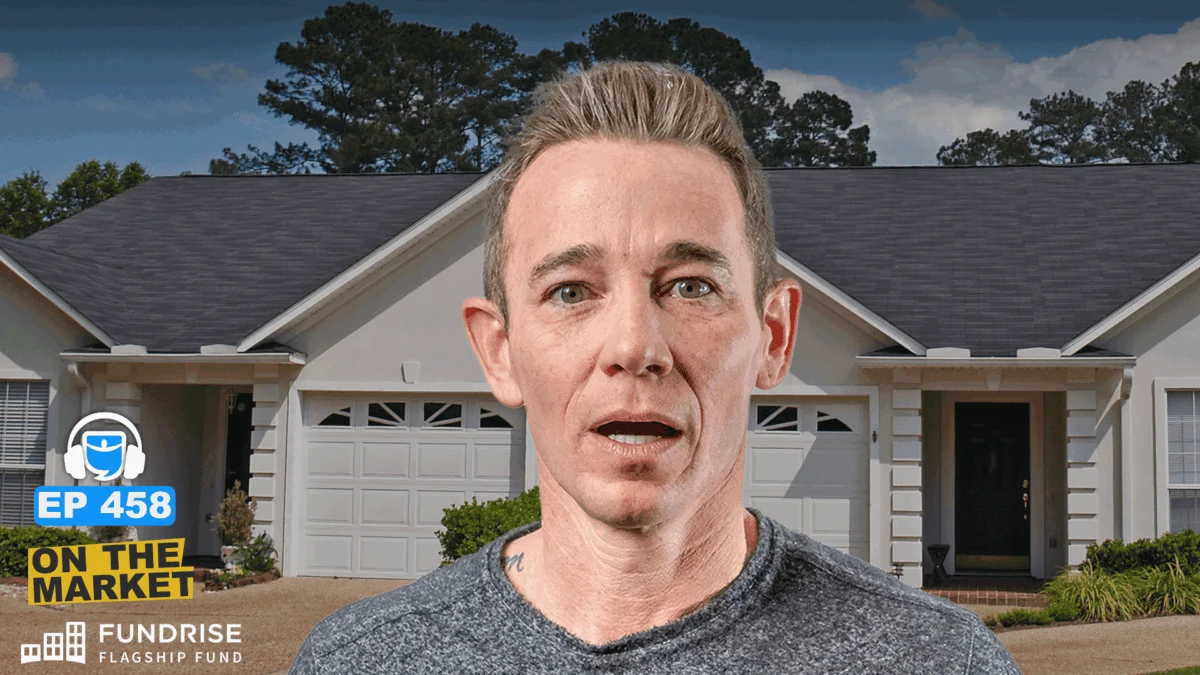
WASHINGTON — As the housing market of 2026 sends mixed signals across the United States, real estate investors are being forced to look past sensationalized media headlines and evaluate the fundamental mechanics driving property values. During a recent panel discussion on the real estate podcast On the Market, industry experts James Dainard, Kathy Fettke, and Henry Washington dissected current economic indicators, addressing a rise in foreclosures, a decade-low in institutional investor purchases, and the evolving role of cash in modern home transactions.
While mainstream media reports often paint a picture of impending economic doom, the panel argued that today’s shifting landscape is not a replay of the 2008 Global Financial Crisis (GFC). Instead, the current environment presents a calculated, highly strategic window of opportunity for disciplined investors who possess adequate capital, conservative underwriting standards, and a localized approach.
Main Facts: Decoding the 2026 Housing Market Realities
The current real estate climate is defined by three distinct macroeconomic trends: a modest uptick in foreclosure starts, a significant pullback by corporate and retail investors, and a subtle softening of cash-only advantages in home acquisitions.
According to data from ATTOM Data Solutions highlighted by the panel, foreclosure starts rose by 18% during the first half of 2026, reaching a total of 227,000 properties with foreclosure filings. While an 18% year-over-year increase initially sounds alarming to everyday consumers, real estate veterans emphasize that these numbers must be viewed through a historical lens.
Simultaneously, a report from Redfin revealed that investor home purchases fell by 6% year-over-year in the first quarter of 2026, marking the lowest level of investor activity since 2020—or 2016 if pandemic-era data distortions are stripped away. Driven by stubbornly high mortgage rates hovering around 6.6% and a median home price near $430,000, everyday investors are finding the math increasingly difficult to justify.
Finally, CNBC data indicates that cash transactions have dipped slightly down to 31.4% of total home sales—a marginal 0.9% decrease from the previous year. Although cash remains a powerful tool, rising alternative yields and a general contraction in overall transaction volume have altered the competitive edge once enjoyed exclusively by all-cash buyers.
Chronology: From Pandemic Moratoriums to Today’s Market Correction
To understand why foreclosure metrics appear distorted in 2026, market observers must look back at the regulatory and economic timeline of the past decade:
- Pre-2008 Peak: Prior to the Great Recession, foreclosure timelines averaged a couple of hundred days, culminating in a historic peak of approximately 1,654,000 foreclosure filings in 2010.
- 2018 Stability: By 2018, foreclosure activity had normalized to roughly 362,000 filings annually, a period during which market distress generated virtually no sensationalized media panic.
- 2020–2021 Moratoriums: Government-mandated foreclosure moratoriums during the COVID-19 pandemic artificially suppressed filings, driving activity down to historic lows of roughly 65,000 properties in 2021.
- 2022–2025 Post-Moratorium Rebound: As restrictions lifted, foreclosure filings bounced upward—climbing to 164,000, then 185,000, and continuing a gradual upward trajectory through 2025. This post-moratorium rebound was frequently mischaracterized by mainstream media as an "exploding" crisis.
- First Half of 2026: Foreclosure starts reach 227,000. While higher than pandemic-era lows, this figure remains well below historical norms, prompting industry leaders to redefine how distress is identified and managed.
Supporting Data: Examining the Numbers Behind the Headlines
A deeper dive into the statistical data reveals a stark contrast between consumer perception and market reality.
- Foreclosure Volume Comparison: The 227,000 foreclosure filings recorded in early 2026 stand in stark contrast to the 1.65 million peak seen in 2010. Furthermore, current numbers are significantly lower than the 362,000 filings recorded in 2018.
- Foreclosure Completion Timelines: According to housing data, the average number of days required to complete a foreclosure currently stands at 563 days. While this duration represents a slight decrease from post-pandemic bottlenecks caused by judicial backlogs, it is more than double the pre-GFC average. This extended timeline indicates that modern banking institutions heavily favor loan modifications and loss mitigation over rapid property seizures, as lengthy foreclosures rarely serve the financial interests of lenders.
- Foreign Investment Shifts: International capital flows into U.S. real estate are experiencing geographic reallocation. Chinese investment has dropped 11% year-over-year, though it still accounts for substantial capital volume ($7.6 billion). Conversely, Canadian buyers have increased their U.S. real estate footprint by 16%, largely driven by the absence of 30-year fixed-rate mortgage products in the Canadian financial sector, which naturally necessitates alternative or all-cash purchasing strategies.
Official Responses and Expert Analysis
Industry leaders appearing on On the Market offered candid assessments of what these statistics mean for the broader economy and individual real estate portfolios.
Addressing the affordability crisis, Henry Washington noted that while foreclosure numbers do not signal a systemic market crash, underlying economic pressures are very real. "There’s an affordability problem. Absolutely," Washington stated. "Are there people who bought a house who then realized that taxes, insurance, and principal all go up over time and now they can’t afford their house? Yes, there’s a lot of people in that boat, and I don’t want to make light of that… I’m just saying that the number of foreclosures is not a telling sign for me that the world is ending."
James Dainard pointed out that traditional owner-occupant foreclosures are still relatively rare due to proactive bank interventions. Instead, the primary surge in localized distress is occurring within the investment sector. "Where we are seeing a lot more surge in foreclosures… is because we’ll have one investor and all of a sudden they’ll have 15 to 20 properties all go into default at the same time with six different hard money lenders," Dainard explained, noting that compounding default interest rates of 12% to 18% are crushing over-leveraged flippers.
Kathy Fettke emphasized that real estate investors must actively seek out distress rather than fearing it. "Most headlines are for non-investors… Don’t be afraid of distress. Distress is your friend. Distress is literally what makes you an investor," Fettke said. She highlighted that multifamily developers and home builders are facing severe pain points regarding high inventory, expensive insurance premiums, and carrying costs, creating prime opportunities for well-capitalized buyers to negotiate rate buy-downs rather than outright price cuts.
Implications: Strategic Takeaways for Real Estate Investors
As the market transitions into a more balanced state characterized by higher inventory, stubborn interest rates, and reduced buyer competition, investors must adapt their operational strategies to safeguard their assets and maximize profitability.
1. Shift Toward Conservative Underwriting
With institutional competition at a 10-year low, professionals are adjusting their "buy boxes." Henry Washington shared that while the types of properties he targets remain consistent, his willingness to pay top-dollar has evaporated. Furthermore, he has completely eliminated single-exit strategies—such as high-end fix-and-flips with no secondary rental potential—from his portfolio. Investors must ensure that every acquisition possesses multiple exit strategies, enabling them to pivot to long-term, medium-term, or short-term rentals if market conditions delay a quick sale.
2. Secure Dependable Financing and Capital Reserves
With cash losing a fraction of its dominance and transaction speeds dictating success, having access to reliable, non-contingent capital is paramount. James Dainard advises investors to audit their lending partnerships and maintain liquid "gunpowder." Making offers with 14-day closes, non-refundable earnest money, and hard money backing with zero funding conditions provides sellers with the certainty they desperately require during default situations.
3. Provide Solutions to Motivated Sellers
Whether dealing with distressed homeowners or over-extended investors, ethical execution is critical. Washington stresses the importance of structuring deals so that distressed sellers walk away with financial compensation rather than simply wiping out debt. Similarly, Dainard warns wholesalers and buyers against tying up properties without the guaranteed capacity to close, noting that time is the most valuable commodity for a seller facing foreclosure.
4. Play the Long Game
Historically, major real estate buying opportunities are preceded by periods where institutional and professional investors temporarily step back. By building disciplined acquisition strategies today, investors position themselves to look like economic visionaries five to ten years down the road. As Kathy Fettke concluded, preparation is everything: investors must secure capital and refine their underwriting standards before market opportunities peak, ensuring they are ready to act when true value presents itself.