









In a move that signals a seismic shift in how traditional industries leverage high-octane data, Oracle has officially partnered with the International Motor Sports Association (IMSA) to launch IMSA Labs. This strategic collaboration serves as the cornerstone for the new Oracle Cloud Innovation Studio, a high-tech incubator designed to transition cutting-edge concepts from the drawing board to validated, scalable solutions.
While the partnership is rooted in the world of professional auto racing, its implications extend far beyond the track. For the small business community, this collaboration serves as a masterclass in digital transformation, demonstrating how artificial intelligence (AI) and cloud infrastructure can be applied to solve real-world operational complexities.
The Genesis of IMSA Labs: A Chronology of Innovation
The journey toward this partnership did not happen in a vacuum. For years, IMSA—the premier sanctioning body for sports car racing in North America—has functioned as a "living laboratory." Recognizing that the data generated by high-performance vehicles mirrors the complexities of global supply chains and logistics, leadership began seeking a partner capable of turning that telemetry into actionable intelligence.
- The Conceptual Phase: IMSA and Oracle identified a gap between theoretical AI research and the harsh, unpredictable realities of operational environments.
- The Launch of IMSA Labs: Formally announced in July 2026, the initiative was established to bridge this gap by providing a sandbox for startups to test AI models under the extreme pressure of professional racing.
- The Oracle Cloud Innovation Studio: Concurrent with the launch, Oracle opened the studio, a dedicated space for selected startups to access Oracle Cloud Infrastructure (OCI) and integrate it with IMSA’s proprietary race data.
- The Path Ahead: Moving forward, the program aims to cycle through cohorts of innovators, focusing on predictive maintenance, logistics optimization, and real-time data streaming—all of which have direct applications in the small business sector.
The Technical Backbone: OCI Meets High-Speed Telemetry
At the heart of this partnership is the integration of Oracle Cloud Infrastructure (OCI) with the immense data streams generated by IMSA race cars. A modern GT or prototype vehicle produces terabytes of data during a single race weekend, ranging from tire pressure and engine temperature to aerodynamic efficiency and fuel consumption.
The Role of Artificial Intelligence
By applying machine learning algorithms to this raw data, the Oracle Cloud Innovation Studio enables startups to create "digital twins" of racing scenarios. For a small business owner, this is not just about cars; it is about predictive modeling. If an AI can predict a component failure on a race car with 99% accuracy before it happens, the same logic can be applied to predicting inventory shortages or equipment maintenance in a local manufacturing plant.
Scalability and Performance
Karan Batta, Senior Vice President at Oracle, emphasized that the collaboration is not merely an academic exercise. "We’re bringing together the power, performance, and scalability of OCI with IMSA’s unique operational environment," Batta noted. This scalability ensures that startups are not building solutions that only work in a lab; they are building solutions that can withstand the "real-world complexity" that small businesses face daily.
Official Responses and Strategic Vision
The collaboration has drawn significant attention from both the tech and automotive sectors, with leadership teams highlighting the symbiotic nature of the deal.
John Doonan, IMSA President:
"Motorsport has always been a laboratory for innovation. With IMSA Labs, we’re extending that tradition beyond the race car to create a platform where startups can develop and validate next-generation solutions in one of the world’s most demanding operational environments."
Doonan’s vision is clear: the racetrack is the ultimate testbed. If a solution can perform while a car is traveling at 200 mph, it is uniquely positioned to thrive in the chaotic, fast-paced environment of modern small business management.
Oracle’s Strategic Stance:
Oracle views this partnership as a way to democratize high-level cloud computing. By providing startups with access to OCI, Oracle is fostering an ecosystem where innovation is not restricted to billion-dollar enterprises. The partnership serves as a validation that Oracle’s infrastructure is as much for the agile startup as it is for the multinational corporation.
Implications for Small Business Owners
For the average entrepreneur, the news of IMSA Labs might seem disconnected from their daily reality of payroll, marketing, and supply chain management. However, the trickle-down effect of this innovation is profound.
1. Data-Driven Decision Making
Small businesses often suffer from "data blindness"—they collect information but fail to act on it. The methodologies being refined in the Oracle Cloud Innovation Studio teach startups how to turn raw data into a narrative that guides business strategy.
2. The Shift to Predictive Maintenance
Small manufacturers or service-based businesses that rely on machinery can learn from the telemetry used in IMSA. The ability to monitor equipment health in real-time and predict a failure before it stops production can save thousands of dollars in downtime—a critical factor for companies with thin profit margins.
3. Streamlined Logistics and Efficiency
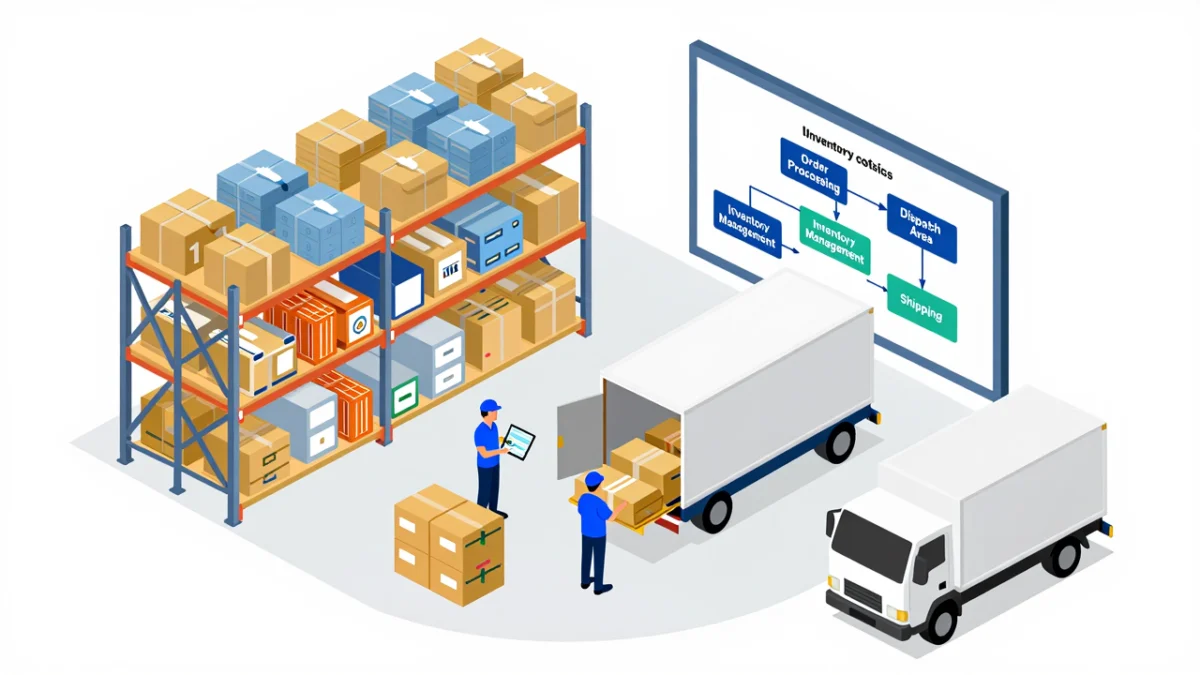
Racing is a game of seconds. The logistics teams at IMSA manage massive amounts of equipment and personnel with extreme precision. The solutions emerging from the Innovation Studio regarding real-time resource allocation can be adapted to help small businesses optimize their own delivery schedules, warehouse management, and workforce deployment.
Navigating the Challenges: The Reality Check
While the potential is immense, it is essential to remain grounded in the challenges that small businesses face when adopting advanced technology.
The Financial and Resource Barrier
The primary hurdle for many small businesses is the "barrier to entry." Implementing AI-driven systems requires more than just a software subscription; it requires:
- Upfront Capital: Investment in hardware and initial cloud configuration.
- Time Allocation: The "hidden cost" of training employees and integrating new workflows.
- Human Capital: The need for tech-savvy staff who can interpret the data, which may necessitate hiring or upskilling.
The Speed of Obsolescence
Technology in the cloud space evolves at a breakneck pace. A solution built today might be eclipsed by a more efficient model within 18 months. Small business owners must weigh the "buy vs. build" decision carefully, ensuring that the tech they adopt is modular and flexible enough to evolve without requiring a total system overhaul every year.
The Learning Curve
Transitioning from traditional manual processes to AI-enhanced automation can be culture-shock for a small team. Business owners must prioritize change management, ensuring their staff understands that these tools are intended to empower them, not replace them.
A Beacon of What’s Possible: The Future Landscape
The Oracle-IMSA partnership is a bellwether for the future of industry. It highlights a trend where the lines between "tech" and "non-tech" sectors are blurring. Whether in manufacturing, energy, or telecommunications, the requirement for speed, resilience, and real-time data handling has become universal.
For the small business owner, the takeaway is clear: you do not need to be a racing team to adopt the mindset of one. By observing the developments coming out of IMSA Labs, businesses can find inspiration in how traditional models are being disrupted.
Key Takeaways for Business Strategy:
- Start Small, Scale Big: Utilize cloud-based tools that allow you to test solutions on a small scale before committing to a full-company rollout.
- Prioritize Resilience: Look for technology that provides visibility into your operations, allowing you to "see" problems before they manifest.
- Embrace the Ecosystem: You don’t have to build solutions from scratch. Partnerships like the Oracle Cloud Innovation Studio demonstrate the value of joining ecosystems where you can learn from others and leverage shared infrastructure.
Conclusion: Turning Innovation into Action
The collaboration between Oracle and IMSA is more than a marketing headline; it is a blueprint for the next decade of operational excellence. By moving beyond theoretical models and into the "demanding operational environment" of the racetrack, these companies are proving that innovation is most effective when it is stress-tested.
As small business owners look toward the future, they should view these high-tech partnerships as a roadmap. The barriers to entry are slowly lowering, and the tools that were once reserved for elite racing teams and Fortune 500 companies are becoming increasingly accessible. By staying informed on the outputs of initiatives like IMSA Labs, the small business sector can position itself not just to survive in a competitive landscape, but to lead it.
For those interested in tracking the progress of this partnership and exploring how these technologies might eventually integrate into their own operations, the official announcements and case studies provided by Oracle serve as a vital resource. The race to the future has begun, and for the forward-thinking entrepreneur, the starting line is closer than it appears.
For more details on this collaboration, visit the official Oracle announcement page.
Image Credit: Google Gemini