








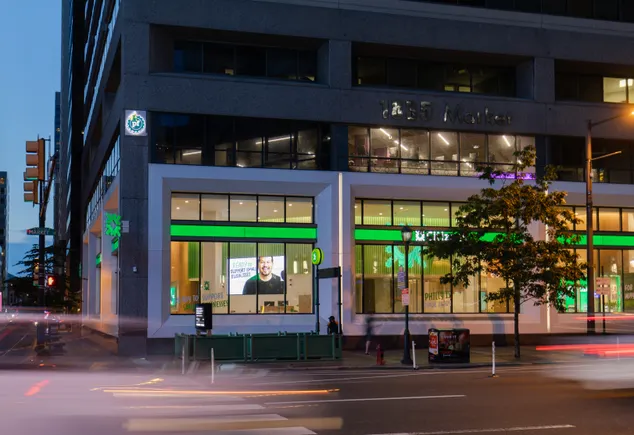
PROVIDENCE, RI – In a move that highlights the intensifying intersection of corporate finance and social activism, Citizens Bank announced on Friday that it will terminate its long-standing financial relationships with two of the nation’s largest private prison operators, CoreCivic and The GEO Group. Both companies are primary contractors for U.S. Immigration and Customs Enforcement (ICE), managing a significant portion of the country’s immigrant detention infrastructure.
The decision follows months of escalating pressure from a coalition of activists, non-profits, and municipal governments that have collectively withdrawn hundreds of millions of dollars from the bank in protest. While the bank characterized the move as a pragmatic "business decision" driven by changing market dynamics, the announcement marks a significant milestone in the national movement to decouple mainstream banking from the private incarceration industry.
1. Core Facts: The Dissolution of a Multibillion-Dollar Partnership
Citizens Bank, the Providence-based subsidiary of Citizens Financial Group, Inc., has officially set a timeline to wind down its credit and banking services for CoreCivic and The GEO Group. For years, the bank served as a key financier for these entities, which are the dominant players in the American private prison sector.
According to data compiled by the "De-ICE Citizens Bank Coalition," the bank had historically facilitated approximately $2.5 billion in financing for these two companies. This capital was utilized for various corporate purposes, including the construction, maintenance, and operation of facilities that house thousands of individuals detained by ICE.
The bank’s exit is framed not as a moral or political pivot, but as a response to "changed commercial circumstances." Citizens Bank officials pointed to a shift in the federal government’s strategy, noting that the U.S. government has either purchased or signaled its intent to acquire several facilities previously owned by these private operators. This shift, the bank argues, has reduced the capital requirements of CoreCivic and GEO Group, thereby diminishing their need for the comprehensive range of financial services Citizens provides.
2. Chronology: From Grassroots Activism to Municipal Divestment
The path to Friday’s announcement was paved by a relentless, multi-month campaign that targeted the bank’s reputation and its bottom line.
Early 2026: The Rise of the De-ICE Coalition
The movement began in early 2026 when a diverse group of human rights organizations and community leaders formed the "De-ICE Citizens Bank Coalition." Their mission was clear: force Citizens Bank to choose between its corporate clients in the prison industry and its retail and municipal customer base. The coalition highlighted reports of poor conditions and a lack of medical oversight within ICE facilities, citing that more than 20 individuals had died in the care of facilities operated by these private groups.
May 2026: The Boycott Gains Momentum
By May, the campaign shifted from awareness to action. Individuals and small business owners began closing their accounts in a coordinated effort to "starve the beast" of the bank’s retail capital. The movement gained significant traction on social media, using the bank’s own branding against it to highlight the contrast between its community-focused marketing and its financing of detention centers.
June 2026: The Jersey City Blow
The financial pressure reached a tipping point in June when Jersey City, New Jersey, took a decisive stand. The city announced it would withdraw a staggering $265 million in public funds from Citizens Bank. In a single day, city officials moved approximately $150 million to other institutions, citing the bank’s refusal to divest from the private prison industry. Jersey City’s move served as a blueprint for other local governments.
July 2026: The Final Push
On July 14, just days before the bank’s announcement, the township council of Montclair, New Jersey, voted unanimously to withdraw $91 million from Citizens Bank. This continued exodus of municipal funds created a "contagion effect," where the reputational risk and the loss of stable, low-cost deposits began to outweigh the interest income generated from prison industry loans.
July 17, 2026: The Official Announcement
Facing a potential wave of further municipal exits, Citizens Bank released its statement on Friday, July 17, confirming the end of the relationships while carefully distancing itself from the activists’ narrative.
3. Supporting Data: The Financial and Human Stakes
The conflict between Citizens Bank and the De-ICE Coalition is underscored by a complex array of financial data and humanitarian reports.
The Scale of Financing
The $2.5 billion in financing attributed to Citizens Bank was part of a larger syndicated credit facility involving multiple global banks. However, Citizens’ role was particularly scrutinized because of its heavy presence in the Northeast, a region with a highly active immigrant advocacy base.
The "Death in Detention" Statistics
A central pillar of the activist campaign was the human cost of private detention. The coalition cited data indicating that since 2017, at least 20 deaths occurred at facilities managed by CoreCivic and GEO Group under ICE contracts. These reports, often involving allegations of medical neglect or delayed emergency response, became the moral cornerstone of the divestment movement.
Citizens’ Community Investment Record
In its defense, Citizens Bank pointed to its extensive record of corporate social responsibility. The bank noted that it currently:
- Funds over 140 non-profit organizations that specifically serve immigrant and underserved communities.
- Provided $2 billion in funding last year toward affordable housing and local economic development initiatives.
- Maintains a significant "Community Reinvestment Act" (CRA) rating, reflecting its commitment to lending in low-income neighborhoods.
By highlighting these figures, the bank sought to argue that its overall impact on society is overwhelmingly positive, regardless of its specific corporate lending portfolio.
4. Official Responses: A Clash of Perspectives
The rhetoric following Friday’s announcement reveals a deep divide in how the bank and its critics view the role of financial institutions in modern society.
The Bank’s Stance: "Fair Access" and Regulatory Duty
Citizens Bank’s official statement was notably defensive. The bank expressed disappointment that it had been "dragged into what is largely a political matter."
"All banks, including ourselves, must consider these regulatory and contractual frameworks in making decisions on who to bank or not bank," the bank stated. They cited a regulatory obligation not to "de-bank" lawful businesses based solely on political or religious pressure. "Given the important role that banks play in providing financing in this country, providing fair access to bank funding should be something all should agree with. Political concerns should be addressed through political channels."
The bank maintained that the decision was not a condemnation of the prison companies’ business models but a reaction to the federal government’s decision to buy back facilities, which fundamentally changed the "capital needs" of the clients.
The Activists’ Response: "Cautious Optimism"
The De-ICE Citizens Bank Coalition was quick to claim victory, though they remained wary of the bank’s phrasing. In a statement provided to Banking Dive, the coalition vowed to continue monitoring the situation.
"We seek assurance that the bank is terminating any and all banking relationships—as well as future relationships—with these companies," the coalition wrote. "Until we get all questions answered, we expect customers will continue to align their personal values with the banks they do business with."
5. Broader Implications: The Future of "Values-Based" Banking
The withdrawal of Citizens Bank from the private prison sector is part of a broader, systemic shift in the American financial landscape. This event carries several long-term implications for the banking industry and social policy.
The End of Private Prison Financing?
Citizens is not the first major bank to distance itself from this industry. In 2019, a wave of major lenders—including JPMorgan Chase, Bank of America, and Wells Fargo—announced they would stop lending to private prison operators following similar public outcry. As more "mainstream" banks exit the space, companies like CoreCivic and GEO Group are forced to turn to smaller, less-regulated lenders or private equity firms, often at much higher interest rates. This "financial strangulation" is a key goal of divestment activists.
The Power of Municipalities
The Citizens Bank saga proves that municipal governments hold immense leverage. While individual retail boycotts are often symbolic, the removal of hundreds of millions of dollars in municipal payroll and tax revenue accounts represents a material threat to a bank’s liquidity and regional stability. This may embolden other cities to use their banking contracts as a tool for social or environmental policy.
The "De-Banking" Debate
The bank’s argument regarding "fair access" to capital touches on a growing legal and political debate. Several states, particularly those with Republican leadership, have passed or considered "anti-boycott" laws that penalize banks for refusing to do business with industries like firearms or fossil fuels. Citizens Bank’s statement suggests that the industry feels caught between the "ESG" (Environmental, Social, and Governance) demands of one demographic and the "fair access" regulatory demands of another.
Redefining Corporate Neutrality
For decades, banks operated under the assumption that "money is neutral." However, the Citizens Bank case illustrates that in a hyper-polarized political environment, the act of providing capital is increasingly viewed as an endorsement of the borrower’s activities. As activists continue to target the "financial plumbing" of controversial industries, banks will likely find it increasingly difficult to maintain a position of "neutrality."
As the dust settles on this announcement, the financial world will be watching closely to see if other regional banks follow Citizens’ lead, or if the "business decision" framing provides enough cover for the bank to retain its remaining municipal clients without admitting a shift in its moral compass. For now, the De-ICE coalition remains vigilant, and the private prison industry faces one less partner in the traditional banking sector.