








By Banking Dive Staff
Updated October 8, 2026
In a major enforcement action that sends a sharp signal to the global financial sector, American Express (Amex) has been slapped with a $350 million civil money penalty and hit with concurrent cease-and-desist orders from the Office of the Comptroller of the Currency (OCC) and the Federal Reserve Board. The regulatory fallout, announced Thursday, stems from what authorities described as "significant deficiencies" in the company’s enterprise-wide anti-money laundering (AML) programs.
The scale of the oversight failures is staggering: federal regulators revealed that systemic breakdowns in Amex’s suspicious activity monitoring and reporting processes allowed approximately $13 billion in potentially illicit financial activity to pass through its systems over the past decade.
The Core of the Enforcement Actions
The enforcement actions represent a rare, synchronized strike by two of the most powerful bank regulators in the United States. The OCC’s move against the American Express National Bank subsidiary includes both the $350 million penalty and a formal cease-and-desist order. Simultaneously, the Federal Reserve Board issued its own cease-and-desist order targeting the parent company, American Express Company, and its travel-related services arm.
At the heart of the regulators’ findings is a failure of internal logic. According to the OCC, American Express National Bank fundamentally misjudged its own risk profile. The bank’s AML risk assessment was found to be improperly tailored; it focused heavily on "relatively narrow" demand deposit account products while significantly under-weighting the inherent risks associated with its "more dominant" credit and charge card portfolios. By focusing its defensive resources on the wrong segment of its business, Amex left a massive blind spot that, according to the regulators, was exploited for years.

Chronology of Regulatory Scrutiny
While the announcement on October 8, 2026, marks the climax of these investigations, the friction between Amex and its regulators has been building for years.
- The Development Phase (2022–2024): During this period, federal examiners began raising concerns regarding the adequacy of Amex’s Bank Secrecy Act (BSA) compliance protocols. Internal audits and routine exams started to highlight discrepancies between the company’s stated AML policies and their practical application.
- The Escalation (2025): As the magnitude of the monitoring gaps became clearer, regulators intensified their oversight. Discussions between the bank and federal agencies shifted from informal guidance to formal remedial expectations.
- The Discovery of $13B in Activity: During the deep-dive investigations of 2025 and 2026, regulators uncovered the $13 billion figure, representing suspicious transactions that went unreported or were inadequately flagged by the firm’s automated systems.
- October 8, 2026: The OCC and the Federal Reserve finalized their enforcement actions, issuing the cease-and-desist orders and the $350 million penalty.
Supporting Data and Systemic Breakdowns
The "systemic breakdowns" identified by the OCC underscore a failure in both technological infrastructure and human oversight. In the modern banking era, financial institutions are expected to employ sophisticated algorithms to detect patterns of money laundering, human trafficking, and terrorist financing. Amex’s failure was twofold:
- Risk Misalignment: By failing to calibrate its risk assessment to its core credit card business, the bank essentially operated with a flawed compass. Credit cards, which allow for rapid, high-velocity transactions, require different monitoring thresholds than traditional deposit accounts.
- Monitoring Failures: The $13 billion in flagged activity highlights a breakdown in "suspicious activity monitoring and reporting" (SAR). Financial institutions are legally obligated to file SARs when they identify transactions that have no apparent lawful purpose or are intended to disguise funds derived from illegal activity. The sheer volume of this missing reporting suggests that Amex’s compliance software or the team tasked with auditing it failed to bridge the gap between transactional data and regulatory transparency.
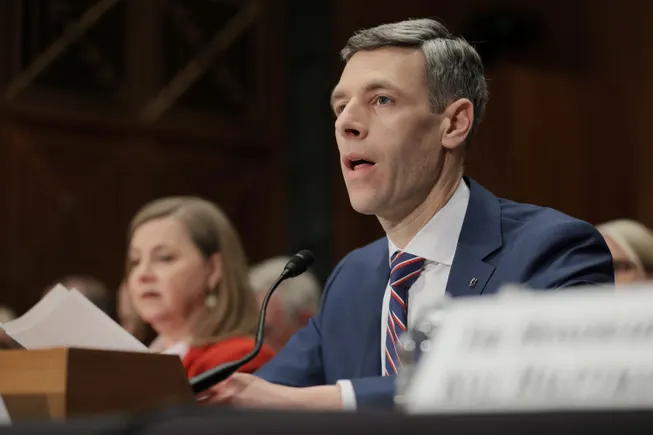
Comptroller of the Currency Jonathan Gould emphasized the gravity of the situation in his public statement: "The OCC expects banks of American Express’s size and complexity to devote sufficient resources to ensure compliance with laws and regulations designed to detect and prevent money laundering, which are critical to both economic and national security."
Official Responses and Corporate Strategy
In the immediate aftermath of the announcement, American Express leadership adopted a tone of contrition coupled with a commitment to transformation.
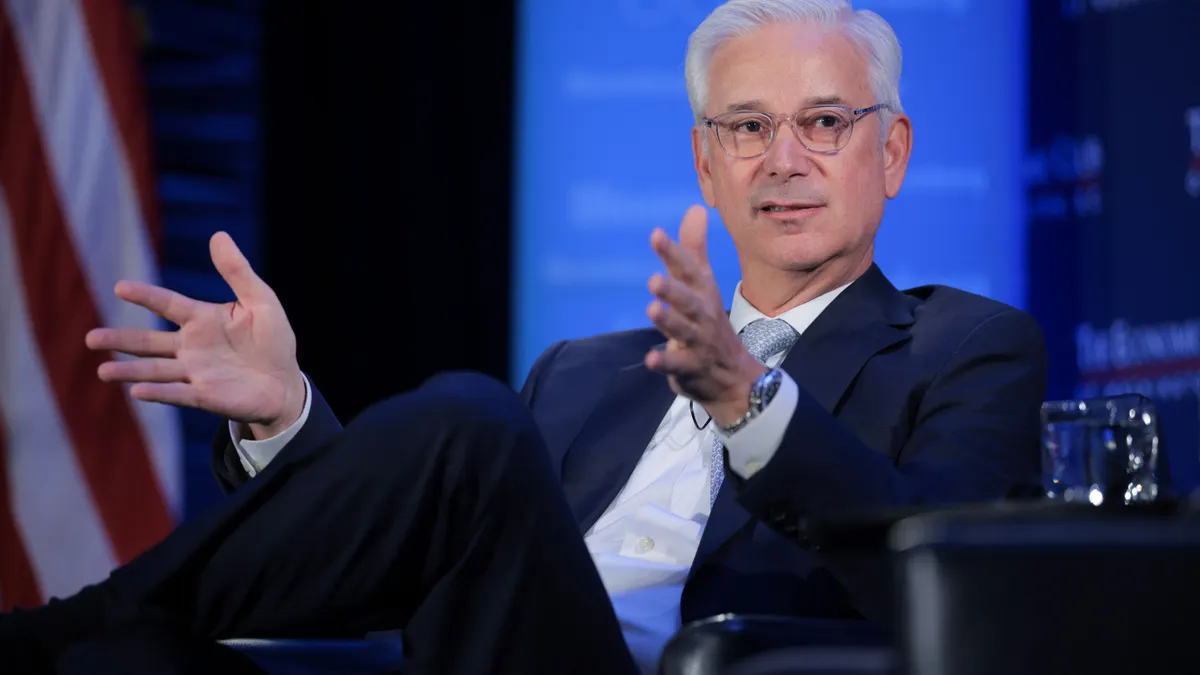
"American Express takes its responsibility to combat financial crimes seriously," said CEO Stephen Squeri in a prepared statement. "Over the last few years, we have engaged closely with regulators as we have strengthened our controls and with law enforcement to provide information. While we have made meaningful progress, we know there is more work to do."

Amex’s financial communication team was quick to reassure investors that the firm’s bottom line would remain resilient despite the $350 million blow. The company clarified that a portion of the civil penalty had been "reserved for in prior periods," effectively cushioning the impact on their current balance sheet. Squeri explicitly stated that the penalty would not impact the company’s full-year 2026 financial guidance, nor would the consent orders hinder projections for 2027.
Implications for the Financial Sector
The American Express case is a cautionary tale for the broader banking industry. It serves as a reminder that "enterprise-wide" compliance is not a checkbox exercise but an evolving discipline that must keep pace with a firm’s growth and changing business models.
1. Increased Regulatory Pressure
The fact that both the Fed and the OCC acted in concert suggests a higher level of inter-agency cooperation. Banks can no longer expect to satisfy one regulator while neglecting another. The "enterprise-wide" framing used by the Fed suggests that the buck stops with the parent company; subsidiaries cannot be treated as silos when it comes to risk management.
2. The Cost of "Scale"
As American Express continues to grow its global footprint, the regulatory burden increases exponentially. For institutions of this scale, the cost of non-compliance is no longer just a reputation issue—it is a material financial risk. The $350 million fine, while manageable for a company of Amex’s size, is a significant warning shot regarding the potential for future, more draconian measures if the "systemic breakdowns" are not addressed.
3. Investment in Compliance Technology
The industry will likely see a surge in capital expenditure toward RegTech (Regulatory Technology). If legacy systems are unable to handle the volume and velocity of modern transaction data, banks will be forced to upgrade their AI-driven monitoring capabilities to avoid similar regulatory intervention.

What Lies Ahead
For American Express, the road ahead is clearly defined by the mandates of the cease-and-desist orders. The firm is now under a microscope. It will be required to submit detailed remediation plans, undergo third-party audits, and provide regular progress reports to the OCC and the Federal Reserve.
The company is currently in the midst of a massive corporate transition, including the development of a 55-story global headquarters in New York City. While management is attempting to project an image of growth and stability, the regulatory baggage of the next few years will necessitate a significant diversion of internal focus toward the unglamorous, yet vital, work of compliance infrastructure.
Ultimately, the lesson of October 8 is that for the world’s largest financial institutions, the greatest threat to their bottom line may not be market competition, but the failure to properly guard the gates of the global financial system. As the investigation continues to unfold, industry analysts will be watching closely to see if Amex can successfully overhaul its culture of compliance without sacrificing the agility that has defined its brand for decades.
This story is developing and will be updated as more details regarding the specific remedial measures and long-term impact on American Express operations become available.