








For any homeowner who has spent even a fleeting moment scrolling through real estate investing forums or DIY renovation blogs, the message regarding Accessory Dwelling Units (ADUs)—frequently referred to as "granny flats," backyard cottages, or converted garages—is loud, clear, and ubiquitous. According to online gurus, slapping a tiny home in your backyard is the easiest, most lucrative passive income you will ever generate.
The reality, as is often the case with high-ticket real estate maneuvers, is somewhat more nuanced. While the hype isn’t entirely unfounded, it is frequently stripped of the gritty financial realities required to execute such a massive project successfully. For the right homeowner in the right housing market, an ADU can deliver one of the most compelling returns on investment (ROI) available for a home improvement dollar. However, the problem with the current discourse is that most proponents skip the actual mathematics.
To determine whether an ADU is a strategic financial asset or an expensive backyard money pit, we must thoroughly examine the true costs, financing strategies, rental income realities, and long-term implications.
Main Facts: What an ADU Actually Is and What It Costs
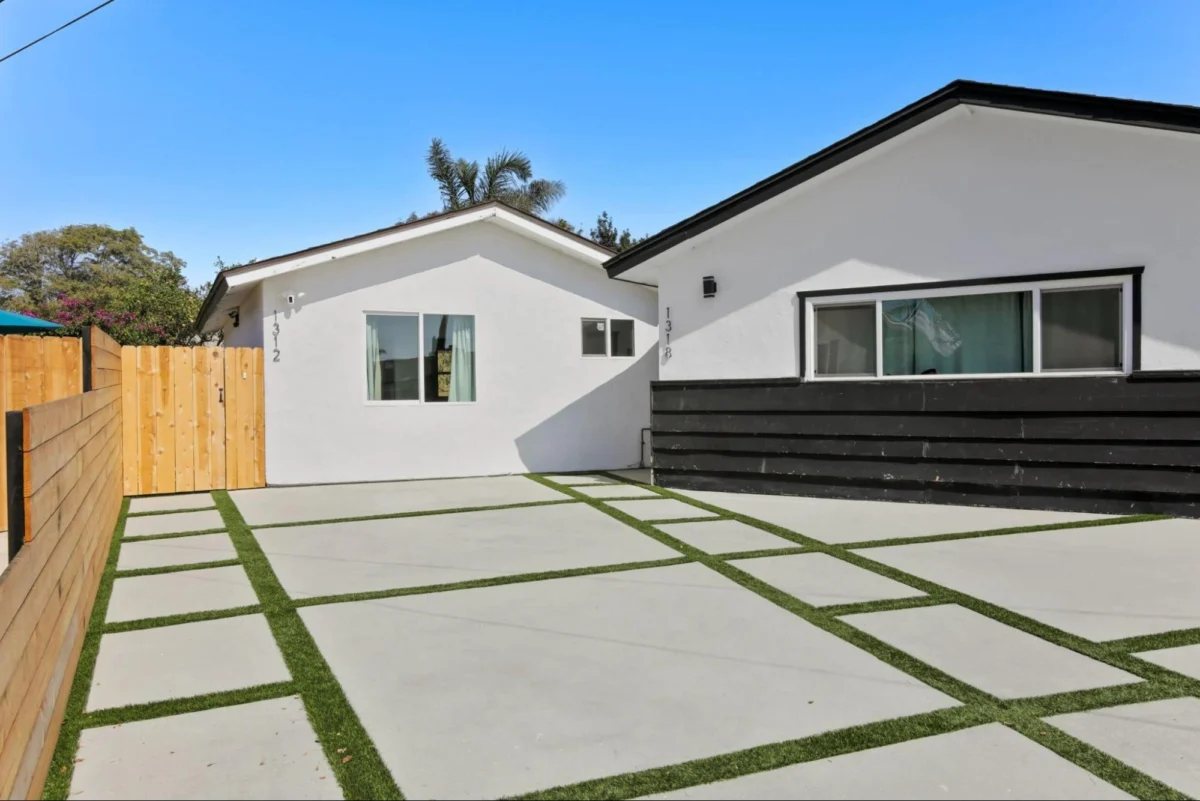
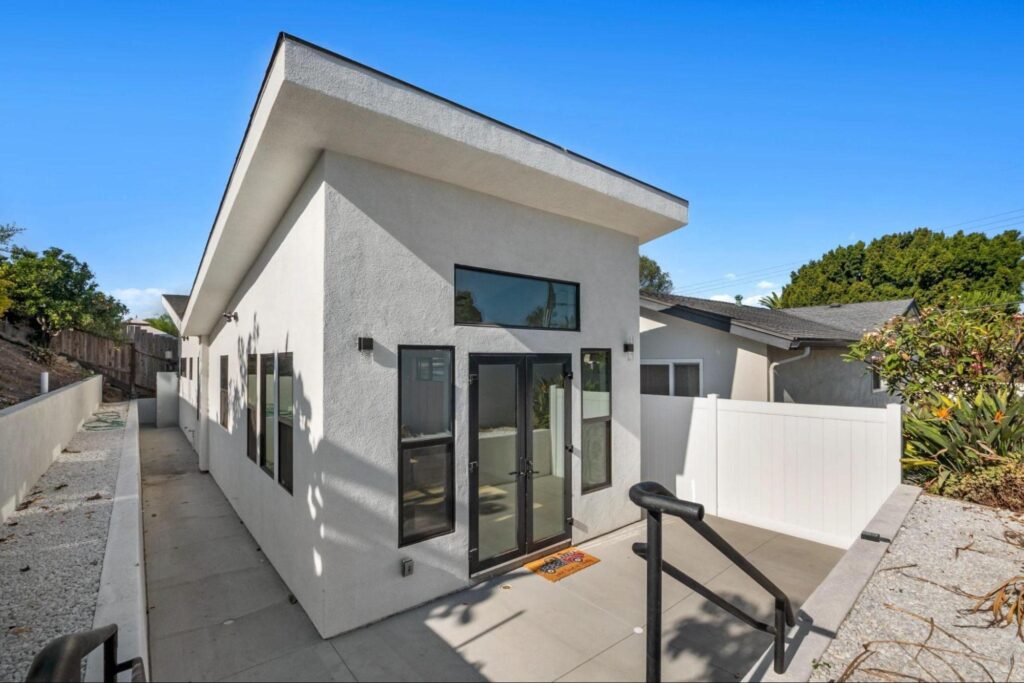
An Accessory Dwelling Unit is a self-contained residential living space located on the same property as a primary single-family home. It features its own kitchen, bathroom, living area, and sleeping quarters, functioning entirely independently. ADUs generally fall into a few distinct categories:
- Detached ADUs: Standalone structures built separately from the main house in a backyard.
- Attached ADUs: Units built as an addition directly connected to the primary home.
- Garage Conversions: Transforming an existing detached or attached garage into livable space.
- Junior ADUs (JADUs): Smaller conversion units (typically under 500 square feet) created within the walls of the existing home or an attached garage, often sharing utility connections or sanitation facilities.
The True Price Tag
Depending on square footage, level of interior finishes, and whether you are building a brand-new foundation or converting existing walls, a fully permitted ADU typically ranges between $80,000 and $380,000.
For brand-new, detached construction, costs generally hover between $250 and $450 per square foot. This is an intentionally wide spectrum. A modest 400-square-foot studio garage conversion is a fundamentally different economic endeavor than a custom, 1,000-square-foot, two-bedroom detached cottage with high-end appliances, dedicated laundry, and custom landscaping.
Homeowners must resist the temptation to anchor their expectations to a single headline-grabbing average cost. Real quotes must be gathered for specific lots, soil conditions, utility connection distances, and municipal requirements before any concrete is poured.
Chronology: The Lifecycle of an ADU Project
Building an ADU is not an overnight home improvement weekend project; it is a multi-month—sometimes multi-year—development pipeline. Understanding the chronological timeline is vital to managing cash flow and expectations.
Phase 1: Feasibility and Design (Months 1–3)
Before spending money on physical materials, a homeowner must evaluate local zoning laws, setback requirements, utility easement parameters, and HOA rules. Once feasibility is established, you hire an architect or a design-build firm to draft structural and architectural blueprints.
Phase 2: Permitting and Plan Check (Months 4–8)
This is frequently the most frustrating stage for developers and homeowners alike. Municipal building departments must review the plans for compliance with local zoning codes, energy efficiency mandates (such as Title 24 in California), and fire safety regulations. Delays at this stage can easily stretch across several months.
Phase 3: Construction and Infrastructure (Months 9–16)
Physical construction begins. This includes grading, pouring foundations, framing, roofing, running electrical, plumbing, and HVAC systems, and installing drywall and finishes. Utility tie-ins—connecting the ADU to the main sewer, water, and electrical lines—often present unexpected logistical hurdles and localized street or yard tearing.
Phase 4: Final Inspection and Certificate of Occupancy (Month 17)
Once the building inspector signs off on all electrical, plumbing, and structural work, a Certificate of Occupancy is issued. Only then can the unit be legally listed for rent or occupied by family members.
In total, from the initial sketch on a napkin to collecting the first month’s rent check, a standard ADU project takes anywhere from 12 to 18 months.
Supporting Data: Financing, Rental Yields, and Payback Math
Very few homeowners possess the liquid capital to pay $200,000+ in cash for an ADU build, nor is it strictly necessary.
How Homeowners Finance ADUs
- Home Equity Line of Credit (HELOC): Highly flexible and relatively fast to secure, a HELOC allows homeowners to draw funds as construction milestones require. However, they typically carry variable interest rates, making monthly obligations subject to market fluctuations.
- Cash-Out Refinance: Replacing your current mortgage with a larger one lets you pocket the difference in cash. This is viable if prevailing mortgage interest rates are lower than or comparable to your current rate, but it resets the clock on your entire primary mortgage.
- Construction Loans: Specifically structured for building projects, these specialty loans disburse funds in stages tied to inspections, eventually converting into a permanent mortgage once construction is complete. They require extensive paperwork and monitoring.
The Rental Income Reality Check
This is where the "passive income windfall" narrative either holds up under scrutiny or completely collapses.
In high-cost-of-living metropolitan areas like San Diego, Los Angeles, or Seattle, a well-located, modern ADU can realistically command gross monthly rents between $1,800 and $2,800. However, gross rent is a misleading metric.
To determine actual net cash flow, a homeowner must deduct:
- Property Tax Reassessments: In states like California (under Proposition 13), building an ADU does not trigger a reassessment of your entire home, but it will result in a supplementary tax assessment based strictly on the added value of the new structure.
- Insurance and Utilities: Increased homeowners insurance premiums and, depending on how sub-metering is handled, tenant utility usage.
- Maintenance and Vacancy Reserves: Prudent investors always factor in an assumed vacancy rate (roughly one month per year) and shave 10% to 15% off expected rental income to cover ongoing maintenance, repairs, and property management expenses—even if they plan to self-manage.
Calculating the Payback Period
Once accurate net cash flow is determined, calculating the payback period is a matter of straightforward division: Total Construction Cost divided by Annual Net Income reveals the number of years required for the asset to break even.
For many urban and suburban homeowners, this payback lands in the 8-to-15-year range. While that sounds like a lengthy horizon, two critical factors change the perspective:
- The construction loan is steadily being paid down by rental income generated by a third party, rather than out of the homeowner’s personal savings.
- At the end of the payback period, the owner retains a permanent, permitted, highly valuable real estate asset rather than a depreciated expense.
Official Responses and Municipal Perspectives
Municipalities across North America have increasingly warmed to ADUs as a viable, market-driven solution to housing shortages and soaring affordability crises. State legislatures—most notably in California, Oregon, and Washington—have systematically overridden restrictive local zoning laws to make ADU construction faster and more accessible.
Urban planning departments emphasize that ADUs provide "infill housing" without fundamentally altering the suburban fabric of neighborhoods. Rather than clearing land for dense apartment complexes, cities can organically absorb workforce housing, aging parents, or college-aged children into existing residential footprints.
However, local municipal officials and utility companies issue strong cautionary warnings regarding infrastructure capacity. Connecting numerous new housing units to aging municipal sewer mains, water lines, and electrical transformers can strain local utility grids. Consequently, cities often levy significant development impact fees (though many forward-thinking municipalities have temporarily waived these fees to incentivize construction).
Zoning enforcement agencies also caution homeowners against attempting to bypass the permitting process. "Unpermitted flips" or backyard conversions built without inspections routinely result in stop-work orders, heavy municipal fines, mandatory teardowns, and disastrous liabilities when attempting to sell the primary home in the future.
Implications: When Does an ADU Make Sense?
Ultimately, the decision to build an ADU comes down to capital strategy, lifestyle goals, and your long-term horizon.
When an ADU is a Brilliant Investment
- You already own the land: Purchasing land is universally the most expensive component of developing real estate. By utilizing your existing backyard, you leverage an asset you already control.
- You intend to stay put: Because the planning, permitting, and construction pipeline takes over a year—and payback horizons stretch across nearly a decade—an ADU is a terrible short-term "flip" strategy. It shines when paired with long-term residency.
- You view it through the proper comparative lens: Comparing an ADU directly to the stock market is a false equivalence. The correct comparison is "ADU versus doing nothing with an underutilized, weed-choked backyard." Measured against that standard, the financial mathematics are overwhelmingly favorable.
When to Think Twice
If you plan on relocating within the next two to three years, the upfront capital expenditure of building an ADU is rarely recouped immediately upon sale, and the administrative stress of construction is rarely worth a short-term turnaround. Similarly, if your property suffers from severe topographical constraints, lack of alley or side access for construction equipment, or strict historic preservation covenants, the project costs can spiral out of control.
The Bottom Line
An ADU is not a get-rich-quick scheme, nor is it a guaranteed financial windfall for every single homeowner. Anyone promising a guaranteed, static return on investment without evaluating your specific lot, local rent comps, zoning restrictions, and financing terms is ignoring the fundamentals.
However, for homeowners sitting on underutilized yard space in markets with robust rental demand, the strategic fusion of recurring rental income, enhanced home equity, and long-term asset appreciation makes the ADU one of the most grounded, practical investments available in modern residential real estate.