









In a sweeping operation that marks a significant escalation in the European Union’s battle against hybrid warfare, Dutch financial crime authorities have dismantled a sprawling network of internet infrastructure allegedly utilized by Russian intelligence agencies. The operation, conducted by the Tax Intelligence and Investigation Service (FIOD), resulted in the arrest of two prominent figures within the hosting industry and the seizure of more than 800 servers, effectively pulling the plug on a critical staging ground for cyberattacks, disinformation campaigns, and state-sponsored digital espionage.
The arrests of a 57-year-old Amsterdam resident and a 39-year-old from The Hague have sent shockwaves through the European IT sector. Authorities allege that these individuals facilitated the operation of "Stark Industries Solutions," a controversial hosting provider that has long been identified by security researchers as a "bulletproof" sanctuary for cybercriminals and Russian-backed hacking collectives.
The Architect of Digital Chaos: A Chronology of Subversion
To understand the gravity of the recent FIOD raid, one must trace the evolution of Stark Industries Solutions, an entity that appeared on the digital landscape just two weeks prior to the Russian invasion of Ukraine in February 2022. From its inception, the company served as a specialized hub for distributed denial-of-service (DDoS) attacks against European government institutions, critical infrastructure, and private entities.
The Rise of Stark and the Shadow of Sanctions
In May 2024, intensive investigative reporting revealed that Stark Industries was far from an independent startup. It functioned as an iron hammer in the cloud, leveraging proxy and anonymity services to obfuscate the origins of malicious traffic. The infrastructure was inextricably linked to Moldovan brothers Ivan and Yuri Neculiti, the masterminds behind PQHosting.
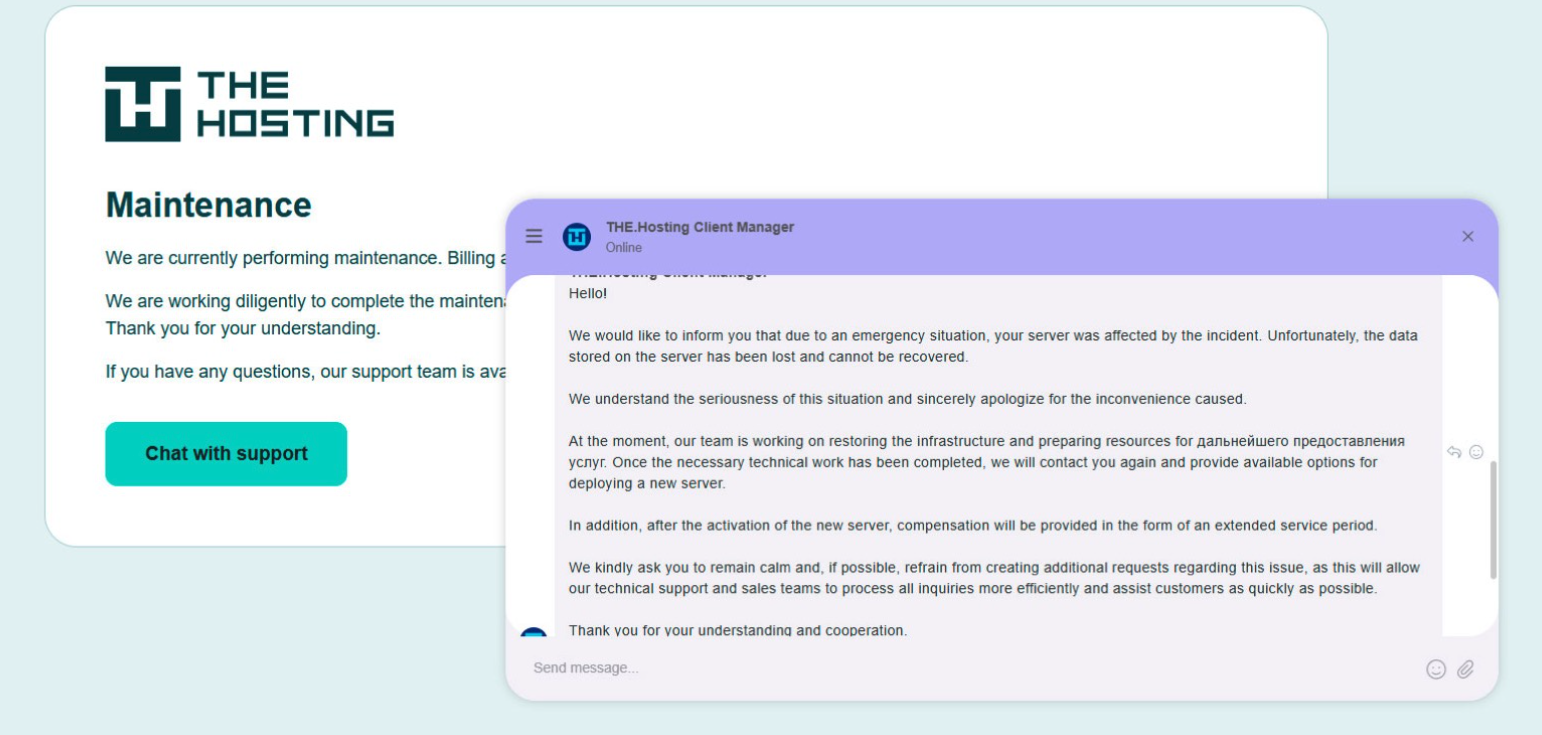
By May 2025, the European Union formally sanctioned the Neculiti brothers and PQHosting for their direct involvement in Russia’s hybrid warfare efforts. However, the sanctions proved to be a "whack-a-mole" exercise in digital enforcement. Sensing the impending regulatory blow, the network assets were rapidly migrated to a new entity known as "the[.]hosting," operated under the corporate umbrella of WorkTitans BV. This transition allowed the infrastructure to maintain its vital link to the global internet via a Dutch provider, MIRhosting.
The Dutch Connection
MIRhosting, a company with deep ties to the Russian internet ecosystem, became the final lifeline for these sanctioned assets. Operated by Andrey Nesterenko, a 39-year-old Russian native residing in the Netherlands, MIRhosting effectively bridged the gap between the sanctioned Neculiti network and the open internet. The recent arrests of Nesterenko and his associate, Youssef Zinad, represent the culmination of a months-long investigation into how this "legitimate" Dutch business was transformed into a conduit for state-sponsored malice.
Supporting Data: The Anatomy of the Raid
On May 18, the FIOD executed a coordinated strike, searching business premises in Enschede and Almere, along with primary data centers in Dronten and Schiphol-Rijk. The physical evidence seized—laptops, encrypted communication devices, and over 800 high-capacity servers—provides a forensic window into the scale of the operation.
The Denmark Connection
According to an investigative report by the Dutch newspaper de Volkskrant, data analysis suggests that WorkTitans and MIRhosting were the primary networks utilized in a wave of pro-Russian cyberattacks targeting Danish government bodies. These attacks occurred between November 13 and November 19, 2025—a period that coincided with Denmark’s municipal elections. The intent was clear: to leverage the digital infrastructure to sow discord, disrupt democratic processes, and influence public perception during a high-stakes political window.
The "Piano Prodigy" and the Hidden Consultant
The backgrounds of the two arrested men present a stark contrast in professional histories. Andrey Nesterenko, a former piano prodigy from Nizhny Novgorod, established Innovation IT Solutions Corp. as early as 2004. Notably, this firm was responsible for hosting "stopgeorgia[.]ru," a website that coordinated cyberattacks against Georgia during the 2008 Russian military incursion. This historical precedent suggests that Nesterenko has long been a fixture in the intersection of Russian nationalist sentiment and offensive cyber capabilities.
Youssef Zinad, by contrast, remained a shadowy figure. Despite his attempts to scrub his digital footprint—deleting LinkedIn profiles and avoiding all direct communication—investigators uncovered evidence linking him to the legal and operational framework of MIRhosting. While Nesterenko attempted to characterize Zinad as a third-party contractor, internal communications obtained by investigators reveal that Zinad held a @mirhosting.com email address and was officially listed as a contact for the company’s physical office in Almere.
Official Responses and Defenses
In the wake of the arrests, the atmosphere surrounding MIRhosting shifted from denial to defensive posturing. Prior to his arrest, Nesterenko maintained that he had severed all ties with the Neculiti brothers immediately following the EU sanctions in May 2025. He further asserted that the transfer of assets to "the[.]hosting" was a legitimate business maneuver, not a calculated effort to evade sanctions.
The MIRhosting Statement
Following the raid, MIRhosting issued a formal statement on LinkedIn, claiming that their internal investigation found no evidence of their network being used to influence the Danish elections. "No anomalies or spikes were observed in our network traffic during the period mentioned," the statement argued. "Had large-scale DDoS attacks occurred, such activity would have been evident." The company further lamented the harm caused to its "legitimate" client base, emphasizing that the seizure of servers has resulted in the permanent loss of data for numerous unsuspecting customers.

The "Harmful Allegations" Narrative
Nesterenko has consistently characterized the investigation as a form of persecution that harms "people who have done nothing wrong." He argues that the Dutch government is unfairly targeting his company based on the activities of clients, rather than the company’s intent. "Closing or damaging a legitimate Dutch infrastructure company will not stop cybercrime," Nesterenko wrote in an email prior to his detention.
Implications for European Security
The arrest of Nesterenko and Zinad signals a shift in how the European Union addresses "bulletproof" hosting providers. Historically, such companies operated in a gray area, claiming "neutrality" as a defense against the misuse of their servers by state-sponsored actors. The Dutch authorities, however, have adopted a more aggressive stance: the violation of sanctions law by providing economic resources to sanctioned entities is being treated as a criminal act, regardless of the provider’s stated intent.
The Erosion of "Neutrality"
This case sets a significant legal precedent. If a hosting provider can be held criminally liable for the state-sponsored activities of its clients, the business model of "bulletproof" hosting—which relies on the willful ignorance of customer activity—becomes inherently unsustainable. The seizure of 800 servers, while disruptive to legitimate clients, serves as a warning to other infrastructure providers that the era of providing sanctuary to Russian hybrid warfare assets is coming to an end.
The Future of Digital Sovereignty
As Europe continues to face an onslaught of disinformation and cyber-aggression, the role of local infrastructure providers has come under intense scrutiny. The ability to hide behind corporate structures, shell companies, and the anonymity of the cloud is being rapidly curtailed by the integration of financial intelligence with cyber forensic investigation.
The case of the Dutch hosting operators serves as a reminder that the physical world—where servers are housed and bank accounts are managed—is the ultimate tether for the digital world. By targeting the people and the hardware, rather than just the malicious code itself, European authorities are finally striking at the foundations of a network that has long operated with impunity. As the legal proceedings against Nesterenko and Zinad unfold, the international security community will be watching closely to see if this represents a lasting shift in the power dynamic between the state and the shadow infrastructure providers that fuel modern cyber warfare.