








In a landmark development for international cybersecurity enforcement, two young British men—Thalha Jubair, 20, and Owen Flowers, 18—have pleaded guilty to criminal charges related to a devastating August 2024 cyberattack that paralyzed Transport for London (TfL), the backbone of the United Kingdom’s capital transit network. The duo, identified as central figures in the prolific and notorious cybercrime collective known as "Scattered Spider," entered their pleas on the opening day of what was originally scheduled to be a six-week trial.
The convictions mark a significant victory for law enforcement agencies on both sides of the Atlantic, as they dismantle a group responsible for some of the most disruptive and financially damaging cyber operations in recent memory.
Main Facts: The TfL Attack and Beyond
The charges brought against Jubair and Flowers in the UK center on their direct involvement in the malicious intrusion of Transport for London’s digital infrastructure. Both men admitted to conspiring to commit unauthorized acts against computer systems and, crucially, causing a risk of serious damage to human welfare. The TfL breach was not merely a data theft; it was a systemic disruption that left thousands of Londoners struggling to navigate the city, highlighting the vulnerability of critical urban infrastructure to modern digital warfare.
Beyond the London incident, the scope of their criminal activities is staggering. Owen Flowers, specifically, confessed to participating in a conspiracy to infiltrate U.S.-based healthcare giants, including SSM Health Care Corporation and Sutter Health, in September 2024. These attacks represented a dangerous escalation in the group’s tactics, moving from commercial extortion to targeting critical healthcare services.
Chronology of a Digital Crime Wave
The trajectory of Scattered Spider has been characterized by a rapid evolution from small-scale social engineering to high-stakes global ransom operations.
- Summer 2022: The group launched a massive, weeks-long SMS phishing campaign targeting employees across hundreds of major corporations. This campaign led to successful breaches at household-name organizations, including LastPass, DoorDash, Mailchimp, Plex, and Signal.
- September 2023: Scattered Spider gained international notoriety for a high-profile ransomware attack that crippled MGM Resorts and Caesars Entertainment in Las Vegas. Investigative reports later identified Owen Flowers as the individual who communicated with media outlets anonymously in the aftermath of these strikes.
- May 2022–September 2025: A period of sustained criminal activity. During this timeframe, prosecutors allege that group members were involved in at least 120 separate network intrusions across 47 U.S. entities, resulting in a staggering $115 million in ransom payments.
- July 2025: UK authorities executed a series of arrests, taking Flowers and Jubair into custody in connection with attacks on major British retailers, including Marks & Spencer, Harrods, and the Co-op Group.
- September 2025: The U.S. Department of Justice unsealed a sweeping indictment in New Jersey, formally linking Jubair to the broader network of Scattered Spider operations.
- April 2026: Tyler "Tylerb" Buchanan, a 24-year-old British national, pleaded guilty in the U.S. to wire fraud and identity theft.
- June 2026: Jubair and Flowers entered their guilty pleas in a London court, setting the stage for their sentencing in July 2026.
Supporting Data: The Mechanics of the Syndicate
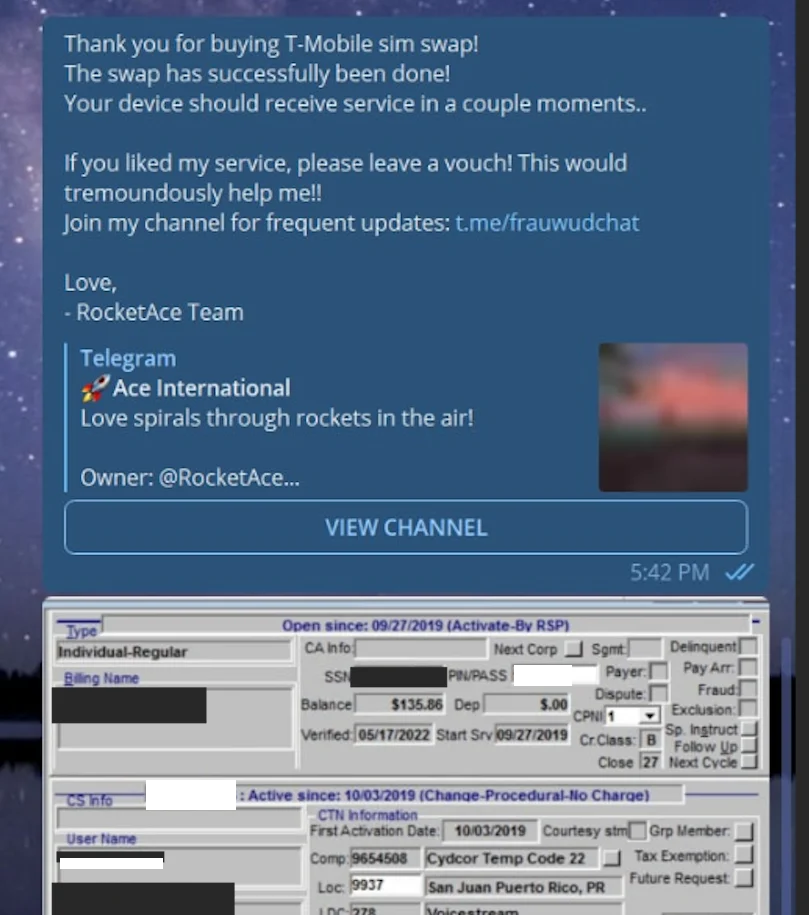
The effectiveness of Scattered Spider stemmed from a sophisticated, multi-layered approach to cybercrime. Thalha Jubair, in particular, was identified by prosecutors as a co-manager of "Star Chat," a highly active Telegram channel dedicated to SIM-swapping operations.
SIM-swapping is a form of identity theft where attackers deceive telecommunications employees into redirecting a target’s phone number to a device controlled by the hackers. Once in control of the phone number, the attackers can intercept voice calls and SMS messages—most importantly, the one-time authentication codes used for Multi-Factor Authentication (MFA). By bypassing these security hurdles, the group gained unauthorized access to sensitive corporate networks.
Evidence surfaced by investigators reveals that the group did not stop at simple phishing. Jubair’s digital footprints include the use of the handle "Rocket Ace" to sell illicit access to internal T-Mobile employee tools. Furthermore, reports indicate that at the age of 15, Jubair operated under the alias "Everlynn," where he specialized in "emergency data requests." By compromising official police and government email accounts, he would send urgent, forged demands for user data to major tech companies, claiming the requests involved immediate life-and-death scenarios to bypass standard legal discovery processes.

Official Responses and Judicial Consequences
The international nature of these crimes has necessitated unprecedented cooperation between the UK’s National Crime Agency (NCA) and the U.S. Department of Justice (DOJ).
The sentencing of previous members illustrates the severity with which the courts are treating these cases. In August 2025, Noah Michael Urban, a 20-year-old Florida resident and member of the group, was sentenced to 10 years in federal prison and ordered to pay $13 million in restitution.
The U.S. legal net remains cast wide. Several other alleged members, including Ahmed Hossam Eldin Elbadawy, Evans Onyeaka Osiebo, and Joel Martin Evans, continue to face active charges in the United States. For Flowers and Jubair, the British legal process is reaching its conclusion; they are currently scheduled to be sentenced in a London court on July 15, 2026.
Implications: A New Era of Accountability
The dismantling of Scattered Spider provides critical insights into the modern threat landscape. First, it highlights the transition of young, digitally native actors from "script kiddies" to sophisticated, state-level-threat-adjacent criminals. The group’s ability to leverage social engineering to bypass billion-dollar security infrastructures serves as a stark warning to any organization that relies solely on automated defenses without robust human-centric security training.
Second, the case demonstrates that the "dark web" and encrypted messaging platforms provide no permanent sanctuary. Through the analysis of Telegram chats, cryptocurrency flow, and physical coordination between international agencies, investigators have proven that digital anonymity is increasingly fragile.
Finally, the shift toward targeting critical infrastructure—as seen in the TfL and healthcare attacks—marks a dangerous evolution. Governments are now viewing these crimes not merely as financial fraud, but as national security threats. The harsh sentencing and international cooperation observed in this case are expected to become the new standard for dealing with cyber-syndicates that threaten the stability of modern society.
As the legal proceedings conclude, the focus for global cybersecurity firms and government entities shifts to the long-term task of hardening systems against the tactics perfected by the Scattered Spider group. The era of impunity for these digital architects of chaos is rapidly drawing to a close, but the damage inflicted on private, public, and healthcare sectors will likely take years to fully remediate.