









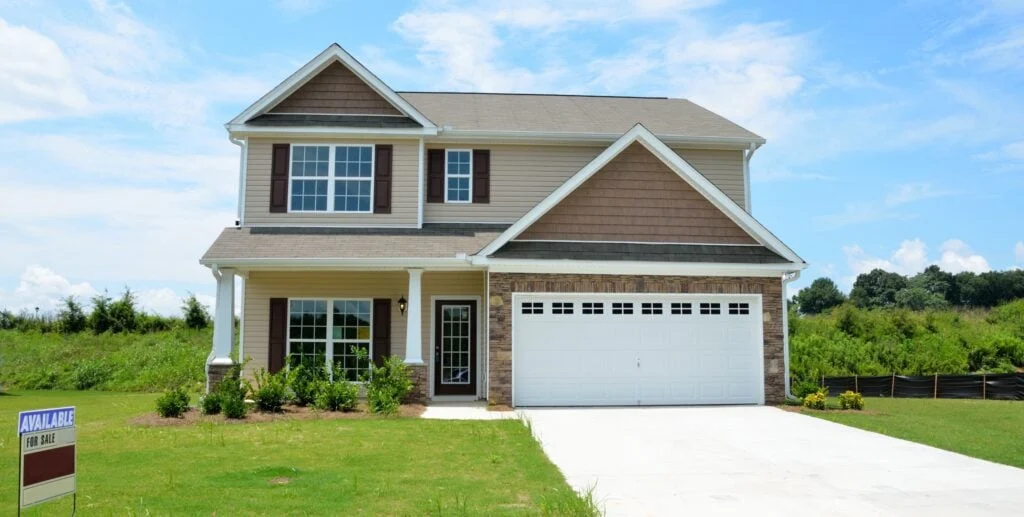
For years, the "BRRRR" (Buy, Rehab, Rent, Refinance, Repeat) strategy has been the gold standard for real estate investors. It promises high returns, equity growth, and the thrill of the hunt. However, as the market environment shifts, many investors are finding that the time, stress, and capital expenditure required for massive renovations are losing their appeal. In a high-interest-rate environment where labor costs are volatile, a more passive, efficient alternative is emerging: buying deeply discounted new-construction homes directly from major builders.
As homebuilders like Lennar grapple with shifting demand, they are offering price points not seen in nearly a decade. For the savvy investor, this represents a unique window of opportunity to acquire high-quality, low-maintenance assets that are immediately cash-flow positive.
The Shift: From Fixer-Uppers to Turnkey Assets
The "passive" in passive income is frequently lost on those who spend their weekends coordinating with subcontractors or managing unexpected repairs on a 40-year-old property. The traditional route requires a level of grit that isn’t sustainable for everyone.
Today, a growing number of investors are pivoting toward new-build communities. These properties offer a "plug-and-play" model: modern energy efficiency, 10-year builder warranties, and an immediate appeal to high-quality tenants who prefer modern, amenity-rich environments. Because builders are currently motivated to clear their inventory, they are frequently subsidizing these purchases through closing cost credits, rate buydowns, and significant price reductions.
Chronology of the Market Cooling
To understand why this opportunity exists, one must look at the timeline of the current housing correction.
- Late 2024: Following a period of aggressive interest rate hikes by the Federal Reserve, the housing market hit a "stagnation phase." Potential homebuyers—particularly Millennials—found themselves priced out by high mortgage rates and record-high home prices.
- Early 2025: Builders, who had scaled up construction projects during the pandemic, found themselves with significant standing inventory. Unlike individual sellers, large developers cannot afford to let houses sit vacant; they carry massive debt loads and need to rotate capital to fund future projects.
- Mid-2025: Major builders began implementing aggressive incentive programs. Rather than just cutting list prices, which can negatively impact the appraisal values of their remaining stock, they began offering "hidden" discounts through mortgage rate buydowns and generous seller concessions.
- 2026 (Current): We are now in a phase where the market has largely stabilized at a "new normal." Builders are no longer hoping for a return to 2021 levels; they are actively competing for buyers. This has created a buyer’s market for investors who have the liquidity to act quickly.
Supporting Data: The Anatomy of the Opportunity
The numbers tell a compelling story. According to recent data from the National Association of Home Builders (NAHB), approximately 35% of builders were actively cutting prices by 5% to 6% in the mid-2026 window. Even more telling is that 61% of builders are offering incentives, such as mortgage rate buydowns, which are essentially invisible subsidies that improve the investor’s monthly cash flow without requiring a lower purchase price.
The shift toward higher-density housing is also significant. Townhouse construction has reached a multi-decade high, accounting for over 18% of single-family starts. This is a direct response to the affordability crisis; by building smaller, more efficient footprints, developers can offer price points that satisfy both the end-user and the buy-and-hold investor.
The Lone Star Advantage
Texas remains the epicenter of this trend. Data from recent regional investment guides confirms that gross rental yields in markets like San Antonio, Houston, and Dallas are consistently outperforming coastal regions. While coastal markets might see gross yields in the 3%–4% range, San Antonio consistently offers 7%–9%. When you factor in the lower cost of living and the influx of corporate relocations, the math in these markets becomes exceptionally attractive.
Official Perspectives: The Builder’s Dilemma
During a recent earnings call, Lennar co-CEO Stuart Miller addressed the state of the market with a measured tone. "Demand is still high, as people want and need homes," Miller noted. "Millennials are hitting the buying age and are realizing the benefit and perhaps imperative of homeownership, but affordability and waning confidence around buying now are sending confusing signals."
This sentiment captures the builder’s struggle. They have the product, and there is a fundamental demand for it, but the "price-to-affordability" gap is the primary hurdle. For the investor, this is the exact gap that makes the current market so ripe. Builders are essentially acting as partners in the deal, absorbing some of the financing pain to ensure the transaction closes.
Strategic Implications: How to Maximize Cash Flow
If you decide to enter the new-build market, you cannot simply buy the first home you see in a master-planned community. You must approach it with the same rigor you would apply to a commercial asset.
1. Leverage Builder Financing
Major builders often maintain relationships with captive or preferred lenders. While you should always shop for the best rate, be prepared to use the builder’s lender. They are often authorized to offer deep-discount rate buydowns—sometimes buying the rate down by 1% to 1.5%—which can significantly increase your monthly cash flow.
2. Targeting the "Highest and Best Use"
New-builds are perfect for niche rental strategies. Because the homes are pristine, they are ideal for:
- Corporate Housing: Traveling nurses and corporate executives prefer new, clean, and well-managed townhomes over hotels.
- Assisted/Sober Living: By coordinating with the builder before the drywall goes up, you can ensure the floor plan supports ADA requirements or specific room counts needed for specialized housing businesses, which command significantly higher rents than standard long-term leases.
3. The "Master-Planned" Premium
Focus your search on communities that offer amenities—trails, pools, and proximity to major infrastructure. Tenants are willing to pay a premium for a lifestyle, not just four walls and a roof. A new-build in a high-amenity community has a lower vacancy risk because the neighborhood itself acts as a retention tool for tenants.
A Case Study in Cash Flow Analysis
Consider a three-bedroom townhouse in a master-planned community in Houston, purchased for $315,000 after all incentives.
- Loan Amount: $252,000 (20% down).
- Standard Market Rate: 6.5%.
- Builder-Subsidized Rate: 5.25%.
At 6.5%, the principal and interest payment is approximately $1,592. At 5.25%, that payment drops to $1,391. Over the course of a year, that 1.25% reduction saves the investor over $2,400 in interest expenses. When combined with a property that requires zero capital expenditures for the first decade, the "net" cash flow begins to outperform many older properties that require constant maintenance and capital reserves.
Navigating the Risks
Despite the benefits, this strategy is not without its pitfalls.
- HOA Risk: Many new builds are located in restrictive Homeowners Associations. Always review the CC&Rs (Covenants, Conditions, and Restrictions) to ensure they do not prohibit rentals or place unreasonable limits on the number of tenants.
- Market Saturation: Because builders are mass-producing these homes, there is a risk of high supply in a single neighborhood. If you are competing with 50 other landlords in the same subdivision, you may face downward pressure on rents. Choose your submarket carefully, prioritizing areas with high job growth and limited buildable land nearby.
Final Thoughts: Fortune Favors the Bold
The current market is a paradox: interest rates are higher than they were a few years ago, but the ease of entry into the new-construction market has never been better. Builders are sitting on inventory that is costing them money every day. They are not in the business of holding real estate; they are in the business of building and selling.
If you have been sitting on the sidelines, waiting for the "perfect" deal, you might be looking in the wrong place. The best deals today aren’t found in a dusty, dilapidated basement of an old house; they are found in the sales office of a major builder, where a motivated developer is waiting for a buyer who is brave enough to make an offer.
Don’t be afraid to ask for the "outlandish." Request the closing cost credits, the appliance upgrades, and the rate buydowns. In this environment, the builder needs the sale just as much as you need the asset. Be prepared, be professional, and be ready to close. The window for this level of builder cooperation will not remain open forever.