








For years, the narrative surrounding Bitcoin was one of untraceable digital rebellion. Early adopters flocked to the world’s first cryptocurrency under the mistaken belief that its ledger offered total anonymity. However, as blockchain forensics evolved—spearheaded by firms like Chainalysis—it became clear that Bitcoin was, in fact, a transparent and highly traceable financial tool.
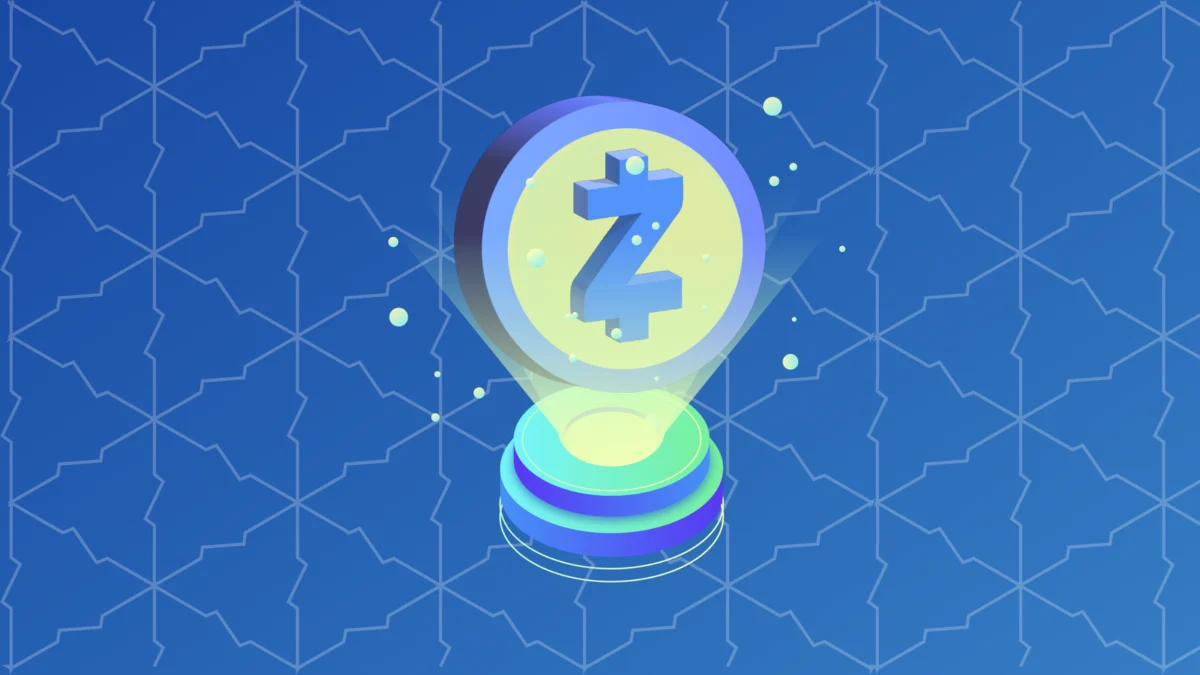
Enter Zcash (ZEC). Launched in 2016, Zcash was engineered to solve the "transparency problem" by offering a sophisticated, opt-in privacy layer that Bitcoin lacked. By leveraging cutting-edge mathematics, Zcash sought to fulfill the original crypto-promise: money that is truly private, fungible, and censorship-resistant. Yet, nearly a decade into its existence, Zcash finds itself at a precarious crossroads, balancing between groundbreaking cryptographic utility and the harsh realities of regulatory pressure, internal leadership disputes, and the existential threat of software vulnerabilities.
The Architecture of Anonymity: How Zcash Operates
At its core, Zcash functions as a dual-natured network. It maintains two distinct pools of addresses: transparent addresses (t-addrs), which function similarly to Bitcoin’s public ledger, and shielded addresses (z-addrs).
The magic lies in zk-SNARKs (Zero-Knowledge Succinct Non-Interactive Arguments of Knowledge). This cryptographic marvel allows the network to verify that a transaction is valid—that the sender has the funds and hasn’t double-spent—without revealing the sender, the recipient, or the transaction amount. When users move funds into the "shielded pool," their tokens become fungible, meaning they are decoupled from their previous transaction history. This makes Zcash a powerful tool for financial privacy, allowing users to conduct commerce without leaving a permanent, public trail for government agencies or data miners to follow.
The project was birthed by the Electric Coin Company (ECC), under the leadership of Zooko Wilcox-O’Hearn, and drew on deep research from elite institutions including MIT, Johns Hopkins, and Tel Aviv University. Despite its institutional pedigree, Zcash was designed to be decentralized; no single entity owns or controls the blockchain, and all major protocol upgrades require community consensus.
Chronology of a Privacy Pioneer
- October 2016: Zcash officially launches, utilizing an Equihash proof-of-work algorithm designed to be ASIC-resistant and "fairer" for home miners.
- 2016–2020: The network undergoes various protocol upgrades (Sprout, Sapling) to improve the speed and efficiency of its shielded transactions.
- November 2020: Regulatory fear hits the industry; exchanges like ShapeShift delist Zcash to avoid legal friction with U.S. authorities.
- April 2022: It is revealed that privacy advocate Edward Snowden participated in the project’s original "trusted setup ceremony," a clandestine event meant to generate the initial cryptographic parameters.
- November 2025: ZEC experiences a massive price resurgence, hitting $698.87. Institutional interest swells, leading to the formation of dedicated ZEC treasury firms.
- January 2026: The SEC confirms the closure of its long-running investigation into Zcash with no enforcement action. However, internal turmoil leads to the "constructive discharge" of the ECC team.
- May–June 2026: A critical vulnerability is discovered in the Orchard shielded pool, triggering a market crash and an emergency network-wide security upgrade.
The Trusted Setup and the Snowden Connection
One of the most fascinating aspects of Zcash’s origin story is the "trusted setup." To ensure the security of the initial privacy parameters, the project required a group of individuals to generate pieces of a private key and then destroy them. If all participants colluded, they could have counterfeited ZEC.
In 2022, the world learned that Edward Snowden was among the six participants. For Snowden, the act was a public service, an attempt to bolster a tool that could protect the financial privacy of activists and marginalized populations globally. This revelation cemented Zcash’s reputation as a tool for "privacy as a human right," though it also drew the ire of regulators who view such tools as instruments of sanctions evasion.
The 2026 Crisis: AI and the Orchard Vulnerability
In May 2026, the Zcash ecosystem faced its most significant existential threat. Security researcher Taylor Hornby, utilizing Anthropic’s advanced Claude Opus 4.8 AI model, identified a "critical counterfeiting vulnerability" within the Orchard shielded pool. This bug theoretically allowed an attacker to print an infinite amount of ZEC without detection.
The disclosure sent shockwaves through the market, wiping billions of dollars off Zcash’s valuation overnight. The incident highlighted a new, terrifying reality for blockchain developers: AI models are now powerful enough to find and exploit complex cryptographic flaws faster than human auditors.
The Zcash Foundation responded with a frantic, coordinated effort involving miners, exchanges, and developers. By June 3, 2026, a network upgrade was successfully deployed, patching the flaw and restoring the integrity of the shielded pool. However, because shielded transactions are inherently private, the developers were forced to admit that they could not cryptographically prove that no counterfeit coins were minted before the patch. This sparked the "Ironwood" proposal, an initiative led by Zooko Wilcox to allow users to verify the circulating supply independently, aiming to restore trust in the token’s economics.
Regulatory Scrutiny and the Survival Strategy
Zcash has long occupied a gray area in the eyes of the law. In 2020, the U.S. Treasury’s Financial Crimes Enforcement Network (FinCEN) labeled Zcash an "anonymity-enhanced cryptocurrency," noting that its features hinder law enforcement investigations.
This labeling led to a "delisting dance." Exchanges like OKX, Binance, and others have frequently moved to remove or reinstate Zcash based on shifting regulatory winds. In 2025, the community was forced to vote on the future of ZEC on major platforms, highlighting the ongoing tension between financial privacy and institutional compliance.
Despite these hurdles, Zcash has shown remarkable resilience. The 2026 decision by the SEC to close its investigation without enforcement was a major victory for the project, signaling that the network’s design—which allows for both shielded and transparent transactions—may be viewed as "regulator-friendly" compared to more rigid privacy coins like Monero.
The Future: A New Era of Development
As of mid-2026, the Zcash landscape is shifting. The departure of the original ECC team from their institutional roles has opened the door for new, leaner organizations to take the helm. Former CEO Josh Swihart has launched cashZ, a project focused on building a modern, user-friendly Zcash wallet, while independent developers at Shielded Labs—backed by funding from the Winklevoss twins—are doubling down on the network’s technical infrastructure.
The upcoming halving in November 2028 serves as the next major milestone. The community is currently engaged in a heated debate over how to fund future development once the current block reward structure expires. With the deprecation of the legacy C++ node (zcashd) and the transition to the more secure Rust-based zebrad, the network is positioning itself for a leaner, more robust future.
Implications: Privacy in the Age of AI
The Zcash story is a microcosm of the broader cryptocurrency industry. It demonstrates that privacy is not just a feature, but a dynamic, contested space where mathematics, law, and corporate politics collide. The 2026 vulnerability disclosure proved that even the most "secure" code is subject to the accelerating power of AI-driven research.
Zcash remains the most significant experiment in balancing individual financial privacy with the demands of a global regulatory framework. Whether it survives as a fringe tool for privacy purists or evolves into a legitimate institutional asset will depend on its ability to navigate the "iron" challenges of the coming years: maintaining its supply integrity, securing decentralized funding, and proving that, in a world of total surveillance, there is still room for digital anonymity.