









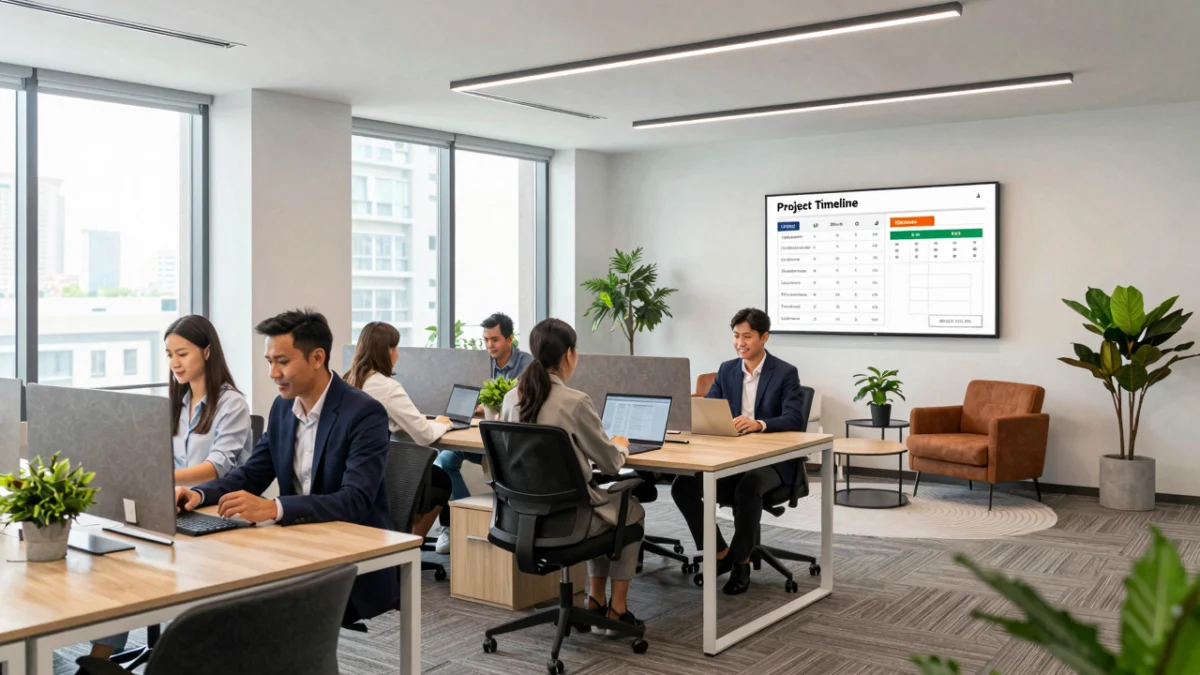
In an era defined by the fluidity of hybrid work and the rapid evolution of organizational structures, the traditional corporate office is undergoing a profound metamorphosis. No longer viewed as merely a collection of desks and cubicles, the modern workspace is increasingly being reimagined as a strategic asset—a powerful tool for talent retention, operational efficiency, and cultural cohesion. To master the art of office design, leadership teams must move beyond aesthetic considerations and embrace a data-driven, human-centric approach.
The Core Philosophy: A Strategic Needs Assessment
The foundation of any high-performing office environment is a comprehensive needs assessment. Without a clear understanding of how employees interact with their surroundings, capital expenditure on office renovation often yields diminishing returns.
Understanding Behavioral Patterns
The process begins by auditing current usage. Are your conference rooms perpetually empty while open-plan areas are overcrowded? By evaluating employee usage patterns, management can identify underutilized "dead zones" and repurpose them into functional spaces. Engagement is key; conducting anonymous surveys and interactive workshops allows employees to voice their preferences regarding noise levels, privacy, and team proximity.

Data-Driven Insights
Modern office planning leverages the Internet of Things (IoT). By deploying occupancy sensors, companies can gather real-time data on space utilization. This allows for evidence-based decision-making regarding space allocation. For instance, if data shows that 40% of workstations remain vacant on Fridays, a company might shift toward a hot-desking model to consolidate office space and reduce overhead costs.
Chronology of an Office Transformation
Successfully redesigning a corporate workspace is a multi-phase endeavor that requires meticulous planning and execution.
- Phase I: Discovery (Months 1-2): Gathering qualitative and quantitative data. This includes department-by-department needs analysis, executive interviews, and initial space audits.
- Phase II: Strategy & Concept (Months 3-4): Establishing the "design language" of the office. Determining the ratio of collaborative zones to quiet zones and selecting the technology infrastructure.
- Phase III: Design & Prototyping (Months 5-6): Using tools like 3D spatial modeling and Virtual Reality (VR) to visualize the impact of design choices before construction begins.
- Phase IV: Implementation & Change Management (Months 7-9): The physical reconfiguration of the space, coupled with training employees on how to utilize new flexible systems.
- Phase V: Post-Occupancy Evaluation (Ongoing): The continuous loop of measuring success via productivity metrics and feedback, ensuring the space remains aligned with evolving business goals.
Supporting Data: The ROI of Comfort and Design
The argument for investing in high-quality, ergonomic, and biophilic office design is not merely anecdotal; it is backed by significant performance metrics.

- Productivity Gains: Ergonomic furniture, including adjustable sit-stand desks and task-specific seating, has been shown to increase employee satisfaction and comfort by approximately 20%.
- The Power of Light: Research suggests that access to natural light is one of the most significant predictors of workplace satisfaction. Offices optimized for daylight can see a 15% increase in productivity and a marked improvement in employee energy levels.
- Health and Wellness: Biophilic design—the integration of nature, such as indoor plants and natural materials—does more than beautify an office. Studies indicate it can reduce the symptoms of "sick building syndrome" by up to 30%, leading to lower absenteeism and higher retention.
- The Feedback Loop: Perhaps the most compelling metric is the correlation between employee input and organizational commitment. Companies that actively solicit and act upon feedback regarding their workspace design report up to a 72% increase in attendance rates, as employees feel their professional environment is a reflection of their value to the company.
Technological Integration: The Digital Backbone
To stay competitive, modern offices must be "smart." The following technologies are becoming standard in top-tier corporate environments:
| Technology | Impact on Operations |
|---|---|
| Digital Twins | Creates a virtual replica of the office to test traffic flow and energy usage in real-time. |
| IoT Sensors | Monitors real-time occupancy to optimize heating, cooling, and lighting based on actual presence. |
| Space Management Software | Facilitates desk and room booking, essential for hybrid work schedules. |
| VR Walkthroughs | Allows stakeholders to "experience" a design before committing to costly architectural changes. |
Implications for Future Growth and Adaptability
The most successful offices are not static; they are "living" ecosystems. Planning for future growth means rejecting fixed architecture in favor of modularity.
The Rise of Modular Infrastructure
Modular furniture systems and movable partitions are the cornerstone of the agile office. As team sizes fluctuate or project needs change, these systems allow for the rapid reconfiguration of the office footprint without the need for expensive, disruptive renovations. An area used for a large team meeting in the morning can be subdivided into three quiet, focused work pods by the afternoon.

Scalable Tech Infrastructure
Technology must also be scalable. Businesses should prioritize "future-proof" cabling and cloud-based systems that allow for seamless upgrades. If the IT backbone is not flexible, the physical workspace will never be truly adaptable.
Professional Guidance
Partnering with an experienced workplace design company is often the difference between a successful transition and a costly misstep. These firms provide the specialized expertise needed to balance aesthetic ambition with functional reality, ensuring that the office remains a catalyst for growth rather than a constraint.
Addressing Common Pitfalls
In the pursuit of the "perfect" office, leaders often fall into common traps.

Over-optimizing for Density
A common mistake is the "cramming" of workstations to save on rent. This ignores the reality that employees require "breathing room" to maintain focus and mental clarity. Overcrowding frequently leads to burnout and a decline in collaboration quality.
Ignoring Acoustic Design
In the rush to create open, collaborative spaces, many companies forget the importance of acoustics. Without sound-masking technology or designated "quiet zones," open-plan offices can become hotbeds of distraction, causing productivity to plummet.
The "One-and-Done" Mentality
Office planning is not a project with a fixed end date. As company goals shift, so too must the space. Organizations that fail to reassess their layouts at least once a year risk having an office that is disconnected from the realities of their daily operations.

Conclusion: Designing for the Human Element
The future of the corporate office is one of purpose. Every square foot of real estate should serve a distinct function, whether that is fostering intense collaborative brainstorming, providing a sanctuary for deep, uninterrupted work, or serving as a hub for cultural socialization.
By starting with a rigorous needs assessment, integrating the right technologies, prioritizing human comfort through ergonomics and nature, and maintaining a commitment to modularity and growth, organizations can build environments that do more than just house employees—they empower them. As the boundary between home and office continues to blur, the physical workspace must offer a value proposition that makes the commute worthwhile. Ultimately, a well-planned office is a statement of intent: it tells your employees that their performance, their comfort, and their future are at the very heart of the business strategy.