





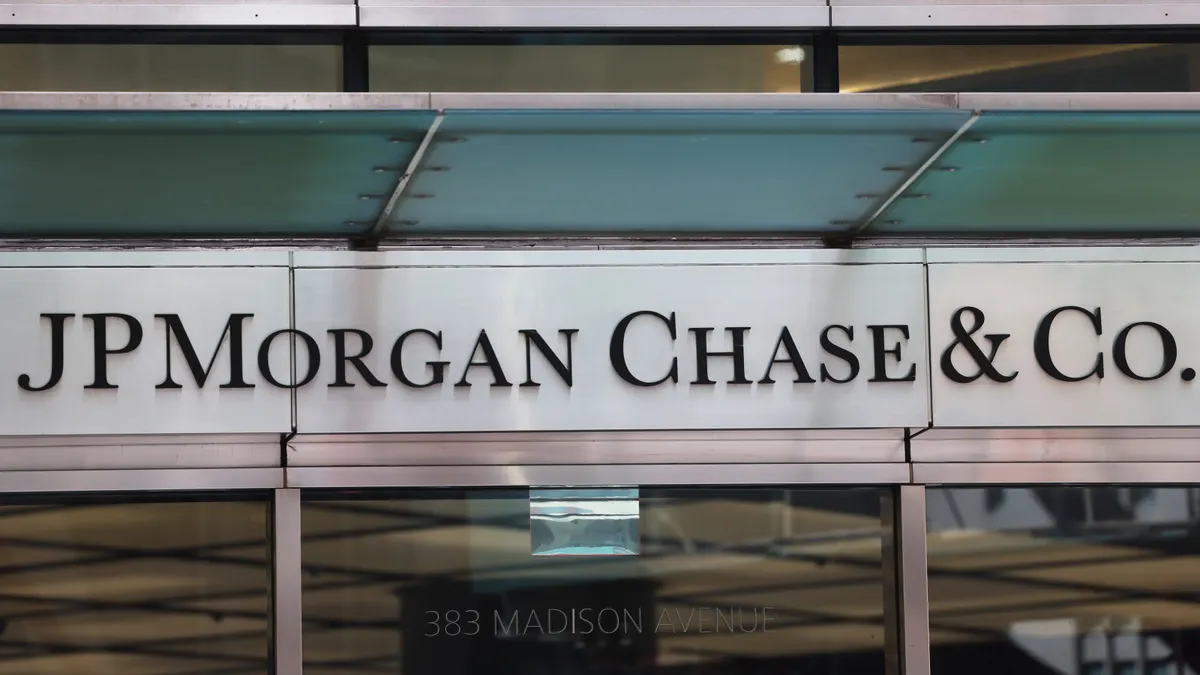
NEW YORK — In a significant legal victory for the traditional banking sector, a federal judge has dismissed a high-stakes lawsuit brought by investors against three of the world’s largest financial institutions. JPMorgan Chase, Barclays, and Fifth Third Bank have successfully defeated allegations that they turned a blind eye to a massive "double-pledging" collateral scheme orchestrated by the now-bankrupt subprime auto lender, Tricolor.
The ruling, handed down by Judge Jed Rakoff of the U.S. District Court for the Southern District of New York, marks a pivotal moment in the ongoing litigation surrounding the billion-dollar collapse of Tricolor. While the dismissal provides immediate relief to the defendant banks, the legal community and financial markets remain on high alert as the judge’s full reasoning is yet to be disclosed.
Main Facts: The Allegations of "Willful Blindness"
The lawsuit, spearheaded by lead plaintiff One William Street Capital Management, alleged that JPMorgan Chase, Barclays, and Fifth Third failed in their fiduciary and custodial duties by ignoring "giant red flags" that should have alerted them to systemic fraud within Tricolor’s operations.
At the heart of the complaint was a sophisticated "double-pledging" scheme. According to the plaintiffs, Tricolor—a lender specializing in subprime auto loans for underserved markets—allegedly used the same individual auto loans as collateral for multiple warehouse credit lines provided by different banks. Furthermore, the lawsuit claimed that Tricolor continued to pledge these loans even after they had been bundled and sold into the securitization market as asset-backed securities (ABS).
The investors argued that the banks were not merely victims of the fraud but were, at best, grossly negligent and, at worst, complicit through "willful blindness." The plaintiffs contended that the banks chose to ignore internal and external warnings to preserve the lucrative fees and interest income generated by Tricolor’s aggressive expansion.
However, on Tuesday, June 9, 2026, Judge Rakoff issued a brief order dismissing the suit in its entirety. In a move that has left legal analysts speculating, the judge did not immediately provide a detailed legal memorandum, stating only that "an opinion explaining the reason for this ruling will issue in due course."
Chronology: The Rise and Fall of Tricolor
To understand the magnitude of the court’s decision, one must look at the timeline of Tricolor’s trajectory from a rising star in the fintech-lending space to a central figure in a federal criminal indictment.
2021–2023: Rapid Expansion and Warning Signs
During the post-pandemic recovery, Tricolor positioned itself as a mission-driven lender, providing credit to "thin-file" borrowers—primarily within the Hispanic community—who lacked traditional credit scores. This growth was fueled by massive warehouse lines of credit from JPMorgan, Barclays, and Fifth Third.
As early as 2022, however, internal audits and third-party reviews began to flag inconsistencies in collateral reporting. The lawsuit alleged that by early 2024, auditors had explicitly warned the banks of irregularities in how loans were being tracked and pledged.
September 2025: The Collapse
The house of cards collapsed in September 2025 when Tricolor filed for Chapter 11 bankruptcy protection. The filing revealed a massive shortfall in assets compared to liabilities, sending shockwaves through the subprime auto industry. Shortly after the filing, the defendant banks were forced to recognize the reality of the situation, logging combined charge-offs that exceeded several hundred million dollars.
December 2025: Criminal Charges
The situation escalated from a civil dispute to a criminal matter in late 2025. The U.S. Department of Justice indicted Tricolor CEO Daniel Chu and COO David Goodgame. The executives were charged with defrauding creditors and lenders in connection with the billion-dollar collapse. Both Chu and Goodgame have pleaded not guilty and are currently awaiting trial.
February 2026: The Investor Lawsuit
In early 2026, One William Street Capital Management and other institutional investors filed their civil complaint. They sought to recoup losses, arguing that the banks’ failure to implement basic "know your collateral" protocols allowed the fraud to persist far longer than it should have.

June 2026: The Dismissal
After months of preliminary motions, Judge Rakoff’s dismissal effectively halts the investors’ attempt to hold the banks liable for Tricolor’s alleged criminal activities.
Supporting Data: The Financial Toll of the "Double-Pledge"
The scale of the Tricolor collapse is reflected in the staggering financial data reported by the involved institutions. The "double-pledging" scheme created a phantom pool of assets that misled both warehouse lenders and ABS investors.
- Bank Charge-offs: Following the bankruptcy, JPMorgan Chase, Fifth Third, and Barclays each reported individual charge-offs related to Tricolor exceeding $100 million. These losses were a rare stain on the balance sheets of these diversified giants, highlighting the risks inherent in the subprime auto sector.
- The Collateral Gap: While the exact number of "double-pledged" loans is still being audited in bankruptcy court, preliminary reports suggest that thousands of VINs (Vehicle Identification Numbers) were registered across multiple credit facilities simultaneously.
- Market Impact: In the wake of the Tricolor scandal, the spread on subprime auto ABS widened significantly as investors demanded a higher risk premium, fearing that other non-bank lenders might be employing similar deceptive accounting practices.
The plaintiffs argued that the banks’ sophisticated risk management systems should have caught these duplicates. They pointed to the fact that modern fintech lending relies on digital registries that make it theoretically simple to cross-reference collateral. The failure to do so, they argued, was a dereliction of duty.
Official Responses: Silence and Legal Strategy
In the immediate aftermath of Judge Rakoff’s ruling, the defendant banks have maintained a cautious stance.
- The Banks: Representatives for Barclays and Fifth Third declined to comment on the victory when reached by reporters. JPMorgan Chase also provided no immediate statement. This silence is typical in high-profile litigation where an "opinion in due course" is still pending; the banks are likely waiting for the judge’s full reasoning before declaring a total victory.
- The Plaintiffs: Legal counsel for One William Street Capital Management has not yet indicated whether they intend to appeal the dismissal. Their strategy likely hinges on the specific legal grounds Rakoff cites in his upcoming opinion.
- The Judiciary: Judge Rakoff is known for his thorough and often pointed opinions on financial regulations and corporate malfeasance. His decision to dismiss the case suggests that the plaintiffs may have failed to meet the high bar required to prove that the banks had "actual knowledge" of the fraud or a specific duty to protect third-party investors from the borrower’s criminal acts.
Implications: A Precedent for the "Shadow Banking" Sector
The dismissal of this lawsuit has far-reaching implications for the financial services industry, particularly regarding the relationship between "money center" banks and non-bank lenders.
1. Protection for Warehouse Lenders
The ruling reinforces the legal boundary between a lender and its borrower. If the dismissal holds, it suggests that banks providing warehouse lines of credit are not necessarily the "guarantors" of their clients’ integrity. This provides a level of legal protection for banks operating in the "shadow banking" sector, where they provide the liquidity that allows non-bank lenders to function.

2. Scrutiny of Due Diligence Protocols
Despite the legal victory, the Tricolor scandal has caused a reputational hit to the banks involved. Moving forward, the industry is expected to see a tightening of due diligence requirements. Banks may move away from relying on a borrower’s self-reporting and instead demand real-time access to collateral registries and third-party verification of VIN-level data.
3. Regulatory Pressure
The Tricolor collapse and the subsequent litigation have caught the attention of federal regulators, including the Consumer Financial Protection Bureau (CFPB) and the Office of the Comptroller of the Currency (OCC). Even if the banks are not held civilly liable in court, they may face increased regulatory scrutiny regarding their "Know Your Customer" (KYC) and anti-money laundering (AML) protocols as they relate to corporate borrowers.
4. Impact on Subprime Liquidity
The most immediate impact may be felt by subprime borrowers. As banks lick their wounds from $100 million charge-offs and the cost of defending massive lawsuits, they are likely to reduce their exposure to the subprime auto market. This "flight to quality" could result in a liquidity crunch for non-bank lenders, making it harder for low-income consumers to secure vehicle financing.
Conclusion
The dismissal of the suit against JPMorgan, Barclays, and Fifth Third is a landmark moment in post-Tricolor litigation. While the banks have successfully argued that they should not be held responsible for the "blatant double-pledging scheme" of a third party, the financial world now waits for Judge Rakoff’s written opinion. That document will likely serve as a roadmap for future litigation and a cautionary tale for the evolution of subprime lending oversight. For now, the banks have avoided a costly trial, but the echoes of the Tricolor collapse will continue to resonate through the halls of Wall Street and the regulatory offices of Washington D.C. for years to come.