









In an era defined by 24-hour news cycles, hyper-volatility, and constant economic uncertainty, the average American investor might be expected to succumb to "market panic." Historically, when headlines scream of recession or stock market dips, retirement accounts suffer as individuals pull their money to the sidelines. However, a remarkable shift has occurred in the first quarter of 2026. According to the latest retirement analysis from Fidelity Investments, American savers have traded emotional, knee-jerk reactions for a calculated, disciplined, and highly strategic approach to wealth accumulation.
Rather than fleeing the markets during Q1’s brief volatility, the data suggests that millions of pre-retirees are doubling down. By leveraging automated workplace tools and prioritizing long-term tax efficiency, these savers are not just surviving economic turbulence—they are actively building "structural financial defenses" designed to last for decades.
Main Facts: A Shift Toward Discipline
The core takeaway from the Q1 2026 Fidelity analysis, which monitors over 54 million retirement accounts (including 401(k)s, 403(b)s, and IRAs), is that the "fear factor" has been replaced by procedural discipline.
The data highlights three critical pillars of this new era:
- Record Contribution Rates: Despite market jitters, employee and employer contribution rates into 401(k) plans have climbed to an unprecedented 14.4%, nearing the "gold standard" 15% recommendation often cited by financial planners.
- The Rise of Tax-Efficient Vehicles: There has been a seismic movement toward Roth-style accounts, which now represent the vast majority of individual contributions, indicating that investors are betting on their future tax flexibility over current liquidity.
- Resilience Against Panic: The traditional tendency to halt contributions or move assets to cash during downturns has significantly waned. Instead, savers are allowing their automated systems to continue buying into the market, treating short-term dips as an opportunity to accumulate assets at a discount.
Chronology of a Shift
To understand how we reached this point, one must look at the evolution of retirement planning over the last decade.
2016–2020: The Foundation of Automation
During the mid-2010s, the financial industry began a massive push toward "auto-escalation." This feature, embedded in many workplace 401(k) plans, automatically increases an employee’s contribution percentage by 1% each year unless they manually opt-out. For a long time, this was viewed as a "nudge" for the financially disengaged.

2021–2024: Testing the Waters
As inflation spiked and market volatility returned in the early 2020s, financial literacy campaigns focused heavily on the "Time in the Market" versus "Timing the Market" philosophy. During this period, the percentage of investors who panic-sold reached a historical low, signaling that the educational efforts of the previous decade were finally taking root in the collective consciousness.
2025–2026: The Strategic Pivot
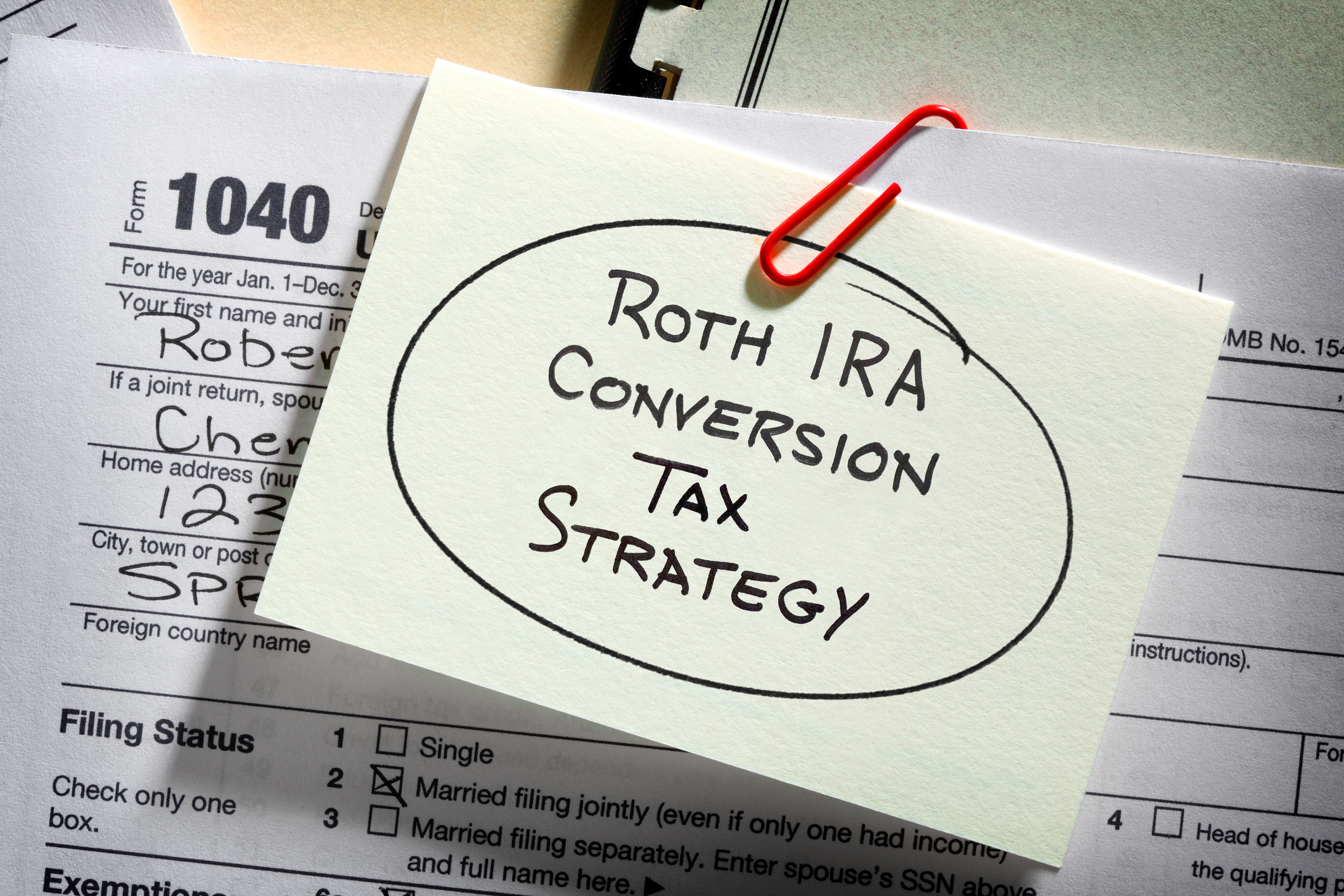
By the start of 2026, the strategy shifted from simple "saving" to "strategic tax planning." The current quarter saw a 41% year-over-year spike in Roth conversions—a complex financial maneuver where investors pay taxes on existing retirement funds today to ensure tax-free growth and withdrawals in the future. This move represents a high-level understanding of long-term tax liability, proving that savers are no longer just looking at their account balances; they are looking at their lifetime tax burden.
Supporting Data: By the Numbers
The figures provided by Fidelity offer a granular look at the health of the American nest egg. While average account balances saw a marginal dip—a 4% decline in both IRAs ($131,380 average) and 401(k)s ($141,000 average) from the final quarter of 2025—the long-term trajectory remains profoundly positive.
- Ten-Year Growth: Over the last decade, IRA balances have swelled by 46%, while 401(k) balances have seen a 61% increase.
- Contribution Velocity: IRA contributions surged 29% year-over-year. Perhaps most tellingly, 67% of those contributions were funneled into Roth accounts.
- The Power of 18%: Nearly one in five (18%) of all plan participants actively chose to increase their savings rate during the quarter, contradicting the narrative that economic anxiety leads to reduced saving.
- Asset Allocation Stability: The percentage of savers who adjusted their asset allocation dropped to just 5.7%, down from 6% a year ago. This suggests that the average investor is now "staying the course" with their portfolio mix, avoiding the temptation to chase trends or retreat into cash.
Official Responses: The Fidelity Perspective
Sharon Brovelli, President of Workplace Investing at Fidelity Investments, frames these developments as a sign of maturity in the American workforce.
"Retirement savers started the year strong with record-high savings rates and contributions," Brovelli stated. "This reflects the long-term approach they’re taking with retirement preparedness."
Fidelity’s leadership emphasizes that the data is not just a reflection of high earnings, but a reflection of a system that works when people allow it to. By leaning on auto-escalation and recurring contributions, investors have created a "set it and forget it" mechanism that protects them from their own worst impulses. When the market falls, those with automated contributions are effectively purchasing more shares for the same dollar amount, a strategy known as dollar-cost averaging that historically results in superior long-term performance.

The Psychological Divergence
Why is there such a massive gap between negative consumer sentiment and positive financial behavior? Economic surveys frequently show that Americans are worried about the state of the economy, yet their retirement accounts tell a story of optimism and grit.
The answer lies in "automated inertia." Because the modern 401(k) is designed to operate in the background, the psychological barrier to saving has been lowered. For most employees, the "path of least resistance" is to continue contributing—or even to increase contributions—rather than to log into a portal and stop the process. This reliance on systems, rather than willpower, is the defining characteristic of the 2026 investor.
Furthermore, the surge in Roth conversions highlights a growing segment of the population that is "financially sophisticated." A Roth conversion requires a conscious decision to pay taxes today, which is a significant "out-of-pocket" expense. By doing so, these investors are signaling that they view the current economic environment not as a crisis, but as a window of opportunity to optimize their long-term tax situation. They are betting that paying a price now is cheaper than paying the potential price of higher future tax rates.
Implications: The Future of Retirement
The implications of these findings are profound for the next decade of American retirement.
1. A More Resilient Middle Class
If current trends continue, the "Achilles’ heel" of retirement planning—emotional panic—may be mitigated by the widespread adoption of automation. A generation of investors who have learned to ignore short-term market noise is a generation that is far more likely to reach their retirement goals with a sufficient "nest egg."
2. The End of the "Traditional" Tax Model
The shift toward Roth accounts and conversions suggests that the classic "tax-deferred" model (401(k)s) is losing its monopoly on retirement savings. As more Americans transition to tax-free growth models, the structure of retirement income will become more predictable, potentially reducing the reliance on social safety nets in the long run.
3. The Importance of Financial Literacy
While automation helps, the 41% increase in manual Roth conversions proves that education is still a primary driver of wealth. Investors are increasingly aware of the tax implications of their portfolios. As financial literacy continues to improve, we can expect to see even more complex, tax-efficient strategies becoming standard practice for the average household.
Conclusion: Turning Noise into Nest Eggs
The current economic climate is, without question, filled with uncertainty. Inflation, geopolitical shifts, and market volatility are constants in the modern world. However, the data from early 2026 provides a reassuring counter-narrative: American savers are evolving.
By combining the "superpower" of automated inertia with the strategic foresight of tax-focused investing, the modern pre-retiree is building a fortress around their future. They are no longer the victims of market volatility; they are, through steady discipline and long-term vision, becoming the architects of their own financial security. For those looking to mirror this success, the lesson is clear: focus on what you can control—your savings rate and your tax structure—and let the long-term compounding of the market handle the rest.